
Voice AI moves into live use at Indian contact centres, Nasscom-Krisp survey finds

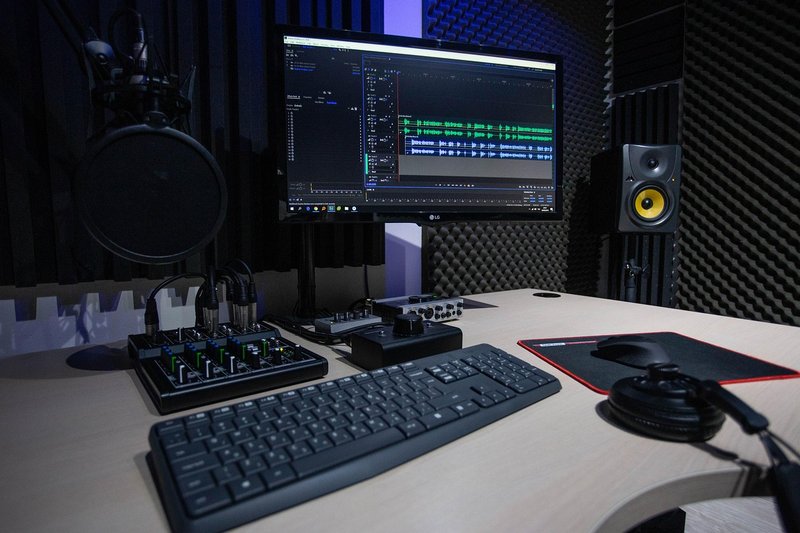
Representative image: roblesse / Pixabay
A Nasscom-Krisp report on October 8, 2026 found 31% of surveyed Indian firms had voice AI in limited production, reshaping BPM and contact-centre work.
What Happened
Voice AI, software that can hold spoken conversations with customers, is moving from trials into real use in Indian companies, according to the India Voice AI Readiness 2026 report released by industry body Nasscom with technology firm Krisp on Thursday, October 8, 2026. The survey of more than 140 organisations, including business process management (BPM) firms and global capability centres (GCCs) running contact centres in India, found that 31% had reached limited production and around 13% had scaled voice AI across several customer journeys. Enterprise-wide use is still at an early stage. Nasscom president Rajesh Nambiar described the opportunity as AI-enabled, multilingual customer operations in which Indian firms take greater ownership of outcomes.
Key Facts
- The Nasscom-Krisp report was released on October 8, 2026, based on responses from more than 140 organisations.
- 31% of organisations surveyed had reached limited production with voice AI, and about 13% had scaled it across multiple customer journeys.
- More than one-third support at least three Indian languages in production.
- 61% reported a cut of more than 20% in cost per eligible customer interaction.
- 30% of organisations that had scaled voice AI reported a positive effect on revenue.
- 68% said they saw returns within six to 24 months, and two-thirds expect voice AI budgets to rise by up to 50% over the next two years.
- Leading sectors include banking and financial services, telecom, e-commerce, retail and consumer goods, travel and logistics.
Why It Matters
Much of the work in India's BPM and contact centre industry involves answering calls, resolving complaints and handling sales. Voice AI agents can now take on some of that work: answering routine queries, making outbound calls, checking call quality and assisting human agents in real time. That changes what entry-level work in the sector looks like.
The report presents this mainly as a growth opportunity rather than a threat. Indian firms that build voice AI into their services can offer clients cheaper, faster and multilingual support, and take on more responsibility for business results rather than simply supplying staff. The multilingual finding is important for India, where customers expect to be served in their own language.
For job seekers, the message is about skills. Roles are shifting towards designing and training voice agents, monitoring AI conversations, handling complex or sensitive calls that machines cannot, analysing speech data and managing quality. People already in contact centres who learn to work alongside AI tools, and those with strong language skills in several Indian languages, are likely to be better placed. The survey responses do not on their own prove that voice AI caused the reported savings or revenue gains, and the effect on overall job numbers is not measured in the report.
| Finding | Share of organisations |
|---|---|
| Limited production | 31% |
| Scaled across multiple journeys | about 13% |
| Three or more Indian languages in production | more than one-third |
| Cost per interaction cut by over 20% | 61% |
| Returns within 6 to 24 months | 68% |
Impact
Short-term: More BPM firms and GCCs will expand voice AI pilots into live customer service, especially in banking, telecom and e-commerce.
Long-term: Contact centre work is likely to shift from routine call handling towards supervising, training and improving AI agents, changing the skills employers seek.
Who is affected: Young graduates and workers in BPM and contact centres, training institutes, BPM and GCC employers, and customers who will increasingly speak to AI agents.
Key Takeaway
A Nasscom-Krisp survey shows voice AI moving into live use in Indian customer service, shifting contact-centre jobs towards AI supervision and multilingual skills.
Questions and Answers
What did the Nasscom-Krisp Voice AI report find?
Released on October 8, 2026, it found 31% of surveyed organisations had reached limited production with voice AI and about 13% had scaled it across multiple customer journeys.
How many organisations were surveyed?
More than 140, including BPM providers, global capability centres with Indian contact centres, and firms evaluating or deploying voice AI.
Are companies saving money with voice AI?
61% reported cutting cost per eligible interaction by more than 20%, according to the survey, though the report's figures are self-reported.
What skills will help people in BPM jobs?
Working alongside AI tools, handling complex customer issues, monitoring and training voice agents, analysing speech data and speaking several Indian languages.
Disclaimer: Prepared by the Peepals newsroom from publicly available sources with AI assistance. Information is accurate to the best of our knowledge at the time of publication and may change. Images may be representative. Not professional advice. Report an error via our contact page.
Sourced and fact-checked by the Peepals Global Editorial Team
Ex-DeepMind founders' Reflection AI unveils Beam, a 500-billion-parameter open model
Ten minutes of AI help made people give up sooner on hard problems, study finds
Reported, fact-checked and published by the Peepals Global Editorial Team.