
Supreme Court: Section 17A cannot shield officials accused of bribe demands
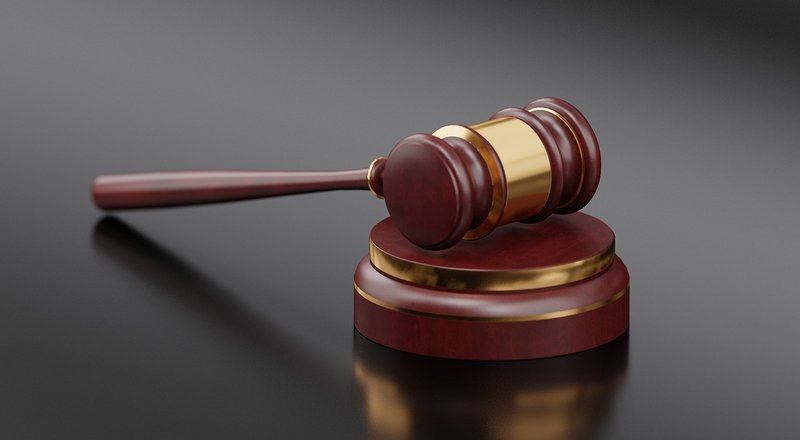
Representative image: succo / Pixabay
The Supreme Court ruled on October 16, 2026 that Section 17A of the Prevention of Corruption Act does not protect public servants accused of demanding bribes.
What Happened
The Supreme Court has ruled that a public servant accused of demanding a bribe cannot use Section 17A of the Prevention of Corruption Act to stop an investigation for want of prior government approval, because demanding a bribe is not connected with the officer's official functions. A bench of Justices S.V.N. Bhatti and N.V. Anjaria delivered the judgment on October 16, 2026 in Tejaram v. State of Rajasthan, dismissing an appeal by a Rajasthan police constable charged with demanding Rs 1.5 lakh.
Key Facts
- Case: Tejaram v. State of Rajasthan, reported as 2026 INSC 1147, decided on October 16, 2026.
- Bench: Justices S.V.N. Bhatti and N.V. Anjaria; Justice Anjaria wrote the judgment, according to legal news reports.
- The accused: a Rajasthan police constable charged under Section 7 of the Prevention of Corruption Act for allegedly demanding Rs 1.5 lakh.
- The holding: the court treated demanding a bribe as a purely criminal act that is not connected with official duties, so the Section 17A requirement of prior approval before an inquiry does not apply.
- The larger bench issue: the appellant relied on the court's January 13, 2026 split verdict on the validity of Section 17A, which was referred to a larger bench; the court held that pending reference had no bearing on this case.
- The limit: the ruling decides only whether the investigation needed prior approval; it does not decide guilt, and the trial continues.
Why It Matters
Section 17A was added to the Prevention of Corruption Act, 1988 through amendments in 2018. It says police cannot start an inquiry or investigation into an offence by a public servant that relates to a recommendation made or a decision taken in the course of official duties, without first getting approval from the government or authority competent to remove that officer. Its supporters say it protects honest officers from harassment over decisions taken in good faith. Critics have argued that it lets governments block inquiries into their own officials.
The provision itself is under challenge. On January 13, 2026, a two-judge bench of Justices B.V. Nagarathna and K.V. Viswanathan split on whether Section 17A is constitutional. Justice Nagarathna would have struck it down as arbitrary, while Justice Viswanathan would have kept it but required the approval decision to be taken by an independent body such as the Lokpal or a state Lokayukta rather than the government. The question was sent to the Chief Justice of India to set up a larger bench, and no ruling on it has been reported.
The October 16 judgment does not settle that larger question. What it does is mark a clear line: whatever the fate of Section 17A, an accused officer cannot use it as a shield when the allegation is that he asked for a bribe. Demanding money is not a decision or recommendation made while performing official duties, the court reasoned, so the protection does not arise in the first place. The section already contains a separate exception for officers caught on the spot accepting or trying to accept an undue advantage.
For citizens who complain about bribe demands, the ruling means investigating agencies such as state anti-corruption bureaus can proceed without waiting for government permission in such cases. For public servants, it narrows the range of cases in which Section 17A can be invoked.
| Issue | Position |
|---|---|
| Section 17A validity | Split verdict on January 13, 2026; referred to larger bench |
| Bribe demand cases | Section 17A approval not needed, per October 16, 2026 ruling |
| Accused constable | Appeal dismissed; trial continues; guilt not decided |
Impact
Short-term: Trial courts and investigating agencies handling bribe-demand cases can rely on the ruling when an accused argues that the investigation was invalid for lack of prior approval.
Long-term: The larger bench's decision on whether Section 17A is constitutional will still shape how corruption inquiries into decisions and recommendations by officials are started. This ruling limits the provision's reach in the meantime.
Who is affected: Public servants facing corruption complaints, state anti-corruption bureaus and vigilance agencies, complainants in bribery cases, and courts hearing such trials.
Key Takeaway
The Supreme Court ruled on October 16, 2026 that Section 17A of the Prevention of Corruption Act does not protect a public servant accused of demanding a bribe, because such a demand is not part of official duties.
Questions and Answers
What did the Supreme Court say about Section 17A and bribe demands?
In Tejaram v. State of Rajasthan, decided on October 16, 2026, the court held that demanding a bribe is not connected with a public servant's official functions, so the prior approval required by Section 17A is not needed to investigate it.
What is Section 17A of the Prevention of Corruption Act?
Added in 2018, Section 17A requires prior approval from the government or competent authority before police inquire into or investigate an offence by a public servant relating to a recommendation or decision taken in official duties.
Has the Supreme Court decided whether Section 17A is valid?
Not yet. On January 13, 2026, a two-judge bench gave a split verdict, and the question was referred to a larger bench, which has not ruled.
Does the ruling mean the constable is guilty?
No. The court only decided that the investigation did not need prior approval. The charge against him will be decided at trial.
Disclaimer: Prepared by the Peepals newsroom from publicly available sources with AI assistance. Information is accurate to the best of our knowledge at the time of publication and may change. Images may be representative. Not professional advice. Report an error via our contact page.
Sourced and fact-checked by the Peepals Global Editorial Team
Kedarnath, Yamunotri to close Nov 11; Badrinath on Nov 16
Prahaar, on Ujjwal Nikam, earns Rs 11 crore in four days
Reported, fact-checked and published by the Peepals Global Editorial Team.