

ICMR-CCRAS Trial Finds Ayurvedic Anaemia Formulations Match Iron-Folic Acid
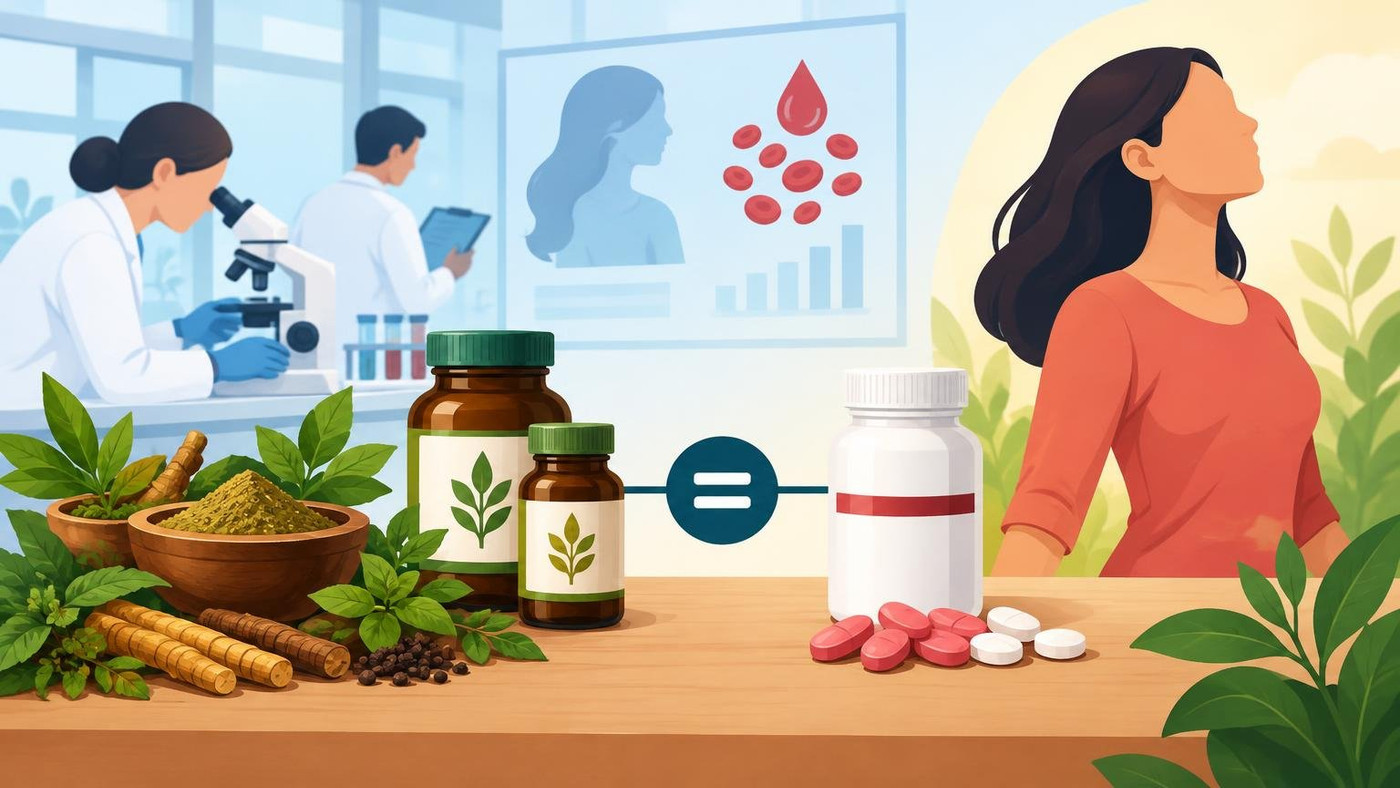
AI-generated illustration
Advertisement
A Phase III trial by the Indian Council of Medical Research and CCRAS, presented on 21 May 2026, found two Ayurvedic formulations therapeutically equivalent to iron-folic acid for moderate anaemia in women.
What Happened
The Indian Council of Medical Research (ICMR) announced on 21 May 2026 that a multicentric Phase III trial found Ayurvedic formulations therapeutically equivalent to standard iron-folic acid supplementation. The condition studied was moderate iron deficiency anaemia in women. The findings were presented at the first ICMR Annual Clinical Trial Meet 2026 in New Delhi, according to the Ministry of Health and Family Welfare. The trial is one of the larger randomised studies of an Ayush intervention in India.
Key Facts
- ICMR ran the trial with the Central Council for Research in Ayurvedic Sciences (CCRAS), the research body of the Ministry of Ayush. It enrolled nearly 4,000 non-pregnant women aged 18 to 49 years.
- All participants had been diagnosed with moderate anaemia. The trial did not cover children, pregnant women or severe cases of anaemia.
- One arm received Punarnavadi Mandura alone. Another arm received Punarnavadi Mandura together with Drakshavaleha. The control arm received standard iron-folic acid supplementation.
- The study tracked haemoglobin levels and wider clinical outcomes over 90 days. Haemoglobin is the protein in red blood cells that carries oxygen and is the usual measure of anaemia.
- The trial report states that both Ayurvedic formulations were therapeutically equivalent to standard iron-folic acid therapy. The official release described the study as an evaluation of integrative approaches to managing anaemia.
- Researchers described Drakshavaleha as a grape-based preparation, traditionally believed to support digestion. They said that by improving absorption, it may help the body make better use of iron.
- The meet also launched a report on advancing First-in-Human Phase 1 clinical trials in India. Its recommendations followed a two-round consultation with 37 experts from industry, academia and national regulators.
- The report recommended strengthening regulatory capacity, streamlining approval processes and improving coordination among agencies. Operational guidelines for single ethics review were also launched at the event.
Why It Matters
Anaemia among women is a long-standing public health concern in India. Iron-folic acid supplements are the standard treatment in government programmes. The official release called anaemia a major public health concern. A comparable Ayurvedic option, if confirmed, could widen the choices available to patients and health planners.
The size of the trial matters. Reviews of Ayush research have repeatedly noted weak points: small samples, varied protocols, limited blinding and short follow-up. A review in the journal Cureus on 10 July 2026 said some Ayurvedic interventions may offer supportive value in selected conditions, but many claims remain insufficiently validated. A trial of about 4,000 participants addresses the sample-size concern directly.
Therapeutic equivalence needs careful reading. It means the treatments produced comparable results on the measured outcomes. It does not mean the traditional formulations were shown to work better than the standard supplements. The explanation about Drakshavaleha aiding iron absorption comes from researchers and traditional understanding, not from a separate finding of the trial.
Researchers also pointed to a possible practical benefit. They said traditional alternatives may offer safer options for patients who struggle with synthetic iron supplements, which can cause gastrointestinal side effects. The trial summaries released so far describe equivalence in haemoglobin and clinical outcomes only. They do not publish side-effect comparisons, so this remains an expectation for further analysis.
For readers interested in how tradition meets evidence, the study shows a method more than a verdict. A classical formulation was tested against a modern standard in a randomised design, with a measurable outcome over a fixed period. The Ministry of Ayush and ICMR have also cooperated elsewhere, including a seminar on liver wellness through Ayurveda in Bhubaneswar in October 2025.
Impact
Short-term: No policy change has been announced. The immediate effect is that the findings are now before policymakers, scientists, clinicians, researchers and regulators who attended the ICMR Annual Clinical Trial Meet 2026. Researchers said the results could open the way for wider policy consideration of an Ayurvedic option. Any move to include these formulations in public programmes would need further review, including full publication of the data. The release does not give exact haemoglobin changes in each arm, dropout numbers or whether side effects differed.
Long-term: The trial signals a shift in Ayush research towards large, randomised designs with measurable outcomes. If the full dataset is published in a peer-reviewed journal, independent experts can check the equivalence claim. That would strengthen or qualify the result. The meet itself aimed to strengthen India's clinical trial system and promote evidence-based integrative medicine research. Speakers stressed robust research systems, ethical governance and scientific validation of integrative healthcare practices. The Phase 1 report and single ethics review guidelines point to faster, better-coordinated trials.
Who is affected: The findings most directly concern women aged 18 to 49 with moderate iron deficiency anaemia, who were the trial population. Patients who struggle with synthetic iron supplements may be interested in the researchers' tolerability expectation, which is yet to be tested. Government health programmes that rely on iron-folic acid are the likely audience for any policy discussion. Ayurvedic practitioners and the Ministry of Ayush gain a large evidence base. Regulators, contract research organisations and academia are affected by the Phase 1 trial report and ethics review guidelines. The results do not apply to children, pregnant women or severe anaemia.
Key Takeaway
On 21 May 2026, ICMR reported that in a trial of nearly 4,000 women, two Ayurvedic formulations matched iron-folic acid over 90 days for moderate anaemia, and policy adoption is yet to be decided.
Questions and Answers
What did the ICMR Ayurvedic anaemia trial find?
The ICMR-CCRAS Phase III trial found that Punarnavadi Mandura, alone and with Drakshavaleha, was therapeutically equivalent to standard iron-folic acid for moderate anaemia in women over 90 days.
How many women took part in the ICMR-CCRAS anaemia trial?
The trial enrolled nearly 4,000 non-pregnant women aged 18 to 49 years, all diagnosed with moderate anaemia.
Does therapeutic equivalence mean Ayurvedic treatment works better?
No. Therapeutic equivalence means the treatments produced comparable results on the measured outcomes. It does not show the Ayurvedic formulations work better than standard iron-folic acid supplements.
Will Ayurvedic formulations be added to government anaemia programmes?
No policy change has been announced. Researchers said the findings could open the way for policy consideration, but any inclusion would need further review, including full publication of the data.
Sourced and fact-checked by the Peepals Global Editorial Team
Reported, fact-checked and published by the Peepals Global Editorial Team.
Advertisement