
West Asian Torpedo Jar Fragment Found in Underwater Exploration off Poompuhar
 By Devansh TiwariKnowledge Systems Writer, Peepals Sanskriti
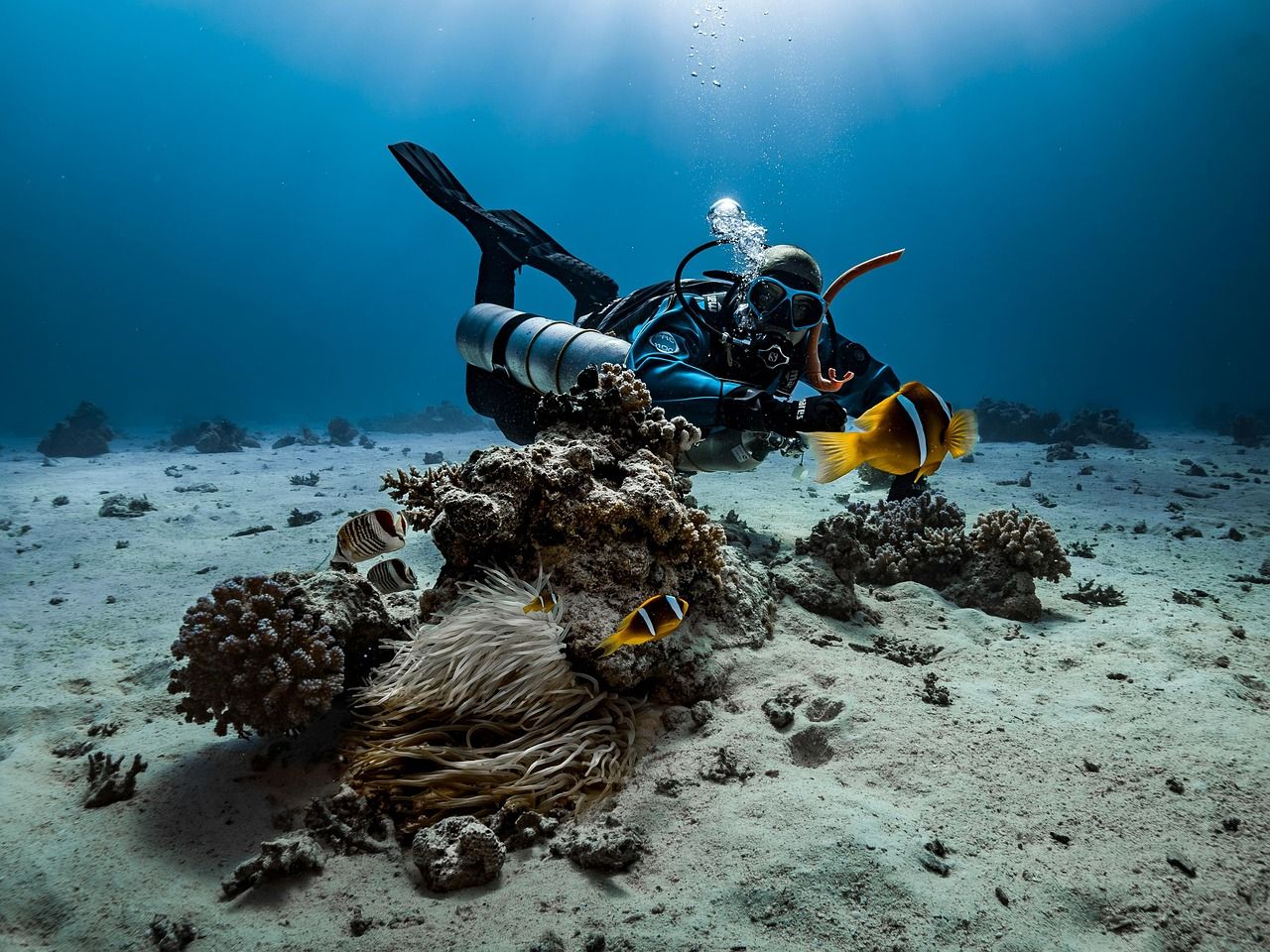
Representative image: Franziska_Stier / Pixabay
The third phase of underwater exploration off Poompuhar, which ended on 23 September 2026, recovered a West Asian torpedo jar fragment that adds physical evidence to literary accounts of the early Chola port's overseas trade.
Underwater: what happened
The Tamil Nadu State Department of Archaeology (TNSDA) and Indian Maritime University completed the third phase of underwater exploration off Poompuhar, also called Kaveripoompattinam, after 18 days at sea. An official announced the results in Chennai on 23 September 2026. The phase wrapped up on 22 September 2026. Among the finds is a fine-ceramic fragment of a West Asian torpedo jar, with an estimated total diameter of 30 to 35 cm. Poompuhar is a submerged early Chola port at the mouth of the Cauvery river, about 260 km from Chennai.
Underwater: key facts
- The team surveyed an underwater zone of about two square kilometres off Poompuhar, in Mayiladuthurai district, at the mouth of the Cauvery river and about 260 km from Chennai.
- The torpedo jar fragment is fine ceramic from West Asia, and the complete vessel is estimated to have measured 30 to 35 cm across. Such jars carried liquids such as wine and olive oil.
- Divers found four large terracotta ring wells, each 60 to 65 cm in diameter, and recovered more than 250 pottery pieces, including rare fragments of glazed ware.
- Sonar images also revealed structural features beyond the present shoreline, and researchers say the ring wells may mark a former land surface or palaeochannel, an ancient river course.
- A core aim of this phase was building full photographic and video records of the submerged antiquities in place, because poor underwater visibility has long limited earlier work.
- Officials say the exploration so far covers roughly 10 percent of the overall planned zone. The TNSDA is consolidating its data and will submit a detailed report to the Tamil Nadu government by February 2027.
- The third phase was launched in September 2026 by the minister holding the Archaeology portfolio, Rajmohan, with Director V.P. Jayaseelan. Divers worked to a depth of about 10 metres, nearly 2 km offshore.
Underwater: why it matters
Poompuhar holds a central place in the cultural memory of Tamil Nadu. Classical Tamil literature, including the epic Silappatikaram, describes Puhar as a prosperous port of the early Cholas. Underwater archaeology tests that literary picture against evidence from the sea bed, which is why each find is closely watched.
Poompuhar grew during the reign of the Chola king Karikal Cholan, who is credited with establishing trade ties with China, Arabia and the Roman Empire. Earlier undersea work found brick buildings, water reservoirs, a boat jetty and Roman coins. S. Jayadevan, a professor of Tamil Studies at Madras University, has said that ancient literature describes a bustling port town.
The torpedo jar adds a new kind of evidence: a container from West Asia. Torpedo jars were narrow vessels used aboard ships to carry liquids. The fragment was provisionally identified as West Asian, so its exact origin and date await the final report. Catastrophic floods struck the coast and swallowed major parts of the city around the 4th to 5th century CE, although estimates of when the town went under vary.
The ring wells are significant for a second reason. Such wells were generally built to reach fresh water on land. Their presence under the sea suggests that areas now submerged were once part of an inhabited landscape, possibly beside a former river channel later lost to erosion and sea-level change.
This work has a clear timeline, shown below.
| Date | Development |
|---|---|
| 1981 | Archaeological Survey of India conducts preliminary underwater explorations at Poompuhar |
| 1997 | Underwater Archaeological Site Museum opens at Poompuhar |
| 14 March 2025 | Tamil Nadu Budget 2025-26 announces deep-sea excavations between Poompuhar and Nagapattinam |
| September 2025 | ASI grants permission for underwater surveys; earlier exploration done with Indian Maritime University |
| September 2026 | Third phase held; concluded 22 September |
The effort sits within a wider push. The 2025-26 Budget, presented by Finance Minister Thangam Thennarasu, set aside a record Rs 7 crore for excavations and scientific research, including dating of artefacts. A recent commentary also noted that the Archaeological Survey of India has an expanded underwater mandate through 2030, according to disclosures in the Rajya Sabha.
Underwater: impact
Short-term: The fragment, four ring wells and more than 250 pottery pieces now join the physical record from Poompuhar's waters. The TNSDA is consolidating its data and artefact findings. The photographic and video documentation of antiquities in place gives researchers a baseline for later study. Because the torpedo jar is only provisionally identified as West Asian, specialists will first need to examine it closely before firm claims on origin and date are made.
Long-term: With only about 10 percent of the planned zone explored, further phases may add to the evidence. The detailed report due to the Tamil Nadu government by February 2027 should set out dating and interpretation. The work also feeds a wider national effort, including the Archaeological Survey of India's expanded underwater mandate through 2030, to document submerged landscapes from Poompuhar to Dwarka and understand the Indian Ocean trade in which the Tamil coast took part.
Who is affected: Historians of ancient trade and archaeologists studying the Indian Ocean are the most directly affected. The TNSDA and Indian Maritime University gain data for further phases. Residents of Mayiladuthurai district and readers of Tamil heritage, including the Silappatikaram tradition, get new material evidence of Kaveripoompattinam. Students and researchers in archaeology and marine science may also benefit from fieldwork and later publications on the site.
Underwater: key takeaway
A single West Asian torpedo jar fragment, found with four ring wells and more than 250 pottery pieces off Poompuhar, is the newest physical evidence of the port's trade links, pending a report due by February 2027.
Underwater: questions and answers
What was found in the Poompuhar underwater exploration?
The third phase off Poompuhar recovered a fragment of a West Asian torpedo jar, four terracotta ring wells of 60 to 65 cm diameter, and more than 250 pottery pieces, including rare glazed ware fragments.
When did the third phase of the Poompuhar exploration end?
The 18-day third phase wrapped up on 22 September 2026, and an official announced the results on 23 September 2026. The Tamil Nadu State Department of Archaeology worked with Indian Maritime University.
What is a torpedo jar?
A torpedo jar is a narrow ceramic vessel used aboard ships to carry liquids such as wine and olive oil. The Poompuhar fragment is West Asian, with an estimated diameter of 30 to 35 cm.
When will the detailed Poompuhar report be submitted?
The Tamil Nadu State Department of Archaeology is due to submit a detailed underwater exploration report to the Tamil Nadu government by February 2027. The exploration so far covers roughly 10 percent of the planned zone.
Disclaimer: Prepared by the Peepals newsroom from publicly available sources with AI assistance. Information is accurate to the best of our knowledge at the time of publication and may change. Images may be representative. Not professional advice. Report an error via our contact page.
By Devansh Tiwari, Knowledge Systems WriterCovers Knowledge Systems and more for Peepals Sanskriti. All stories by Devansh Tiwari
Your week ahead, every Sunday. Free.
Exam and result dates, IPOs opening, scheme deadlines, government holidays and the RBI decision for the next 7 days, plus the week's top stories. One email a week, unsubscribe in one click.
Devansh Tiwari is a pen name of the Peepals Global Editorial Team, which researches, fact-checks and publishes every story. The portrait is an illustration.
Responsible for this story: the Peepals Global Editorial Team. How we report