
Danielle Calazans named Banestes' first woman chief in its 89 years
 By Priya NairLeadership & Growth Editor, Peepals Shakti

Representative image: joelfotos / Pixabay
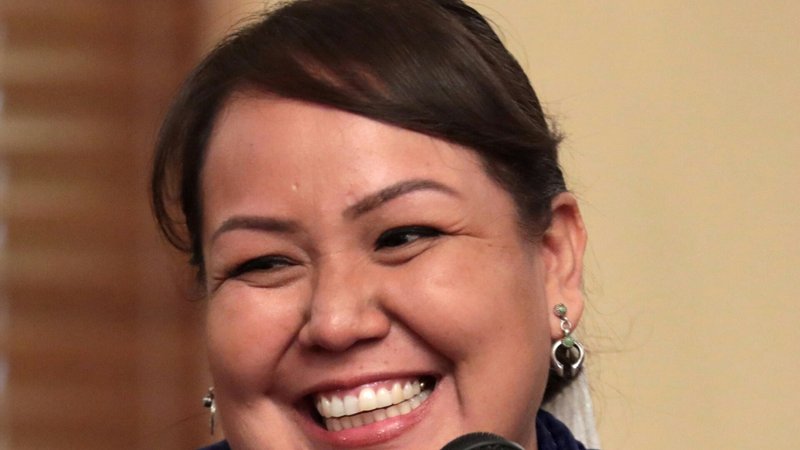
Espírito Santo's governor-elect on 25 November 2026 picked Danielle Calazans to lead state bank Banestes from 2027; she would be its first woman head.
Danielle Calazans: what happened
Banestes, the state-owned bank of the Brazilian state of Espírito Santo, is set to get its first woman chief executive in 89 years. On Wednesday, 25 November 2026, the state's governor-elect, Lorenzo Pazolini, announced that he had chosen Danielle Santos de Souza Calazans, a career employee of the federal bank Caixa Econômica Federal, to lead Banestes from 2027. The choice is a nomination, not yet an appointment: it still has to pass the bank's own governance checks and be approved by the Central Bank of Brazil.
Danielle Calazans: key facts
- Who: Danielle Calazans, a lawyer and career employee of Caixa Econômica Federal, where she has served as acting president and as vice-president of corporate management.
- Current post: secretary of planning, governance and management in the government of Rio Grande do Sul, a role she has held since January 2023.
- Nominated by: Lorenzo Pazolini, governor-elect of Espírito Santo, in an announcement on Wednesday, 25 November 2026.
- The bank: Banestes, Espírito Santo's state bank, founded in 1937. No woman has led it before.
- Steps still needed: an assessment by the bank's eligibility committee, election by its board of directors, and approval by the Central Bank of Brazil.
- Her stated aims: a wider loan book that relies less on payroll-deduction loans, more credit for businesses and agribusiness, digital transformation and a microcredit programme for women.
Danielle Calazans: why it matters
State banks matter in Brazil in a way that is easy to miss from outside. Banestes is owned by the Espírito Santo state government, and its loan book has leaned on payroll-deduction lending, which is why its next chief's plans for businesses and farmers matter. Who runs it is a political choice made by each new governor, and Pazolini's pick is the first time in the bank's history that the choice has fallen on a woman.
Calazans comes to the job with a public-sector banking and administration record rather than a political one. At Caixa, a federal state-owned bank, she rose to vice-president of corporate management and served for a time as its acting president. She has also worked in Brazil's federal government, as secretary of management at the Ministry of Economy and earlier as a director at the Finance Ministry. Since January 2023 she has run planning, governance and management for the Rio Grande do Sul state government under Governor Eduardo Leite. Her studies follow the same line: a master's degree in public administration and government management from the IDP institute, doctoral studies in public administration, a specialisation in leadership and people management from the Getulio Vargas Foundation, and training in corporate governance and the management of state-owned companies.
Her plans, as set out in the announcement coverage in Espírito Santo, point to a change of direction. Payroll-deduction loans, in which repayments come straight out of a borrower's salary or pension, are low-risk for a bank but leave it dependent on one kind of customer. Calazans wants Banestes to lend more to businesses and to agribusiness, to invest in digital services and technology, to study whether the bank should expand, and to start a microcredit programme aimed at women. That last point gives her appointment a direct meaning for women in the state, beyond the symbolism of the title.
For Indian readers, the story will look familiar. India's public sector banks are also owned by government, also face pressure to widen lending to small business and agriculture, and have also had few women at the very top. How a first woman leader of a state-owned bank sets her priorities, and whether women borrowers gain from them, is a question that travels well.
Peepals timeline: Banestes was founded in 1937, so the bank is in its 89th year (2026 minus 1937 is 89) with no woman at its head. Calazans has been Rio Grande do Sul's secretary of planning, governance and management since January 2023, close to four years. Pazolini named her on 25 November 2026, and she is due to take over in 2027 once the bank's committee, its board and the Central Bank of Brazil have cleared her. Our calculation from the reported figures.
| Step | Who decides | Status |
|---|---|---|
| Nomination | Governor-elect Lorenzo Pazolini | Announced 25 November 2026 |
| Eligibility check | Banestes eligibility committee | Pending |
| Election | Banestes board of directors | Pending |
| Approval | Central Bank of Brazil | Pending |
Danielle Calazans: impact
Short-term: Nothing changes at Banestes yet. The current leadership stays in place until the governance steps and the central bank's approval are complete, and the new state government takes office.
Long-term: If she is confirmed, a shift away from payroll loans towards business, farm and women's microcredit would change who the bank lends to in Espírito Santo, and would be the first test of her record as its chief.
Who is affected: Banestes staff and customers; small businesses, farmers and women borrowers in Espírito Santo; the state government that owns the bank; and women in banking, for whom a first at the top of a state bank is a visible marker.
Danielle Calazans: key takeaway
Watch the Central Bank of Brazil's approval and, after it, whether Banestes actually launches the promised microcredit programme for women.
Danielle Calazans: questions and answers
Is Danielle Calazans already the head of Banestes?
No. She has been nominated by Espírito Santo's governor-elect, Lorenzo Pazolini. She still needs clearance from the bank's eligibility committee, election by its board and approval from the Central Bank of Brazil before she can take office in 2027.
What is Banestes?
It is the state bank of Espírito Santo, a state in south-eastern Brazil. It was founded in 1937 and is owned by the state government.
What has Calazans done before?
She is a career employee of Caixa Econômica Federal, where she was vice-president of corporate management and acting president. She has also worked in Brazil's Ministry of Economy and Finance Ministry, and since January 2023 has been a state secretary in Rio Grande do Sul.
What does she want to change at the bank?
She wants Banestes to depend less on payroll-deduction loans, lend more to businesses and agribusiness, invest in digital services, consider expanding, and start a microcredit programme for women.
Disclaimer: Prepared by the Peepals newsroom from publicly available sources with AI assistance. Information is accurate to the best of our knowledge at the time of publication and may change. Images may be representative. Not professional advice. Report an error via our contact page.
By Priya Nair, Leadership & Growth EditorCovers Leadership & Growth and more for Peepals Shakti. All stories by Priya Nair
Julianne Hough defends her DWTS looks: 'my leading lady era'
Fashion Awards 2026: Sarah Burton, Olsen sisters lead women in contention
Your week ahead, every Sunday. Free.
Exam and result dates, IPOs opening, scheme deadlines, government holidays and the RBI decision for the next 7 days, plus the week's top stories. One email a week, unsubscribe in one click.
Priya Nair is a pen name of the Peepals Global Editorial Team, which researches, fact-checks and publishes every story. The portrait is an illustration.
Responsible for this story: the Peepals Global Editorial Team. How we report