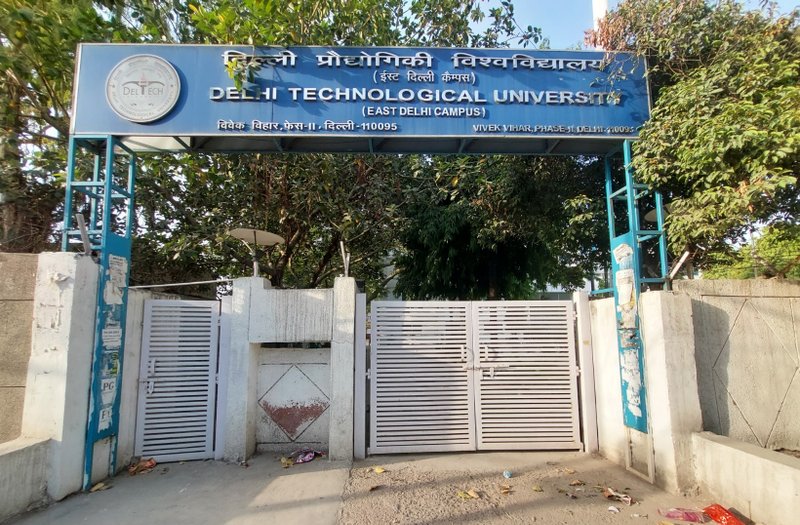

22% of Indian college students have started a business: IIT Mandi survey
Representative image: tortugamediaservices / Pixabay
The GUESSS India survey led by IIT Mandi, released on 22 October 2026, found 22% of 25,783 college students have started a business and 43% want to.
What Happened
More than one in five Indian college students has already started a business, according to the GUESSS India 2025 National Survey led by the Indian Institute of Technology (IIT) Mandi and released on 22 October 2026. The survey of 25,783 students from more than 1,200 higher education institutions found that 22% have launched a business, close to the global average of 23%, and that 43% want to become entrepreneurs. It also found that fewer students now aim for jobs in large companies.
Key Facts
- Survey: GUESSS India 2025 National Survey, part of the Global University Entrepreneurial Spirit Students' Survey, an international study of student entrepreneurship. The India report was released on 22 October 2026.
- Authors: Puran Singh, associate professor at IIT Mandi's School of Management and GUESSS national representative for India, and Prerak Sharma of IIT Mandi. REVA University was the national partner.
- Sample: 25,783 students from more than 1,200 institutions across 34 states and Union Territories, surveyed between September and December 2025.
- Founders: 22% of Indian students have already started a business, against a global average of 23%.
- Aspiration: 43% of Indian students want to start a business, against a global figure of 23%, according to the report.
- Career plans: students who want to run their own business straight after studying rose from 14% in 2023 to 16.2% in 2025, while those aiming for large companies fell from 31.3% to 27.4%.
- Founder patterns: 41% of student founders had closed an earlier business before starting the current one, and 42% run two or more businesses.
- Gender gap: 45% of aspiring women entrepreneurs have started a business, compared with 53% of aspiring men.
Why It Matters
For years, the default plan for many Indian graduates has been a government job or a place at a large company. This survey suggests that plan is slowly changing. The share of students who want to start their own business right after studies has risen, and the share aiming for big firms has fallen, while coverage of the report notes that interest in government jobs is also declining. Student entrepreneurship in India is now about as common as the global average, and the wish to start a business is well above it.
The report also shows how student founders work in practice. Many do not stop after one failure: 41% had already shut a business before starting again. Many run more than one venture at a time, which often means small side businesses, freelance services or online selling alongside their studies rather than funded start-ups. According to the report, 31% of student businesses with regular sales were launched in 2025 alone, which shows how new most of these ventures are.
The survey also points to gaps. About half of Indian students said they know no entrepreneur other than their parents, compared with about a third of students worldwide. Without people to learn from, it is harder to find mentors, customers and partners. The report's authors also highlight that finding the first paying customer is harder than coming up with the first idea. And women who want to start a business are less likely than men to have actually done so.
What should a student do next? If you are thinking of starting something, check whether your college has an incubation centre or an entrepreneurship cell, since these often offer mentoring, workspace and small grants. Start-up India and state start-up missions run programmes and challenges for students. Before spending money, test whether someone will actually pay for what you plan to sell.
| Measure | India | Global |
|---|---|---|
| Students who have started a business | 22% | 23% |
| Students who want to start a business | 43% | 23% |
| Students who know no entrepreneur apart from parents | About half | About a third |
Impact
Short-term: Colleges, incubators and state start-up programmes have fresh data to plan mentoring and support for student founders, especially for helping them reach first customers.
Long-term: If more students build businesses while studying, the pool of experienced young founders will grow. The gender and networking gaps the survey found will need attention if that growth is to include women and students outside well-connected campuses.
Who is affected: College students and recent graduates, especially those weighing a business against a job, women students who want to start ventures, college incubation centres, and government start-up schemes.
Key Takeaway
The GUESSS India survey, released by IIT Mandi on 22 October 2026, finds that 22% of Indian college students have already started a business and 43% want to, but many lack mentors and early customers.
Questions and Answers
What is the GUESSS India survey?
It is the Indian part of the Global University Entrepreneurial Spirit Students' Survey, which studies student entrepreneurship worldwide. The 2025 India edition, led by IIT Mandi with REVA University as national partner, was released on 22 October 2026.
How many Indian college students have started a business, according to the IIT Mandi survey?
22% of the 25,783 students surveyed said they had already launched a business, close to the global average of 23%.
Are fewer Indian students aiming for big company jobs?
Yes. The share aiming for large companies fell from 31.3% in 2023 to 27.4% in 2025, while those planning to run their own business straight after studies rose from 14% to 16.2%.
What problems do student founders in India face?
About half of the students know no entrepreneur apart from their parents, finding the first paying customer is a major hurdle, and aspiring women are less likely than men to have started a business (45% against 53%).
Disclaimer: Prepared by the Peepals newsroom from publicly available sources with AI assistance. Information is accurate to the best of our knowledge at the time of publication and may change. Images may be representative. Not professional advice. Report an error via our contact page.
Sourced and fact-checked by the Peepals Global Editorial Team
AYUSH NEET Round 3 seat allotment out: report to colleges by October 29
BHEL to hire 660 ITI-trained artisans for its factories; CBT in December
Reported, fact-checked and published by the Peepals Global Editorial Team.