

GST Council backs ending arrest powers, raises prosecution threshold to Rs 5 crore
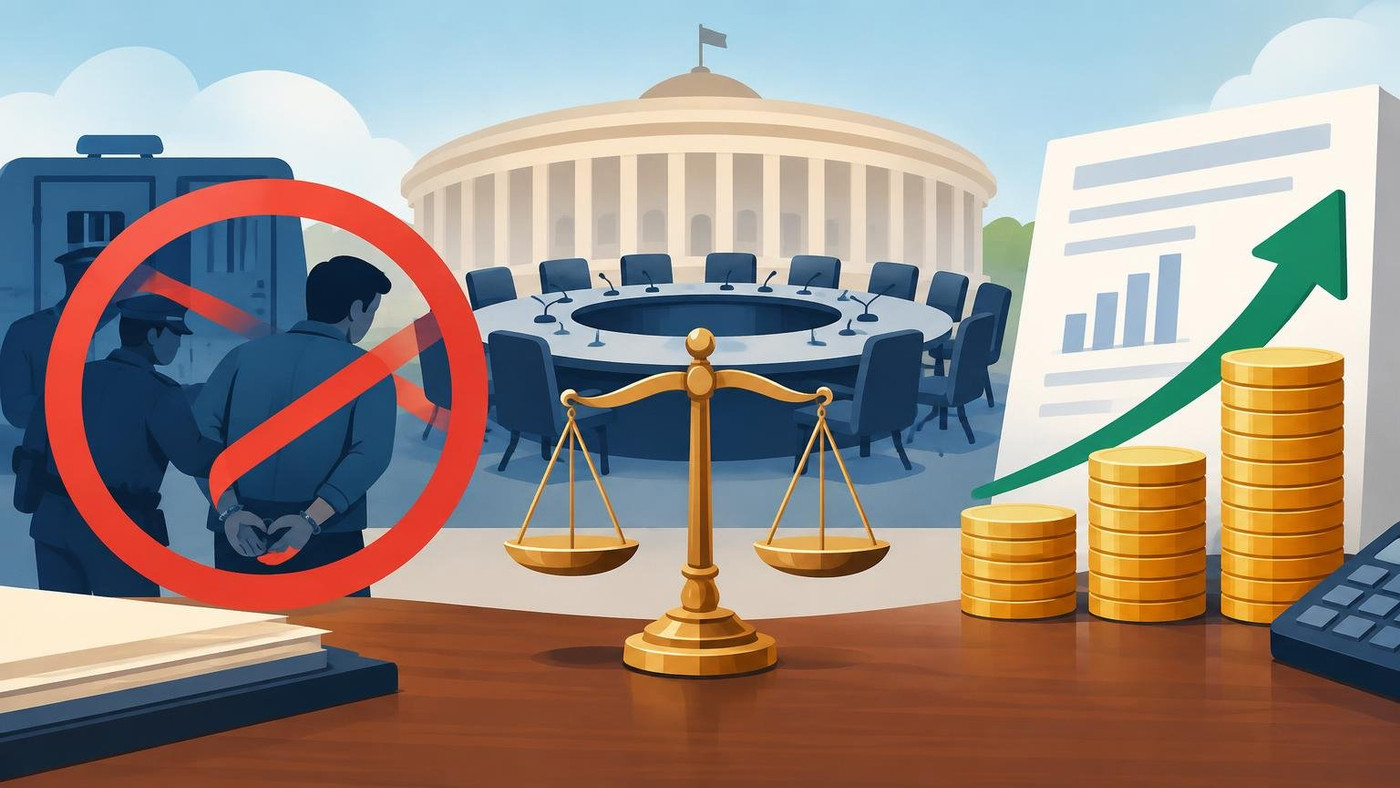
AI-generated illustration
Advertisement
The 57th GST Council on 8 October 2026 recommended removing GST arrest powers and a Rs 5 crore prosecution threshold, with no change in tax rates.
What Happened
The GST Council, chaired by Union Finance Minister Nirmala Sitharaman, recommended on Thursday, 8 October 2026, that GST officers lose their power to arrest taxpayers and that the money threshold for prosecuting GST offences be raised to Rs 5 crore. The Council, which includes finance ministers of the states and Union Territories, met in New Delhi for its 57th meeting and left all GST rates unchanged. It focused instead on easing compliance, cutting litigation and speeding up refunds. Sitharaman said the process reforms, including those that need further examination, are intended to take effect from 1 April 2027.
Key Facts
- The Council recommended omitting Section 69 of the CGST Act, 2017, which would remove the power of GST officers to arrest people.
- Offences involving tax below Rs 5 crore would no longer lead to prosecution under the revised threshold.
- The minimum punishment for GST offences would be dropped, leaving courts to decide on a fine, jail or both.
- The general penalty cap under Section 125 of the CGST Act would fall from Rs 25,000 to Rs 10,000.
- No GST rates were changed; Sitharaman said rate matters will now be taken up once a year at a dedicated meeting.
- Refunds of accumulated input tax credit are to be widened for capital goods and input services in inverted duty and export cases.
- An optional scheme for small businesses with turnover up to Rs 5 crore that sell only to consumers was approved as a concept, with details due at the next meeting.
Why It Matters
Since GST began in 2017, the power to arrest has been one of the most criticised parts of the law. Businesses and tax experts have argued that the threat of arrest during an investigation, often before any final finding, put heavy pressure on taxpayers and pushed disputes into courts. Removing Section 69 would mean officers can still assess tax, charge interest and impose penalties, but people would not be arrested in ordinary tax disputes at the investigation stage.
Raising the prosecution threshold and dropping minimum punishments moves GST further toward treating most disputes as civil matters to be settled with money, not criminal cases. This matches the government's wider effort to remove criminal penalties for minor business offences. It does not mean tax fraud goes unpunished: large frauds above the threshold can still be prosecuted, and recovery of tax, interest and penalty continues.
For small traders, the lower penalty cap and the proposed optional scheme for consumer-facing businesses could reduce paperwork and the cost of mistakes. For exporters and manufacturers that pay more GST on inputs than they collect on sales, wider and faster refunds would free up working capital. Most of these changes are recommendations that need amendments to the GST laws, notifications and circulars before they apply.
| Measure | Before | Recommended |
|---|---|---|
| Arrest power (Section 69) | In the law | To be removed |
| Prosecution threshold | Lower threshold | Rs 5 crore |
| General penalty cap (Section 125) | Rs 25,000 | Rs 10,000 |
| GST rates | Unchanged | Reviewed once a year |
Impact
Short-term: Nothing changes immediately. The Centre and states must amend the CGST and state GST laws and issue notifications, which is expected to take months.
Long-term: If enacted from April 2027 as planned, the changes should reduce litigation, lower the fear of arrest among businesses and make GST compliance cheaper, particularly for small firms and exporters.
Who is affected: GST-registered businesses, especially MSMEs and exporters, tax professionals, GST officers and state governments.
Key Takeaway
The 57th GST Council on 8 October 2026 recommended ending arrest powers and raising the prosecution threshold to Rs 5 crore, keeping rates unchanged and aiming to bring the reforms into force from 1 April 2027.
Questions and Answers
Can GST officers still arrest taxpayers today?
Yes, for now. The Council has only recommended removing Section 69 of the CGST Act. The arrest power stays until Parliament and the states amend the law.
Did GST rates change at the 57th meeting?
No. Finance Minister Nirmala Sitharaman said no rates were changed and that rate-related matters will be taken up once a year at a dedicated Council meeting.
What does the Rs 5 crore prosecution threshold mean?
Offences involving tax below Rs 5 crore would not attract criminal prosecution under the revised rule. Officers could still recover the tax along with interest and penalties.
When will these reforms take effect?
Sitharaman said the process reforms are intended to be implemented from 1 April 2027, after the required legal amendments and notifications.
Sourced and fact-checked by the Peepals Global Editorial Team
WorldSkills Shanghai 2026: PM Modi Meets Team India After 10th-Place Finish
Coal stock drawdown at power plants more than halves in October, says ministry
Reported, fact-checked and published by the Peepals Global Editorial Team.
Advertisement