
PM dedicates IIT Madras brain centre, launches mission to map 100 human brains
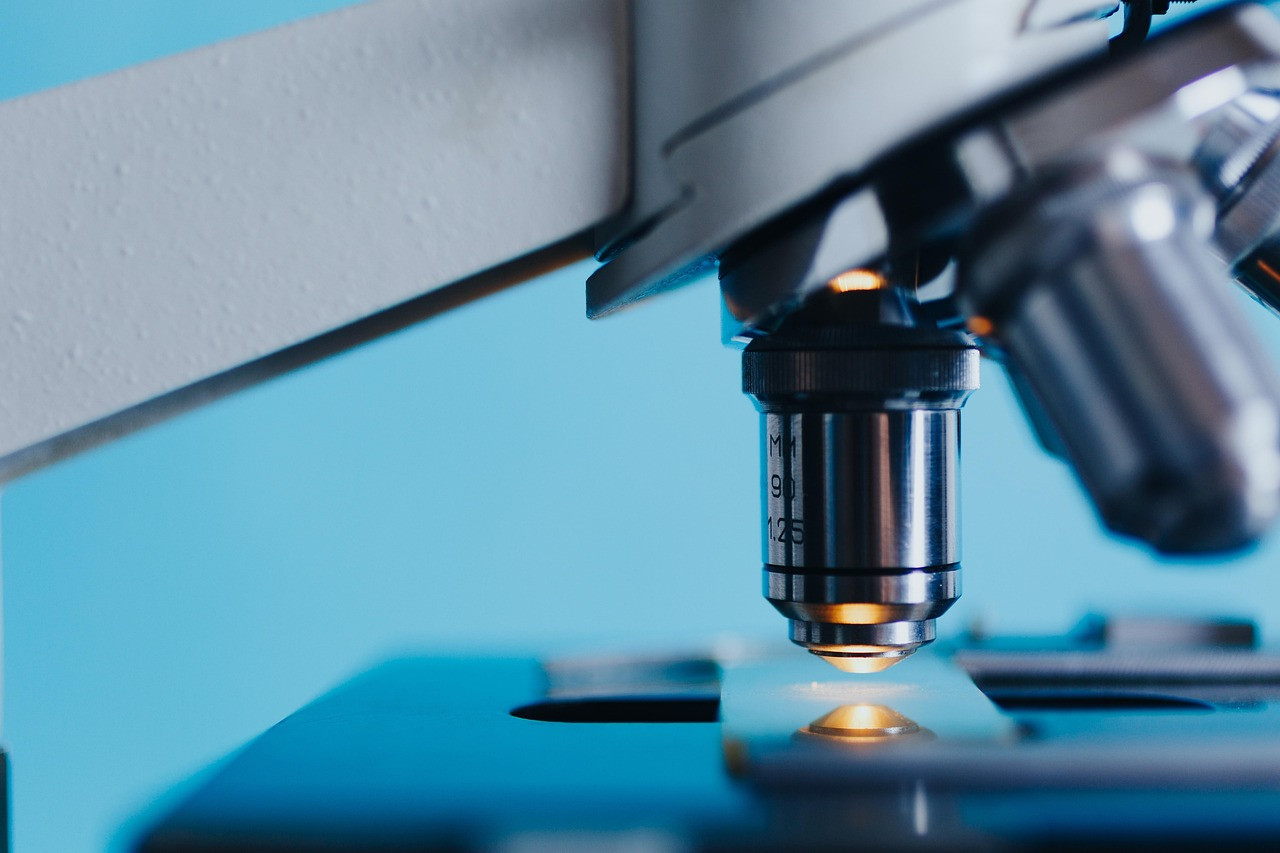
Representative image: Kost9n4 / Pixabay
PM Modi dedicated IIT Madras's Sudha Gopalakrishnan Brain Centre on 11 October 2026 and launched a mission to map 100-plus human brains at cellular resolution.
What Happened
Prime Minister Narendra Modi dedicated the Sudha Gopalakrishnan Brain Centre at the Indian Institute of Technology Madras to the nation on Sunday, 11 October 2026, and launched a scientific mission to map more than 100 human brains into three-dimensional atlases at cellular resolution. The mission aims to cover the human lifespan, from the foetal stage to old age. During the visit to the IIT Madras campus in Chennai, the Prime Minister also released C-STROKE, an atlas built from more than 1,000 annotated microscopic sections of a stroke-affected brain. The centre was set up at IIT Madras in March 2022 with support from Sudha and Kris Gopalakrishnan.
Key Facts
- Event: dedication of the Sudha Gopalakrishnan Brain Centre and launch of a brain-mapping mission, on 11 October 2026, at IIT Madras, Chennai.
- Mission goal: map more than 100 human brains into 3D atlases at cellular resolution, across ages from foetal to old age.
- New resource released: C-STROKE, with more than 1,000 annotated microscopic sections from a stroke-affected brain.
- The centre was established in March 2022, supported by Sudha and Kris Gopalakrishnan, with a focus on high-resolution brain imaging.
- Earlier work by the centre includes DHARANI, a digital human brain atlas released in 2025, and ANCHOR, a 3D atlas of the human brainstem that maps more than 200 brainstem nuclei and fibre tracts.
- The centre is also studying brains affected by conditions such as dementia, Alzheimer's disease and rabies, according to reports.
- The visit was part of a Chennai trip in which the Prime Minister also inaugurated a section of Chennai Metro's second phase.
Why It Matters
Understanding how the brain's cells are arranged is central to neuroscience. Most brain scans used in hospitals show the brain at a scale far too coarse to see individual cells. A cellular-resolution atlas is built by slicing a preserved brain into thousands of very thin sections, imaging each one under a microscope, and stitching the images together in three dimensions. The result lets researchers trace structures and cell types in detail that scans cannot provide.
Mapping more than 100 brains across the full lifespan would give scientists a reference for how the brain develops and ages, and how diseases change it. The stroke atlas released on Sunday is an example of how such maps can be used to study damage from a specific condition. Over time, detailed maps of this kind can help researchers understand disorders such as dementia and stroke, and may guide new approaches to diagnosis and treatment.
For students and researchers, the centre's work is a sign that India is building capacity in a field that combines neuroscience, microscopy, computing and artificial intelligence. Projects that produce huge volumes of image data need people trained to handle, analyse and interpret it. A national-level mission based at an Indian institute creates opportunities for doctoral students, engineers and medical researchers to work on frontier science at home rather than abroad.
| Item | Detail |
|---|---|
| Centre | Sudha Gopalakrishnan Brain Centre, IIT Madras |
| Set up | March 2022 |
| Mission | Map 100+ human brains in 3D at cellular resolution |
| Released on 11 October 2026 | C-STROKE atlas, 1,000+ sections |
Impact
Short-term: The dedication and mission launch raise the profile of IIT Madras's brain research and are likely to draw collaboration requests from hospitals and research groups.
Long-term: A library of cellular-resolution brain atlases across the lifespan could become an important resource for neuroscience research worldwide and train a generation of Indian researchers in brain data science.
Who is affected: Neuroscientists and medical researchers, students in biology, engineering and data science, hospitals studying stroke and dementia, and patients who may benefit from future research.
Key Takeaway
PM Modi dedicated IIT Madras's brain centre on 11 October 2026 and launched a mission to map more than 100 human brains at cellular resolution across the lifespan.
Questions and Answers
What did the Prime Minister launch at IIT Madras?
On 11 October 2026 he dedicated the Sudha Gopalakrishnan Brain Centre to the nation and launched a mission to map more than 100 human brains into 3D atlases at cellular resolution.
What is C-STROKE?
It is an atlas released during the visit, built from more than 1,000 annotated microscopic sections of a brain affected by stroke.
Is the brain centre new?
No. It was set up at IIT Madras in March 2022 with support from Sudha and Kris Gopalakrishnan; the October event was its formal dedication and the launch of the new mission.
Why map brains at cellular resolution?
Such detailed maps show how brain cells and structures are arranged and how they change with age and disease, which ordinary medical scans cannot reveal.
Disclaimer: Prepared by the Peepals newsroom from publicly available sources with AI assistance. Information is accurate to the best of our knowledge at the time of publication and may change. Images may be representative. Not professional advice. Report an error via our contact page.
Sourced and fact-checked by the Peepals Global Editorial Team
Reported, fact-checked and published by the Peepals Global Editorial Team.