
Sitharaman's Singapore Visit: Finance Minister Meets Leaders, Courts Investors
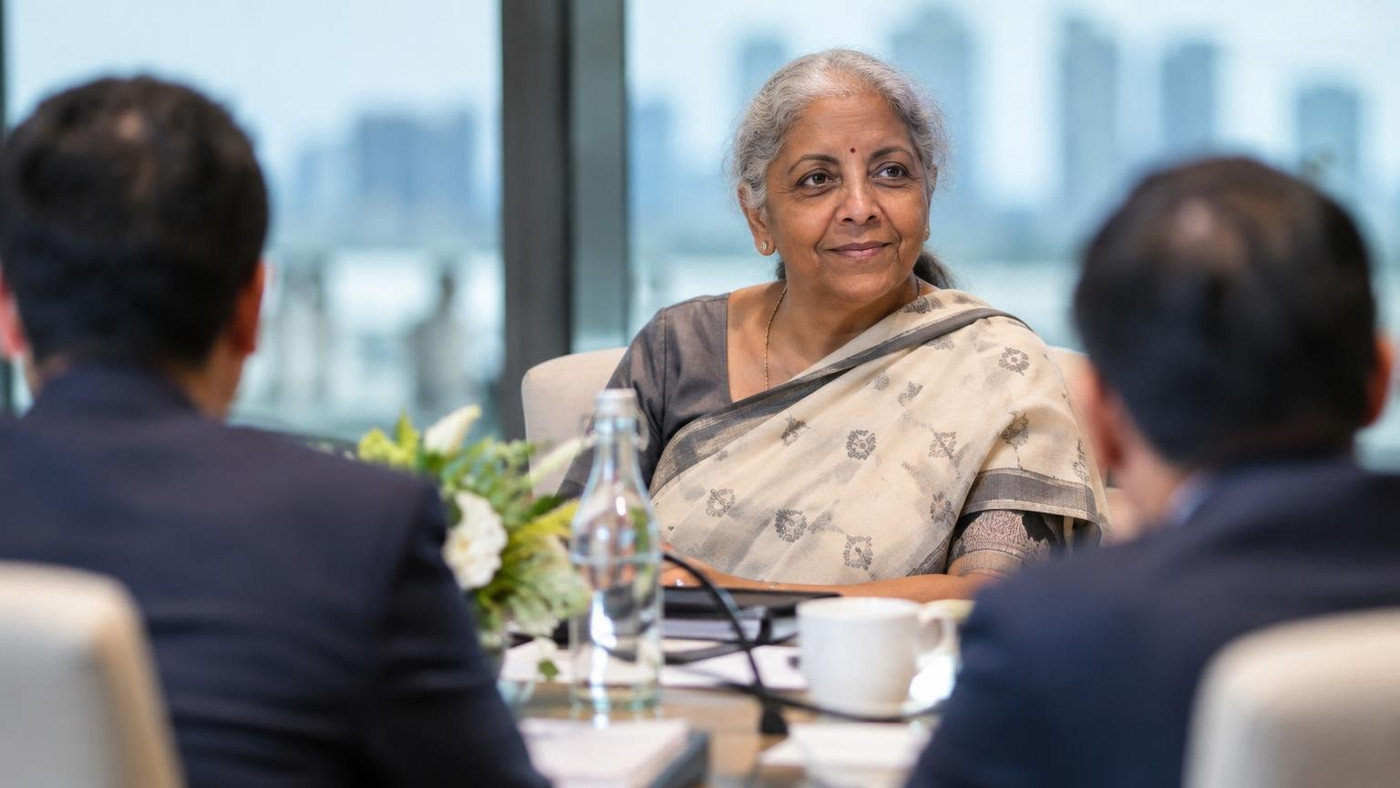
AI-generated representative image
Finance Minister Nirmala Sitharaman's Singapore visit from 9 to 11 October 2026 aims to deepen investment ties with India's largest source of foreign direct investment.
What Happened
Union Finance Minister Nirmala Sitharaman began a three-day visit to Singapore on 9 October 2026. It runs until 11 October. The Ministry of Finance said the trip aims to strengthen economic ties. It also aims to attract fresh investment into India. On 9 October she met Singapore's President Tharman Shanmugaratnam at the Istana. She also met Prime Minister Lawrence Wong. Her schedule also includes a meeting with Deputy Prime Minister Gan Kim Yong.
Key Facts
- Sitharaman called on President Tharman Shanmugaratnam at the Istana on 9 October 2026. The Ministry of Finance said the meeting was a chance to exchange views on taking forward the Comprehensive Strategic Partnership.
- Prime Minister Lawrence Wong said on social media that he discussed global economic developments with Sitharaman. They also discussed the ongoing energy crisis. He also expressed optimism about India's growth prospects.
- Sitharaman shared select projects from the official pipeline of the National Investment and Infrastructure Fund (NIIF) with the Singapore side. She also highlighted India's economic fundamentals. This was to encourage more investment from Singapore-based investors.
- Singapore is India's largest source of foreign direct investment (FDI). Cumulative inflows were about USD 194.68 billion between April 2000 and March 2026. This is according to figures cited in the finance ministry's updates.
- Sitharaman and Wong exchanged views on strengthening India-ASEAN cooperation. This included the run-up to Singapore's chairmanship of the Association of Southeast Asian Nations (ASEAN) in 2027.
- Sitharaman met Foreign Minister Vivian Balakrishnan. They discussed the geopolitical situation, market headwinds, GDP growth, FDI trends, foreign exchange reserves and policy reforms, the official statement said.
- Singapore expressed keenness to share its experience in asset tokenisation. The talks also covered central bank digital currencies (CBDCs). Sitharaman reaffirmed her government's commitment to sustaining reform momentum.
- Sitharaman will take part in a roundtable with hedge fund and portfolio fund managers. She will also attend government-to-business (G2B) meetings. She will hold one-to-one meetings with senior executives of investment firms, banks and healthcare companies.
Why It Matters
Singapore holds a special place in India's external finances. It is the largest source of FDI, with about USD 194.68 billion in cumulative inflows from April 2000 to March 2026. Singaporean institutional investors, including GIC and Temasek, have large investments across the Indian economy. This makes the city-state central to India's efforts to fund infrastructure and growth.
The Ministry of Finance said the visit will focus on advancing the Comprehensive Strategic Partnership. It will also focus on carrying out the outcomes of the India-Singapore Ministerial Roundtable (ISMR). Key areas are trade and investment, digital financial connectivity, capital markets, taxation, semiconductors, advanced manufacturing, skill development and aviation. The list shows the relationship now goes beyond capital flows. It also covers technology supply chains and worker training.
The visit builds on recent high-level contact. President Shanmugaratnam made a state visit to India in January 2025 and met Sitharaman in New Delhi. They discussed fintech, digital technologies, the semiconductor ecosystem and skill development. Wong made his first official visit to India as Prime Minister in September 2025. It coincided with the 60th anniversary of diplomatic relations.
Wong and Sitharaman met on 2 September 2025. They discussed the outcomes of the third ISMR round. The regional angle also matters for India. ASEAN is central to India's Act East policy and to its trade links with Southeast Asia. So a friendly chair in 2027 carries weight for New Delhi.
The timing reflects global economic pressures. Wong's reference to an energy crisis points to an uncertain outside climate. So does the talk of volatile equity, bond and currency markets. India imports most of its crude oil. It is exposed to energy price swings. Stable, long-term capital from Singapore can help cushion that exposure. The investor meetings let New Delhi present its macroeconomic position directly to global funds.
Impact
Short-term: The immediate focus is the remaining two days of the trip. Sitharaman's engagements on 10 and 11 October 2026 include the hedge fund roundtable, the G2B meetings and one-to-one sessions. These are with executives of global investment firms, banks and healthcare companies. They give India a direct channel to present its growth prospects and investment opportunities. No new investment commitments or agreements had been announced as of 9 October.
Long-term: The visit signals continued effort to turn the Comprehensive Strategic Partnership into concrete work. The areas include semiconductors, advanced manufacturing, capital markets and aviation. Any follow-up is likely to come through the ISMR process. It tracks progress on agreed areas of work between the two governments. Cooperation on asset tokenisation and CBDCs could support India's digital payment and financial infrastructure. Ties ahead of Singapore's 2027 ASEAN chairmanship may help India's Southeast Asia engagement.
Who is affected: Indian infrastructure projects, including those in the NIIF pipeline, stand to gain if Singapore-based investors commit capital. Singaporean sovereign and institutional investors are the direct audience for the pitch. So are hedge fund and portfolio managers, banks and healthcare companies. Sectors named for cooperation are also affected. These include semiconductors, aviation, taxation and skill development. More broadly, India's external finances rely on Singapore as the top FDI source. Its Act East policy is also linked to the outcome.
Key Takeaway
Singapore remains India's largest FDI source, with about USD 194.68 billion in cumulative inflows from April 2000 to March 2026. Sitharaman's visit runs until 11 October 2026.
Questions and Answers
When is Nirmala Sitharaman visiting Singapore?
Finance Minister Nirmala Sitharaman began a three-day visit to Singapore on 9 October 2026. The trip runs until 11 October. According to the Ministry of Finance, it aims to strengthen economic ties and attract fresh investment into India.
Who did Sitharaman meet in Singapore?
On 9 October 2026 Sitharaman met President Tharman Shanmugaratnam, Prime Minister Lawrence Wong and Foreign Minister Vivian Balakrishnan. Her schedule also includes a meeting with Deputy Prime Minister Gan Kim Yong.
How much FDI has Singapore invested in India?
Singapore is India's largest source of foreign direct investment. Cumulative inflows were about USD 194.68 billion between April 2000 and March 2026. This is according to figures cited in the finance ministry's updates.
What will Sitharaman do on 10 and 11 October?
Sitharaman will take part in a roundtable with hedge fund and portfolio fund managers. She will attend government-to-business meetings with investors and business leaders. She will also hold one-to-one meetings with senior executives of investment firms, banks and healthcare companies.
Disclaimer: Prepared by the Peepals newsroom from publicly available sources with AI assistance. Information is accurate to the best of our knowledge at the time of publication and may change. Images may be representative. Not professional advice. Report an error via our contact page.
Reviewed & Edited by Prashant Sonar
Vesta raises $30 million to put AI agents to work on mortgage lending
World Mental Health Day 2026
Reviewed & Edited by Prashant Sonar. Published by the Peepals Global Editorial Team.