
Nova Spectral AI raises Rs 21.15 crore for India-made infrared chips
 By Meera IyerGovernance & Policy Editor, Peepals Bharat
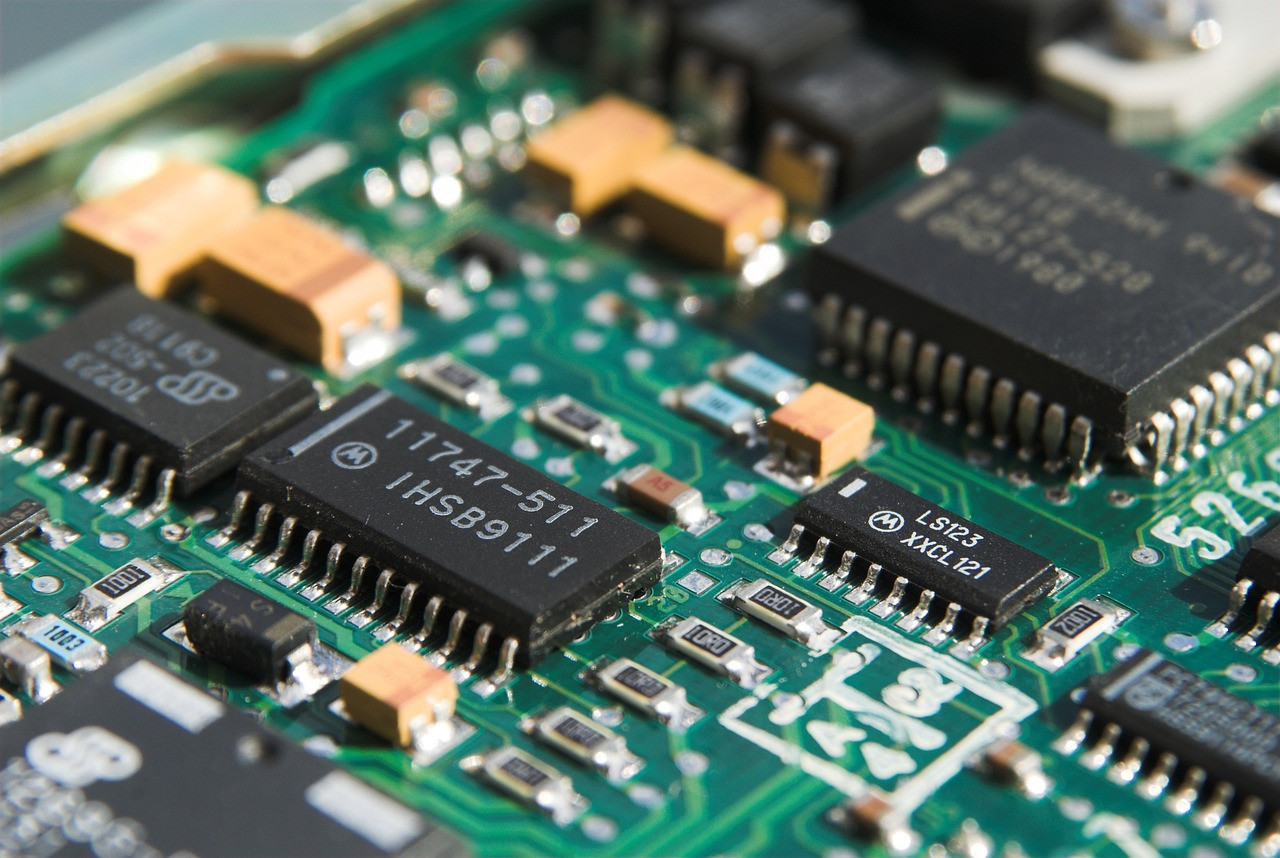
Representative image: axonite / Pixabay
Bengaluru deep-tech start-up Nova Spectral AI raised Rs 21.15 crore in a seed round led by Shastra VC, reported on October 27, 2026, to build low-cost infrared sensors.
What Happened
Nova Spectral AI, a Bengaluru-based deep-tech start-up, has raised Rs 21.15 crore (about $2.25 million) in a seed funding round led by Shastra VC, according to reports of the deal published on October 27, 2026. Equirus InnovateX Fund and a group of angel investors also took part. The company is developing short-wave infrared image sensor chips that it says can be made on ordinary silicon, and it plans to use the money to build its team and reach a field-ready prototype within 18 months.
Key Facts
- Amount: Rs 21.15 crore, roughly $2.25 million, in a seed round.
- Lead investor: Shastra VC, with Equirus InnovateX Fund and angel investors participating.
- Founders: Anish Priyadarshi and Sanjeev Kumar, both alumni of IIT Kanpur; Priyadarshi also holds a PhD from Nanyang Technological University, Singapore.
- Product: lead-free colloidal quantum dot short-wave infrared (SWIR) image sensors built on standard silicon CMOS chips.
- Plan: hire a team and build a field-ready prototype within 18 months; the company says it has an in-principle go-ahead to incubate at the Indian Institute of Science (IISc), Bengaluru.
- Company claim: its approach could cut the cost of such sensors by up to 100 times; this is a target, and no prototype data has been published yet.
Why It Matters
Most cameras, including the one in a phone, see visible light. Short-wave infrared, or SWIR, is light with a slightly longer wavelength that the human eye cannot see. Cameras that capture it can see through haze, smoke and fog, tell apart materials that look the same to the eye, and work in low light. That makes them useful in defence and surveillance, but also in factories that sort food or check product quality, in farming, and in medical imaging.
Today, SWIR sensors are expensive. They are usually made from special materials such as indium gallium arsenide, which have to be grown and joined to a separate reading chip in a slow, costly process. That keeps them out of most everyday products. Nova Spectral AI is trying a different route. It uses quantum dots, which are tiny crystals only a few billionths of a metre across, whose size can be tuned so that they absorb infrared light. These crystals can be coated directly on top of a standard silicon chip of the kind made in large volumes for ordinary cameras. CMOS, short for complementary metal-oxide semiconductor, is the common technology behind those chips.
Many quantum dot infrared sensors developed abroad use lead-based materials. The company says its dots are lead-free, which matters because rules on hazardous substances in electronics are tightening in many markets. Whether the design can match the performance of existing sensors at a much lower price is the central question, and the company has not yet shown results publicly. The 100-times cost figure is the company's own aim, not a measured outcome.
The deal also fits a wider push. India wants to design and make more of its own semiconductors and defence electronics instead of importing them. Infrared sensors for night vision and targeting are among the parts the armed forces buy from abroad. A start-up working on home-grown sensor chips, with an incubation link to IISc, is the kind of company that national programmes for chips and defence self-reliance are meant to encourage.
For investors, Shastra VC is a Bengaluru-based fund that backs companies built on their own intellectual property, such as patents and original hardware, rather than on apps or services. It has said it plans to write cheques of roughly $500,000 to $3 million per company from its latest fund.
| Stage | What it means for Nova Spectral AI |
|---|---|
| Seed round | Rs 21.15 crore raised, led by Shastra VC |
| Next 18 months | Build team, aim for a field-ready prototype |
| Not yet public | Prototype data, customers, valuation |
Impact
Short-term: The money pays for engineers and laboratory work. The company has not named any customers or disclosed its valuation, so the next milestone to watch is a working prototype and published test data.
Long-term: If low-cost SWIR sensors made on standard silicon prove workable, they could move infrared vision from specialist military kit into cars, drones, farm equipment, phones and factory lines, and give India a domestic supplier for a part it now imports.
Who is affected: Deep-tech founders and researchers in India, who gain another example of early funding for hardware; defence and industrial buyers of infrared cameras; and investors watching whether semiconductor start-ups can deliver on technical promises.
Key Takeaway
Nova Spectral AI has Rs 21.15 crore and 18 months to show that its lead-free quantum dot design can make infrared sensors on ordinary silicon chips far more cheaply than today's technology.
Questions and Answers
How much did Nova Spectral AI raise and who led the round?
The Bengaluru start-up raised Rs 21.15 crore, about $2.25 million, in a seed round led by Shastra VC, with Equirus InnovateX Fund and angel investors also investing.
What is a short-wave infrared sensor?
It is an image sensor that captures light just beyond what the human eye can see. Cameras using it can see through haze and smoke and tell materials apart, which is useful in defence, factories, farming and medicine.
Is the claim that sensors will be 100 times cheaper proven?
No. It is the company's own target. Nova Spectral AI has not yet published prototype data, named customers or disclosed its valuation.
What will the money be used for?
The company says it will build its team and develop a field-ready prototype within 18 months, working from an incubation arrangement at the Indian Institute of Science in Bengaluru.
Disclaimer: Prepared by the Peepals newsroom from publicly available sources with AI assistance. Information is accurate to the best of our knowledge at the time of publication and may change. Images may be representative. Not professional advice. Report an error via our contact page.
By Meera Iyer, Governance & Policy EditorCovers Governance & Policy and more for Peepals Bharat. All stories by Meera Iyer
Guwahati-Bangkok IndiGo flight: Assam gets non-stop Thailand link from October 31
Scene: Suriya's DSP Inbaraj glimpse out ahead of November 6 Diwali release
Get the day's stories in your inbox
Peepals Weekly: the week decoded, free. One email a week, unsubscribe in one click.
Meera Iyer is a pen name of the Peepals Global Editorial Team, which researches, fact-checks and publishes every story. The portrait is an illustration.