

Vaishno Devi gears up for Navratri rush with RFID checks and tighter security
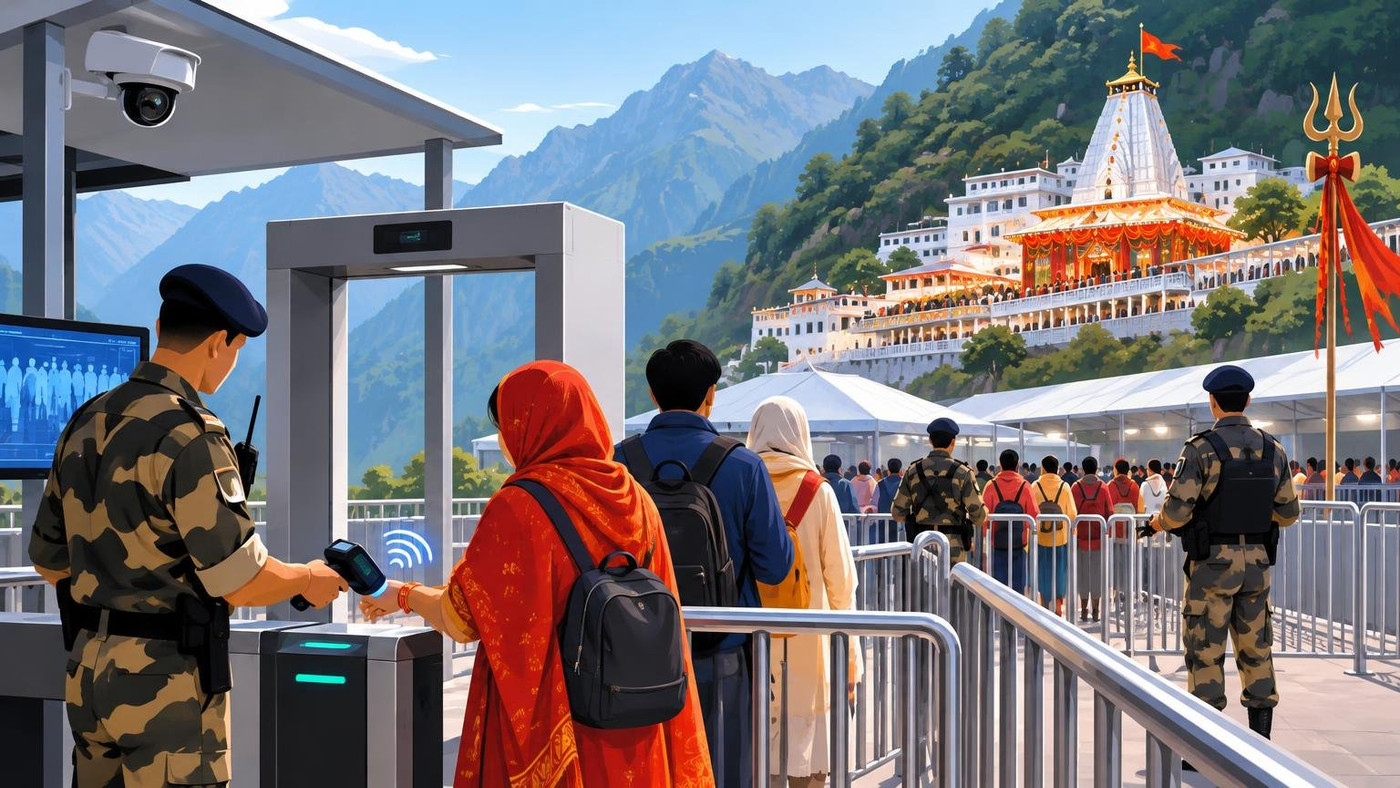
AI-generated illustration
Advertisement
Vaishno Devi Shrine Board has tightened RFID checks, security and crowd control for Shardiya Navratri, which begins on October 11, 2026.
What Happened
The Shri Mata Vaishno Devi Shrine Board has readied the cave shrine in the Trikuta hills and its base town of Katra in Jammu and Kashmir for a heavy rush of pilgrims during Shardiya Navratri, which begins on Sunday, October 11, 2026. The board's Chief Executive Officer, Sachin Kumar Vaishya, chaired a review meeting on Tuesday, October 6, with local officials and security agencies to check crowd control, emergency response, security and civic facilities along the yatra route. The board expects a large influx of devotees at both the shrine and the Katra base camp over the nine nights of the festival.
Key Facts
- Shardiya Navratri, the autumn festival of the Goddess, begins on Sunday, October 11, 2026.
- The preparedness review was chaired by Shrine Board CEO Sachin Kumar Vaishya on Tuesday, October 6.
- A valid RFID card remains mandatory for every pilgrim, and more handheld RFID scanners are being placed at key points, with staff to verify and monitor.
- Checks on pony and pithoo (porter) service providers were reviewed to stop impersonation.
- Firefighting arrangements, mock drills and rescue equipment in every sector were stressed, along with coordination with the State Disaster Response Force.
- Police described a multi-tier security grid with Quick Reaction Teams at strategic points; the Integrated Command and Control Centre will be used for real-time monitoring.
- Crowd steps include regular public announcements, joint beat monitoring and designated holding areas to ease congestion.
- Sanitation, drinking water and lighting of dark stretches in Katra were also reviewed.
Why It Matters
Navratri is one of the busiest seasons at Vaishno Devi, and the Shrine Board itself expects a heavy influx this year. For devotees, the nine nights are a time of fasting, prayer and pilgrimage to the Mother Goddess. The autumn festival, known as Shardiya Navratri, leads up to Vijayadashami, and many families plan the climb from Katra around these days.
That devotion brings a practical challenge. The route from Katra to the shrine is a mountain path, and large crowds on it need careful handling. The measures reviewed this week are aimed at the points where trouble usually begins: overcrowding at bottlenecks, fire risk, medical emergencies and people slipping through without registration. The emphasis on holding areas and frequent public announcements shows the board is planning to slow and spread out movement rather than simply add staff.
The RFID card is the backbone of this system. Each registered pilgrim carries a card that lets the board track how many people are on the route at any time, which helps it decide when to hold back or release groups. More handheld scanners mean more checkpoints where unregistered visitors can be caught. The checks on pony and pithoo operators address a long-standing complaint: people posing as registered service providers to overcharge or mislead pilgrims.
Security remains a central concern in Jammu and Kashmir, and the multi-tier grid with quick reaction teams reflects that. Real-time monitoring from the command and control centre allows officials to see crowd build-up on camera and respond before a situation becomes dangerous.
| Measure | Purpose |
|---|---|
| Mandatory RFID card | Count and track pilgrims on the route |
| Extra handheld RFID scanners | Catch unregistered visitors at more points |
| Holding areas and announcements | Spread out crowds at bottlenecks |
| Fire drills and rescue kit in all sectors | Faster emergency response |
| Checks on pony and pithoo providers | Prevent impersonation and overcharging |
Impact
Short-term: Pilgrims arriving from October 11 should expect RFID checks at more points, controlled movement in busy stretches and a visible security presence from Katra to the Bhawan.
Long-term: Steady use of RFID tracking, command-centre monitoring and holding areas builds a crowd-management model that can be reused at other major pilgrimage sites during peak festivals.
Who is affected: Devotees travelling to Vaishno Devi, local pony and pithoo operators, Katra hotels and traders, and the police and disaster response teams on duty.
Key Takeaway
Vaishno Devi has tightened RFID checks, security and crowd control for Shardiya Navratri, which begins on October 11, 2026, so pilgrims should register in advance and follow official instructions on the route.
Questions and Answers
When does Shardiya Navratri 2026 begin?
Shardiya Navratri begins on Sunday, October 11, 2026, and the Vaishno Devi Shrine Board expects a heavy pilgrim rush through the festival.
Do I need an RFID card to visit Vaishno Devi during Navratri?
Yes. The Shrine Board has said a valid RFID card is mandatory for every pilgrim, and extra handheld scanners will check cards at key points on the route.
What safety steps has the Shrine Board taken for Navratri?
It has reviewed firefighting arrangements and mock drills, rescue equipment in all sectors, coordination with the State Disaster Response Force, holding areas for crowds and real-time monitoring from its command and control centre.
Why are pony and pithoo operators being checked?
The board reviewed checks on these service providers to stop people from posing as registered operators, which protects pilgrims from being misled or overcharged.
Sourced and fact-checked by the Peepals Global Editorial Team
Reported, fact-checked and published by the Peepals Global Editorial Team.
Advertisement