
Mary Peltola claims Alaska Senate win; ranked-choice count due November 18
 By Priya NairLeadership & Growth Editor, Peepals Shakti
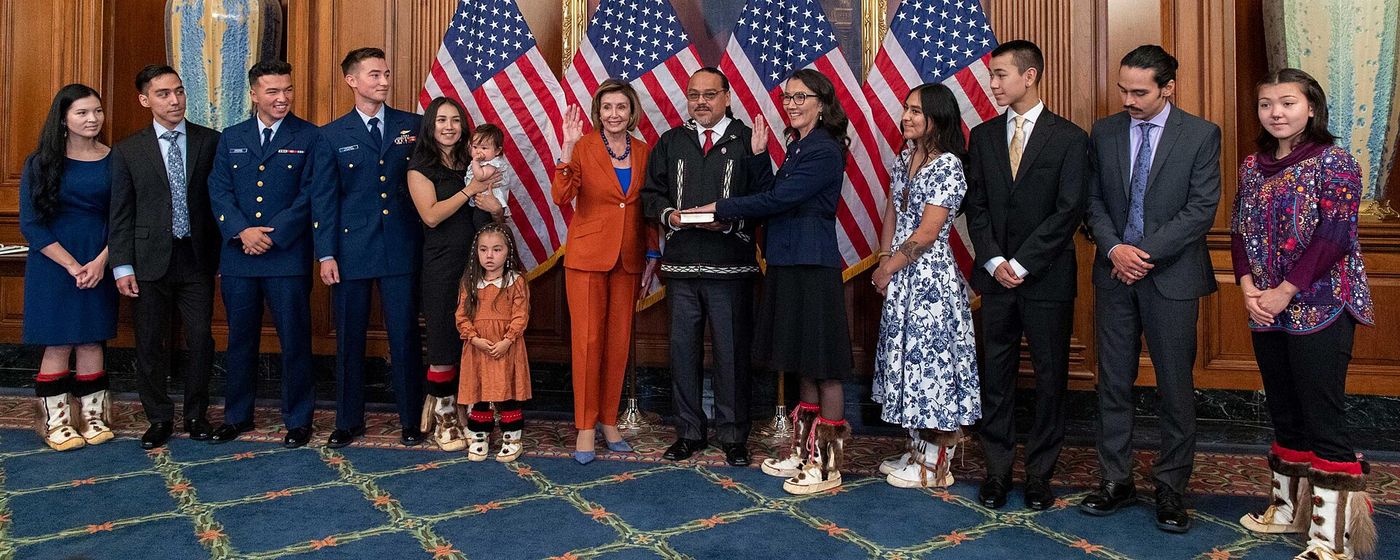
File photo: https://peltola.house.gov/ (Public domain), via Wikimedia Commons
Mary Peltola declared victory in Alaska's Senate race on 13 November 2026 with about 49.9% of first choices; the race is not yet called and tabulation is due 18 November.
What Happened
Mary Peltola, the Democratic former member of the US House of Representatives from Alaska, has declared victory in the state's 2026 US Senate race against the Republican incumbent, Senator Dan Sullivan. Her campaign posted a statement on Friday, 13 November 2026, saying Sullivan no longer had a path to win and that the remaining ballots would confirm her election, and she repeated the claim on Saturday, 14 November. The race has not been officially called. The Associated Press had not declared a winner in the latest reports, and Sullivan's campaign has not conceded. If she is confirmed, Peltola would be the first Alaska Native to serve in the US Senate, according to Alaska Public Media.
Mary Peltola: key facts
- Alaska Public Media's count of the preliminary results put Peltola at 49.9% and Sullivan at 46%, with the Associated Press estimating 96% of ballots counted.
- A later report on Saturday gave Peltola 49.8% and Sullivan 46.1%, a lead of more than 10,000 votes, with about 98% counted.
- Peltola is just short of the majority of first-choice votes needed to win outright under Alaska's ranked-choice system.
- Ranked-choice tabulation is scheduled for Wednesday, 18 November, according to reports.
- NBC News's Decision Desk rates Peltola as likely to win, which it defines as at least 95% confidence.
- A win would make her the first Democrat to take a Senate race in Alaska since Mark Begich in 2008.
Mary Peltola: why it matters
Peltola's run is one of the most closely watched women's campaigns of the 2026 US midterms. She first became known nationally as the first Alaska Native member of Congress and the first woman to represent Alaska in the House. She narrowly lost that House seat in 2024 and decided early in 2026 to challenge Sullivan for the Senate instead. A Senate win would take her from a lost re-election to one of 100 seats in the upper house within two years, a rare comeback in American politics.
The count has been slow. The Anchorage Daily News has reported that the state's Senate race is set to be the last in the country to be called. For most of the past fortnight Peltola's lead has grown with each batch of ballots, from a few hundred votes in the first days after the 3 November election to close to four percentage points now.
Ranked-choice voting is the reason the result is not yet final. In Alaska, voters rank the candidates in order of preference. If nobody wins more than half of the first-choice votes, the candidate with the fewest votes is eliminated and those ballots move to their next choice, round by round, until one candidate has a majority. Peltola's share has hovered just below and, at one point, just above the 50% line. The Anchorage Daily News reported that preliminary data on how voters ranked the lower-placed candidates suggests Peltola would still be likely to win if the race goes to tabulation.
One of those lower-placed candidates is a second man named Dan Sullivan, from Petersburg, whose presence on the ballot drew controversy and a federal lawsuit. Some critics have described his candidacy as an attempt to split the Republican vote; Peltola has denied knowing anything about it. The Anchorage Daily News found that nearly 30% of the 4,055 voters who ranked him first in the preliminary cast vote data put Peltola second.
Peepals calculation: Peltola needs a little more than half of the first-choice votes, and the Alaska Public Media figures leave her 0.1 percentage point short (50% minus 49.9%) while 3.9 points ahead of Sullivan (49.9% minus 46%). If the race goes to ranked-choice rounds, close to 1,200 of the second Sullivan's voters ranked Peltola next (0.30 x 4,055 = about 1,217, as an upper figure since the share was "nearly" 30%). Our calculation from the reported figures.
| Figure | Reported value |
|---|---|
| Peltola, first-choice share | 49.9% (later report: 49.8%) |
| Sullivan, first-choice share | 46% (later report: 46.1%) |
| Ballots counted (AP estimate) | 96% to 98% |
| Ranked-choice tabulation | 18 November 2026 |
Impact
Short-term: The result stays officially open until the Division of Elections finishes its count and, if needed, its ranked-choice rounds. Sullivan's campaign has so far declined to concede, and a federal lawsuit and investigations linked to the second Sullivan candidacy were described as unlikely to be resolved before the state certifies the election.
Long-term: A Peltola win would put an Alaska Native woman in the Senate for the first time and would add to the number of Democratic seats in the chamber. For women in public life it is a case study in returning after a defeat: she lost her House seat by a narrow margin and chose a harder race two years later rather than a rematch.
Who is affected: Alaska's voters, the two main campaigns, the parties counting Senate seats after the midterms, and Alaska Native communities, who would have one of their own in the Senate for the first time.
What to watch next: The ranked-choice tabulation on 18 November, and whether the Associated Press calls the race before or after it.
Key Takeaway
Mary Peltola has claimed Alaska's Senate seat with just under half of the first-choice votes, but the result is not official until the count and the 18 November ranked-choice tabulation are complete.
Questions and Answers
Has Mary Peltola won the Alaska Senate race?
Peltola declared victory on 13 November 2026 and repeated the claim the next day, but the race has not been officially called. The Associated Press had not called it in the latest reports, and Senator Dan Sullivan had not conceded.
What are the latest Alaska Senate results?
Alaska Public Media's figures gave Peltola 49.9% and Sullivan 46% with about 96% of ballots counted. A later report put it at 49.8% to 46.1%, a lead of more than 10,000 votes.
Why is ranked-choice voting needed in the Alaska Senate race?
Alaska requires a winner to have a majority. If no candidate passes 50% of first-choice votes, the last-placed candidates are eliminated and their ballots move to voters' next choices. That tabulation is scheduled for 18 November.
What would a Peltola win mean?
According to Alaska Public Media, she would be the first Alaska Native to serve in the US Senate, and the first Democrat to win a Senate race in Alaska since Mark Begich in 2008.
Disclaimer: Prepared by the Peepals newsroom from publicly available sources with AI assistance. Information is accurate to the best of our knowledge at the time of publication and may change. Images may be representative. Not professional advice. Report an error via our contact page.
By Priya Nair, Leadership & Growth EditorCovers Leadership & Growth and more for Peepals Shakti. All stories by Priya Nair
Cervical Cancer Elimination Day 2026 on November 17: theme, India's HPV drive
Working mothers survey: 94% report career cost, 70% a gain
Get the day's stories in your inbox
Peepals Weekly: the week decoded, free. One email a week, unsubscribe in one click.
Priya Nair is a pen name of the Peepals Global Editorial Team, which researches, fact-checks and publishes every story. The portrait is an illustration.
Responsible for this story: the Peepals Global Editorial Team, led by editor Prashant Sonar. How we report