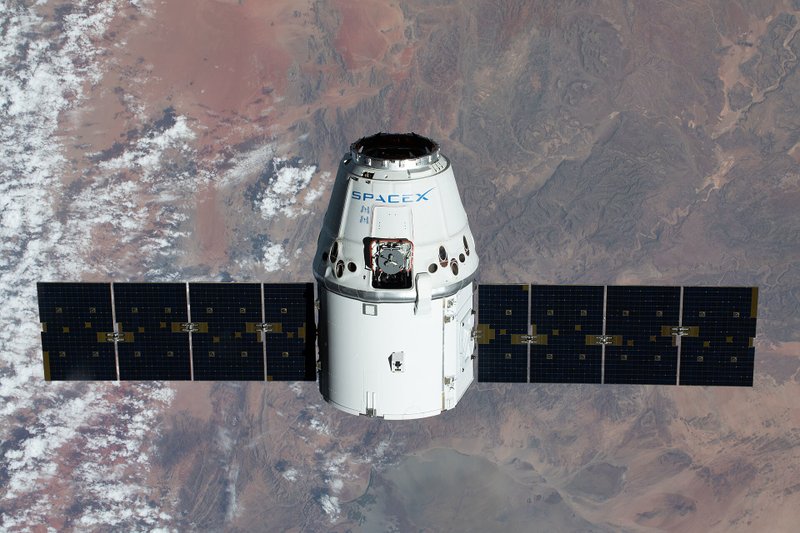

Japan launches MMX to bring back the first samples from Mars's moon
Representative image: Hans / Pixabay
JAXA launched MMX on an H3 rocket on October 20, 2026 to land on Mars's moon Phobos and return at least 10 grams of samples, a first for another planet's moon.
What Happened
Japan's space agency JAXA launched its Martian Moons eXploration (MMX) spacecraft on an H3 rocket from the Tanegashima Space Center on October 20, 2026, Japan time (October 19 in the United States), beginning a mission to bring back the first samples from Phobos, the larger of Mars's two moons. The spacecraft is due to reach Mars in August 2027 and aims to return at least 10 grams of Phobos material to Earth in the early 2030s. If it succeeds, it will be the first time samples have been brought back from the moon of another planet.
Key Facts
- Launch: H3 rocket from Tanegashima, at 4:41 am Japan time on October 20, 2026 (3:41 pm EDT on October 19), according to reports.
- Arrival: MMX is scheduled to reach Mars in August 2027 and enter a special orbit near Phobos, called a quasi-satellite orbit.
- Landing: a landing on Phobos is expected no earlier than December 2028.
- Rover: a small rover named IDEFIX, built by Germany and France, is to be released on Phobos in late 2028 or early 2029 to scout sampling sites.
- Sample goal: at least 10 grams of Phobos material; reports say the spacecraft leaves Mars orbit around 2030, with samples reaching Earth around 2031.
- Partners: JAXA leads, with NASA, the French space agency CNES, the German aerospace centre DLR and the European Space Agency.
- Science question: the samples could show whether Phobos is a captured asteroid or debris thrown up by a giant impact on Mars.
Why It Matters
Sample-return missions are among the hardest things space agencies attempt. A spacecraft must travel to a distant body, land or touch down, collect material, take off again and survive the long journey home. MMX takes this kind of mission to the Mars system for the first time.
The scientific prize is a long-running puzzle. Scientists are still unsure how Phobos formed. If it is a captured asteroid, its material should look like rocks from the asteroid belt. If it formed from debris after a large impact on Mars, it may contain material from Mars itself. Laboratories on Earth can study returned samples with far more precise instruments than any spacecraft can carry, which is why a few grams can answer questions that remote observation cannot.
The mission also shows how space exploration is increasingly built on partnerships. NASA, Europe's agencies and France and Germany each contribute instruments or hardware. For engineers and students, missions like MMX show the range of skills involved, from rocket propulsion and navigation to robotics and materials science.
For Indian readers following space science, the mission is a reminder of how much deep-space exploration now depends on collaboration between agencies, with each partner contributing instruments, hardware or expertise.
| Date | Planned step |
|---|---|
| October 2026 | Launch from Tanegashima |
| August 2027 | Arrival at Mars |
| Late 2028 or later | Landing on Phobos; rover release |
| Around 2030-31 | Departure from Mars and return of samples |
Impact
Short-term: MMX begins a cruise of about ten months to Mars, during which JAXA will check its systems and plan the approach to Phobos.
Long-term: Successful samples would help settle the origin of Mars's moons and could inform the planning of future missions to Mars itself, including human exploration.
Who is affected: Planetary scientists worldwide, JAXA and its partner agencies, the space industry, and students and engineers interested in space careers.
Key Takeaway
Japan launched the MMX mission on October 20, 2026 to land on Mars's moon Phobos and bring back at least 10 grams of samples, aiming for the first sample return from another planet's moon.
Questions and Answers
What is Japan's MMX mission?
MMX, or Martian Moons eXploration, is a JAXA spacecraft launched on October 20, 2026 (Japan time) on an H3 rocket. It will travel to Mars, land on its moon Phobos and bring back at least 10 grams of samples to Earth.
When will MMX reach Mars and return samples?
It is scheduled to arrive at Mars in August 2027 and land on Phobos no earlier than December 2028. Reports say it will leave Mars orbit around 2030, with the samples reaching Earth around 2031.
Why study Phobos?
Scientists are unsure whether Phobos is a captured asteroid or debris from a giant impact on Mars. Analysing its rocks in laboratories on Earth could settle the question.
Which countries are involved?
Japan's JAXA leads the mission, with NASA, France's CNES, Germany's DLR and the European Space Agency as partners. France and Germany built the IDEFIX rover.
Disclaimer: Prepared by the Peepals newsroom from publicly available sources with AI assistance. Information is accurate to the best of our knowledge at the time of publication and may change. Images may be representative. Not professional advice. Report an error via our contact page.
Sourced and fact-checked by the Peepals Global Editorial Team
Reported, fact-checked and published by the Peepals Global Editorial Team.