
SatSure raises Rs 60 crore from Antariksh space fund in Series B
 By Karan BansalTech Startups Correspondent, Peepals Tech
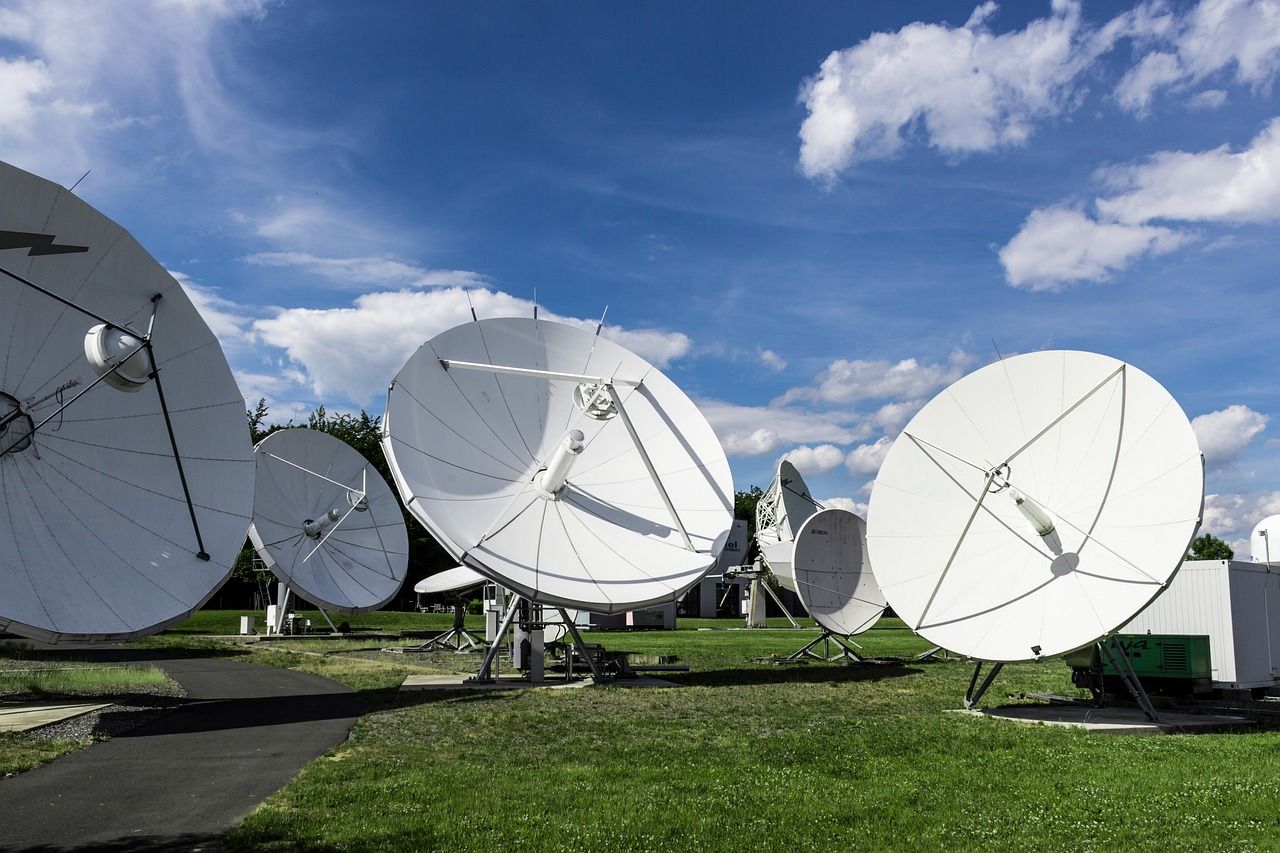
Representative image: TheoLeo / Pixabay
SatSure raised Rs 60 crore led by the government-backed Antariksh fund on 20 November 2026, the first close of a Rs 200 crore Series B at Rs 870 crore value.
SatSure: what happened
Bengaluru-based SatSure, a company that turns satellite images into data for farming, banking and infrastructure, has raised Rs 60 crore led by the Antariksh Venture Capital Fund, the government-backed space fund anchored by the space regulator IN-SPACe. The money is the first close of a Series B round of Rs 200 crore that the company expects to complete by December 2026. The investment, announced on Friday, 20 November 2026, values SatSure at Rs 870 crore after the money comes in, according to the company's announcement.
SatSure: key facts
- Lead investor: Antariksh Venture Capital Fund, anchored by IN-SPACe and managed by SIDBI Venture Capital Limited, with a corpus of about Rs 1,600 crore.
- First close: Rs 60 crore, announced on 20 November 2026.
- Full round: Rs 200 crore, made up of Rs 165 crore of new equity, Rs 25 crore of venture debt and Rs 10 crore of secondary share sales, closing on a rolling basis through December 2026.
- Valuation: Rs 870 crore post-money, the company said.
- Total raised: after this first close, SatSure's institutional funding stands at Rs 427 crore, not counting government grants.
- First of its kind for the fund: the investment is described as the fund's first in the downstream data and artificial intelligence part of the space economy.
SatSure: why it matters
India's space sector has two halves. "Upstream" companies build rockets and satellites; "downstream" companies use what satellites collect, such as images and signals, to sell useful information. SatSure is a downstream company that is also moving upstream: its subsidiary KaleidEO designs optical cameras for satellites, called payloads, and is building satellites under an Earth observation public-private partnership anchored by IN-SPACe for a national constellation, a group of satellites working together.
The company says it will use the money for four things: preparing its optical payloads for their first flight in orbit in 2027; delivering its part of the multi-satellite constellation; scaling Dhaarini, its large Earth observation AI model; and expanding commercial work abroad. A "foundation model" like this is a large AI system trained on huge amounts of satellite imagery that can then be adapted to tasks such as estimating crop area, spotting new buildings or checking flood damage. Chief executive Prateep Basu said the aim is to own the whole chain, from the camera in orbit to the AI that reads the images.
The deal also shows how the government's space fund is being used. The Antariksh fund was set up to back private space firms at a stage when private investors are often cautious, because satellites take years to pay back. A government-anchored fund leading a round can make it easier for private investors to join the rest of it. KaleidEO has tested its payload from aircraft but has not yet launched a satellite, which is why the 2027 orbital flight is the key test.
Peepals calculation: The three parts of the round add up to the stated total (Rs 165 crore + Rs 25 crore + Rs 10 crore = Rs 200 crore), with new equity making up 82.5% of it (165 ÷ 200). The Rs 60 crore first close is 30% of the full round (60 ÷ 200). At the stated post-money valuation, Rs 60 crore equals about 6.9% of the company's value (60 ÷ 870 ≈ 0.069). Our calculation from the reported figures.
| Part of the round | Amount |
|---|---|
| Primary equity | Rs 165 crore |
| Venture debt | Rs 25 crore |
| Secondary transactions | Rs 10 crore |
| Total Series B | Rs 200 crore |
| First close, led by Antariksh fund | Rs 60 crore |
SatSure: impact
Short-term: SatSure has money to keep building its payloads and AI model while it raises the remaining Rs 140 crore of the round.
Long-term: If KaleidEO's payloads fly successfully in 2027, India would have another private company that both builds Earth observation satellites and sells the data, reducing reliance on foreign satellite imagery for farming, lending and planning.
Who is affected: Banks and insurers that use satellite data to judge crop loans and claims, farmers whose land is assessed from space, space-tech start-ups seeking the fund's backing, and job seekers in remote sensing and AI.
What to watch next: the round's full close, which the company expects by December 2026, and the first orbital flight of its optical payloads in 2027.
SatSure: key takeaway
Watch whether private investors fill the remaining Rs 140 crore by December: it will show whether the government fund's lead is drawing private money into India's space data companies.
SatSure: questions and answers
How much has SatSure raised in its Series B?
SatSure has raised Rs 60 crore in the first close, led by the Antariksh Venture Capital Fund. The full Series B round is Rs 200 crore and is expected to close by December 2026.
What is the Antariksh Venture Capital Fund?
It is a government-backed fund for private space companies, anchored by IN-SPACe and managed by SIDBI Venture Capital Limited, with a corpus of about Rs 1,600 crore.
What does SatSure do?
It analyses satellite images with AI for uses such as agriculture, banking and infrastructure, and through its subsidiary KaleidEO it is developing optical payloads and satellites.
What is Dhaarini?
Dhaarini is SatSure's large Earth observation AI model, trained on satellite data so that it can be adapted to tasks such as mapping crops or detecting changes on the ground.
Disclaimer: Prepared by the Peepals newsroom from publicly available sources with AI assistance. Information is accurate to the best of our knowledge at the time of publication and may change. Images may be representative. Not professional advice. Report an error via our contact page.
By Karan Bansal, Tech Startups CorrespondentCovers Tech Start-ups & Stories and more for Peepals Tech. All stories by Karan Bansal
Riemann hypothesis: Anthropic mathematician claims proof with Claude, unverified
Randstad report: 90% of Indian employers expanding tech teams for AI
Your week ahead, every Sunday. Free.
Exam and result dates, IPOs opening, scheme deadlines, government holidays and the RBI decision for the next 7 days, plus the week's top stories. One email a week, unsubscribe in one click.
Karan Bansal is a pen name of the Peepals Global Editorial Team, which researches, fact-checks and publishes every story. The portrait is an illustration.
Responsible for this story: the Peepals Global Editorial Team, led by editor Prashant Sonar. How we report