

Verizon has worst day since 2002 as SpaceX buys spectrum for Starlink Mobile
AI-generated illustration
Advertisement
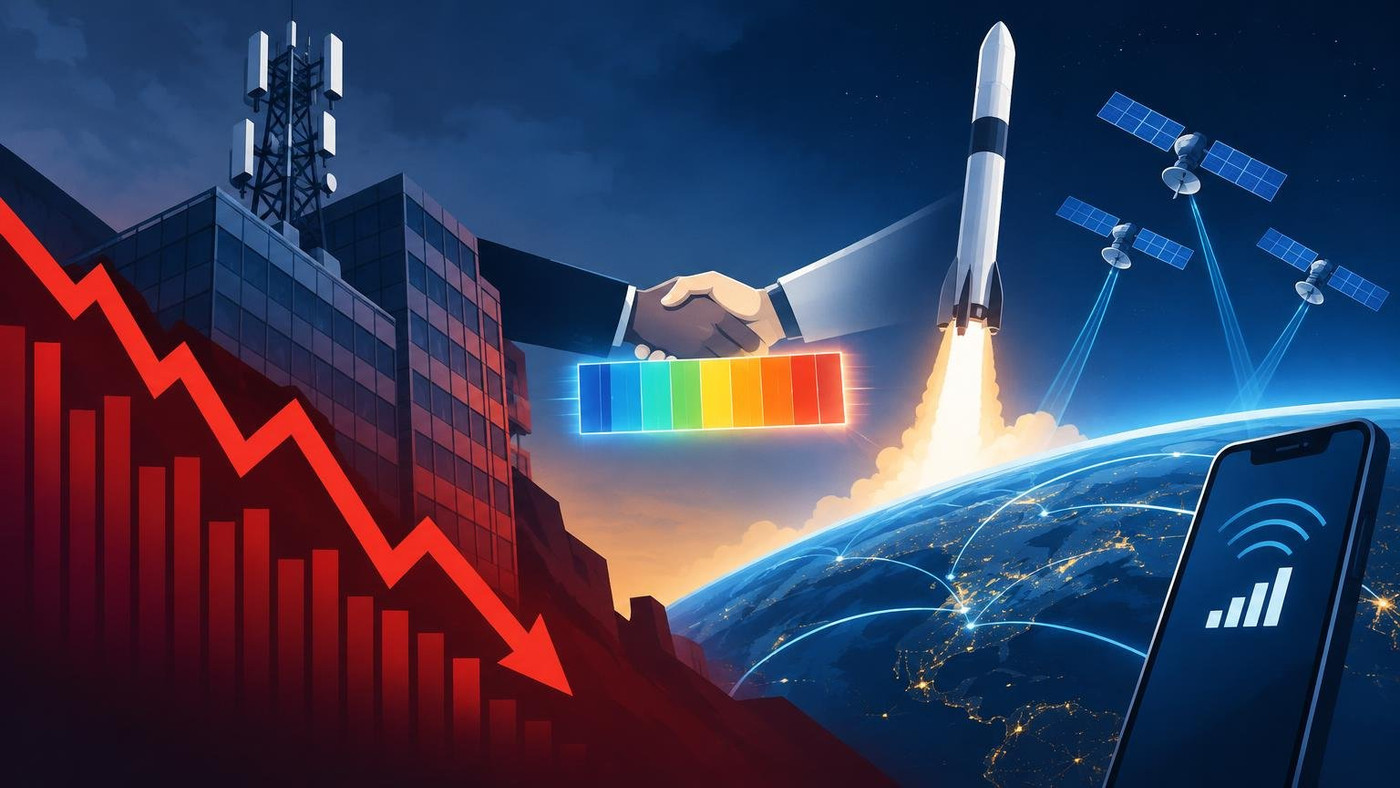
US telecom stocks slumped on October 9, 2026 after SpaceX agreed to buy Grain Management's nationwide 800 MHz spectrum for Starlink Mobile.
What Happened
Shares of the three big US mobile operators fell sharply on Friday, October 9, 2026, a day after SpaceX agreed to buy a nationwide block of low-band wireless spectrum to build out Starlink Mobile. Verizon closed down about 8.8%, its worst single day since July 2002. T-Mobile lost about 13.3% and AT&T about 9.8%. SpaceX announced on Thursday, October 8, that it will acquire all of Grain Management's 800 MHz spectrum holdings across the United States, a deal that still needs approval from the Federal Communications Commission (FCC).
Key Facts
- SpaceX will buy 100% of Grain Management's nationwide 800 MHz portfolio, up to 14 MHz of paired low-band spectrum.
- The companies did not disclose the price; a Wall Street Journal report cited by other outlets put it at about $8 billion in cash, which has not been confirmed by either side.
- Grain bought the same spectrum from T-Mobile in August, paying with cash and some of its own 600 MHz spectrum.
- SpaceX says the low-band layer will help Starlink Mobile signals get through obstacles such as walls, adding to the 2 GHz mid-band spectrum it already holds.
- On October 9, Verizon fell about 8.8%, T-Mobile about 13.3% and AT&T about 9.8%; tower companies rose, with Crown Castle up about 12.7% and American Tower about 7.8%.
- The deal needs FCC approval and other customary closing conditions; SpaceX has not said when services using it will reach customers.
Why It Matters
Until now, Starlink's phone service has mainly worked by beaming signals from satellites to ordinary handsets, usually in places where ground networks do not reach. Satellite signals are weak indoors. Low-band spectrum such as 800 MHz travels far and passes through walls well, which is why carriers prize it for coverage. By pairing satellites with ground-based low-band and mid-band spectrum, SpaceX is assembling the pieces a full mobile operator needs. That is what investors reacted to.
Not everyone agrees the threat is close. Verizon said that buying spectrum alone does not give a company the network or infrastructure needed for true nationwide coverage or to compete with mobile providers. Some analysts, including at JPMorgan, see limited near-term risk to the incumbents because building a ground network takes years and heavy capital. Others, such as Evercore ISI, said SpaceX now has the outline of a real network. The rise in tower stocks shows how many investors expect it to play out: if SpaceX builds on the ground, it will need to rent space on towers.
FCC Chair Brendan Carr welcomed more competition in the spectrum market as good news for American consumers. The regulator will review the transfer.
For readers in India, the episode is a useful signal. Satellite-to-phone service and the role of satellite operators in mobile markets are live questions here too, and the public dispute this week over Starlink's entry into India shows how sensitive incumbent operators are to the company. What happens in the US will be watched by telecom companies and regulators elsewhere.
| Company | Move on October 9, 2026 |
|---|---|
| Verizon | Down about 8.8%, worst day since July 2002 |
| T-Mobile | Down about 13.3% |
| AT&T | Down about 9.8% |
| Crown Castle | Up about 12.7% |
| American Tower | Up about 7.8% |
Impact
Short-term: US telecom stocks suffered some of their steepest one-day falls in decades, and the deal now moves to FCC review. Analysts will press the carriers on how they plan to respond.
Long-term: If approved and built out, Starlink Mobile could become a fourth national competitor that combines satellite and ground networks, putting pressure on prices and pushing rivals to invest more in coverage.
Who is affected: Shareholders of Verizon, AT&T and T-Mobile; tower companies; US mobile customers; and telecom operators and regulators in other markets weighing satellite competition, including India.
Key Takeaway
SpaceX's purchase of nationwide 800 MHz spectrum moves Starlink from a satellite add-on towards a full mobile carrier, and investors marked down the US incumbents on October 9, 2026.
Questions and Answers
Why did Verizon, AT&T and T-Mobile shares fall on October 9, 2026?
They fell after SpaceX agreed on October 8 to buy Grain Management's nationwide 800 MHz spectrum for Starlink Mobile, which investors read as a step towards SpaceX becoming a full mobile competitor.
What is 800 MHz spectrum and why does it matter?
It is low-band radio spectrum that travels long distances and passes through walls well, so it provides wide, reliable coverage, including indoors, where satellite signals are weak.
How much is SpaceX paying for the spectrum?
SpaceX and Grain did not disclose the price. A report cited by several outlets put it at about $8 billion in cash, but the companies have not confirmed that figure.
Is the deal final?
No. It needs approval from the US Federal Communications Commission and must meet other customary closing conditions.
Sourced and fact-checked by the Peepals Global Editorial Team
Reported, fact-checked and published by the Peepals Global Editorial Team.
Advertisement