

MeitY Advisory Asks Platforms to Label AI Content Showing Current Events
AI-generated illustration
Advertisement
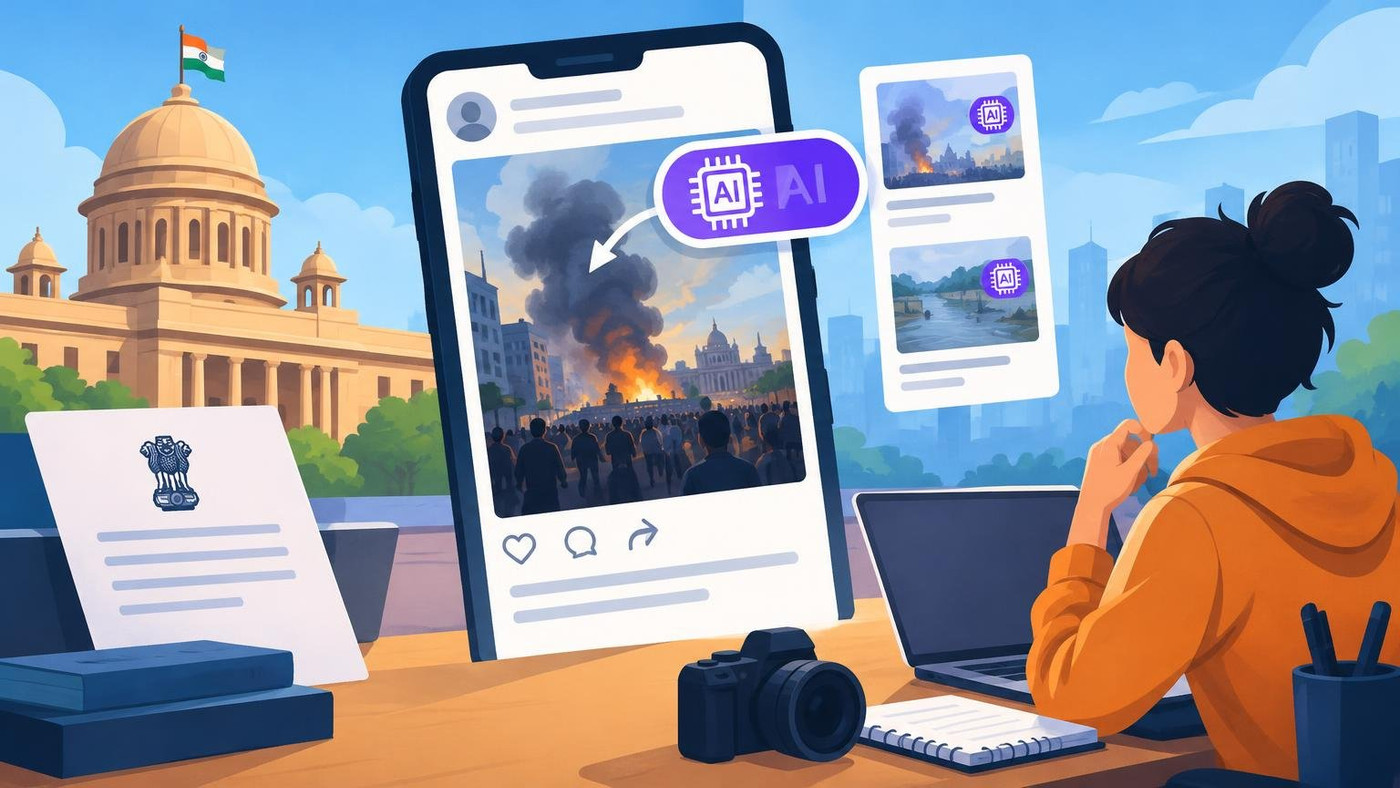
India's IT ministry told social media platforms on 8 October 2026 to label AI-generated posts that depict ongoing events, a rule that directly affects young creators.
What Happened
The Ministry of Electronics and Information Technology (MeitY) issued an advisory to large social media platforms on 8 October 2026. It asks them to label AI-generated content, especially when it is shown as footage of ongoing events. The advisory also asks platforms to act quickly on unlawful posts linked to protests. News of the advisory became public on 9 October 2026.
Key Facts
- The ministry has not published the text. Details come from official sources quoted in reports and from a copy seen by MediaNama.
- The advisory voices concern about protest-related information online that is false, misleading, manipulated or shared without context. Officials say such content could disturb public order and possibly incite violence.
- Platforms are asked to identify such unlawful content and give priority to complaints from authorised government bodies, including law enforcement agencies. They should share information within timelines set under the IT Rules.
- The advisory asks platforms to identify and label or contextualise manipulated, synthetically generated or misleading content, particularly where it is presented as depicting a current event.
- MeitY amended the Information Technology (Intermediary Guidelines and Digital Media Ethics Code) Rules, 2021 on 10 February 2026. The changes came into force on 20 February 2026 and created the category of synthetically generated information (SGI).
- SGI is limited to audio, visual or audio-visual content that appears real, so text-only posts fall outside it. Law firms say the rules require a visible label or watermark on such content.
- Law firms describe a three-hour deadline for removing certain harmful AI content after a lawful government order or notice. The earlier window was 36 hours. Missing these duties risks losing safe-harbour protection.
- The advisory is guidance, not a new law. The online gaming rules, which ban online money games, came into force on 1 May 2026, after the deepfake rules of February.
Why It Matters
The advisory shows how India is tightening its rules on AI-made media. Platforms now face a direct request to label manipulated visuals that pose as real events. For young creators, who often edit video, clone voices or use AI tools, this changes everyday posting habits.
The advisory builds on the February 2026 amendment to the IT Rules. That amendment created the legal category of synthetically generated information and set labelling duties. MediaNama notes that the advisory does not refer to the February amendment anywhere.
The timing is tied to politics. MediaNama reports the advisory came nearly a week after protests began in Delhi over the revision of electoral rolls. Another report says it came two days before a protest planned by the Cockroach Janta Party at Jantar Mantar on 10 October 2026, for which police have denied permission. Peepals Yuva reports this as a platform-compliance matter and takes no side on the protests.
The labelling clause may reach further than the February rules. The advisory carries no limit to audio-visual material, so it is unclear whether text posts could be asked to carry context labels. Any change to the formal rules would need a separate notification from MeitY.
The wider pattern is clear. Platforms carry more responsibility, and creators are expected to be open about how their content is made. Online gaming rules and deepfake rules both point the same way.
Impact
Short-term: Advisories of this kind are usually followed by platform notices to users and by tighter automated checks. Platforms must already ask users at upload whether content is synthetic, according to a plain-language guide to the rules. Creators who post about live events carry extra risk. An old clip shared as if it were new, or an AI-edited image without context, can now be flagged or taken down faster. How each platform will apply the labelling request has not been announced.
Long-term: The advisory signals continued tightening of India's digital rules, with more responsibility on platforms and more openness expected from creators. Platforms have not yet publicly responded. Whether the labelling expectation extends to text posts remains open. Platforms that miss duties under the IT Rules risk losing safe-harbour protection, which normally shields them from liability for user posts.
Who is affected: Large social media platforms are the direct addressees and must act on unlawful content and cooperate with law enforcement. Young creators are affected most in practice. Anyone who edits video, clones a voice or uses AI tools to make clips should say so on the post. Legal guidance says unlabelled posts may be flagged or removed. Creators covering live events in India should add the date, place and original source of a clip, and keep the original files.
Key Takeaway
MeitY's 8 October 2026 advisory asks large platforms to label manipulated or AI-generated content shown as current events, so creators who label AI work and add context are less likely to face removal.
Questions and Answers
What does the MeitY advisory on AI content say?
The Ministry of Electronics and Information Technology advisory of 8 October 2026 asks large platforms to label or contextualise manipulated, synthetically generated or misleading content, especially when presented as depicting a current event. It also asks them to act quickly on unlawful protest-related posts.
Is the MeitY advisory a new law?
No. The advisory is guidance that points platforms back to duties already in the IT Rules. Any change to the formal rules would need a separate notification from MeitY.
What should young creators do after the MeitY advisory?
Creators should label AI-assisted work, add context to news-related posts and keep the original files. A caption with the date, place and original source of a clip lowers the risk of a post being flagged or removed.
What are the February 2026 IT Rules changes on AI content?
MeitY amended the IT Rules on 10 February 2026, effective 20 February 2026. They created synthetically generated information as a category, and law firms say they require visible labels and a three-hour removal deadline for certain harmful AI content.
Sourced and fact-checked by the Peepals Global Editorial Team
CUET UG 2027: One-Day Exam, Shorter Papers Under Consideration
Urban Indian Young Adults Define Healthy Living: Diet, Sleep, Exercise, Less Screen Time
Reported, fact-checked and published by the Peepals Global Editorial Team.
Advertisement