
Ofqual warns AI coursework cheats could lose whole GCSE or A-level
 By Kabir SethiEducation Correspondent, Peepals Yuva

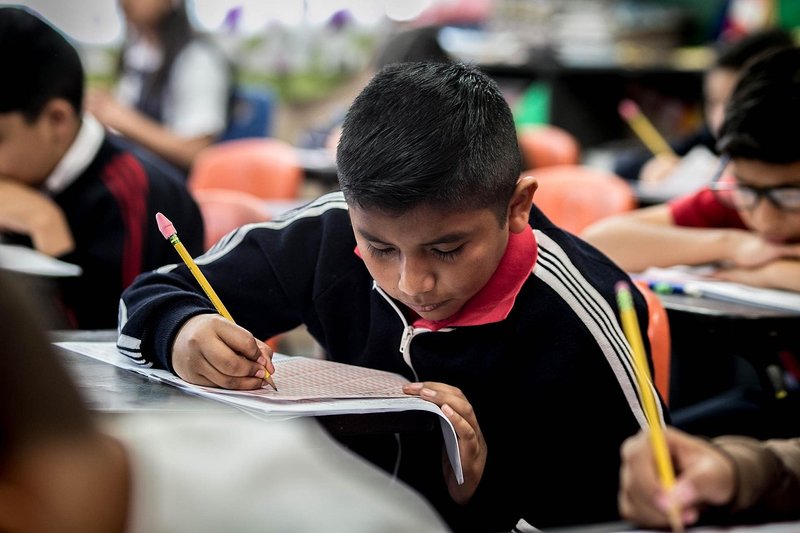
Representative image: wal_172619 / Pixabay
Ofqual says students using undeclared AI in coursework could lose a whole GCSE or A-level, and wants invigilators trained to spot smart glasses before 2027.
Ofqual: what happened
Ofqual, the exam regulator for England, has warned that students who use artificial intelligence (AI) in coursework without declaring it could lose an entire GCSE or A-level qualification, a penalty its chief regulator, Sir Ian Bauckham, described as "life-altering" for a young person's future. His remarks, reported on Wednesday, 18 November 2026, come with a publicity campaign ahead of coursework deadlines. Bauckham has also written to exam boards this week asking that invigilators be trained to spot smart glasses and other wearable devices that can reach AI, before the 2027 exams.
Ofqual: key facts
- Who: Sir Ian Bauckham, Chief Regulator of Ofqual, which regulates qualifications in England.
- The warning: undeclared AI use in assessed coursework can lead to disqualification from the whole qualification in serious cases.
- Wearables: exam boards are asked to train invigilators to deal with what the regulator calls an emerging risk from AI-enabled wearable devices, ahead of the 2027 exams.
- Device cheating: 2,225 cases of smart-device and mobile-phone cheating were recorded in GCSE, AS and A-level exams in the summer 2025 season.
- AI plagiarism: proven AI-related plagiarism cases rose to 100 in summer 2025, from 85 in 2024.
- Earlier step: Ofqual's letter of 3 March 2026 to exam board chief executives had already named phones in exam halls and AI misuse in non-exam assessment as its two main concerns.
- Possible reform: Bauckham has suggested more supervision of coursework and more emphasis on referencing sources to show that a student wrote the work.
Ofqual: why it matters
Coursework, which the UK system calls non-exam assessment, is the part of a GCSE or A-level a student completes over weeks, often at home. It was designed to test research and extended writing that a timed paper cannot. Generative AI tools can now produce a plausible essay in seconds, which puts the whole format under pressure. Bauckham has said that detecting AI misuse will become "more difficult to do", and he has questioned whether unsupervised extended essays can survive in their present form. Subjects such as A-level history and English still use extended essays.
The regulator's message has two parts. The first is deterrence: by naming the worst outcome, losing a whole qualification, Ofqual wants students and parents to understand that the risk is far larger than a lower mark. The second is a slow redesign: the regulator is considering linking coursework to a written or spoken test, so that a student has to show they understand what they submitted.
The wearables warning moves the same worry into the exam hall. Smart glasses and earpieces that can call up AI answers are harder to spot than a phone, and invigilators have not been trained to look for them. Asking exam boards to train staff before the 2027 season shows the regulator expects the problem to grow.
For Indian readers, the debate is not distant. Indian schools and universities are working through the same question of how to grade take-home work in the age of AI, and many Indian students sit UK-designed qualifications. Ofqual's rules apply to qualifications in England; international versions are run by the exam boards under their own rules, so students abroad should check what their own board says.
Peepals calculation: proven AI plagiarism cases rose from 85 to 100, an increase of about 18% in one year ((100 − 85) ÷ 85 ≈ 0.18), while device-cheating cases (2,225) were about 22 times as many as AI plagiarism cases (2,225 ÷ 100 ≈ 22). Our calculation from the reported figures.
| Measure | 2024 | Summer 2025 |
|---|---|---|
| Proven AI-related plagiarism cases | 85 | 100 |
| Smart-device and phone cheating cases | not given | 2,225 |
Ofqual: impact
Short-term: Students in England finishing coursework this term are being told plainly that undeclared AI use can cost them the whole qualification, and schools are expected to repeat that message.
Long-term: Coursework may change shape, with more supervised writing time, stricter referencing and possibly a short spoken or written check on the work, and extended essays could shrink.
Who is affected: GCSE and A-level students and their parents, teachers who supervise and mark coursework, exam boards and invigilators preparing for the 2027 exam season.
What to watch next: whether exam boards confirm invigilator training on wearables before the 2027 exams, and any formal Ofqual proposals on coursework.
Ofqual: key takeaway
Any student using AI for help with coursework should declare it in the way their school and exam board require, because hidden use is now treated as malpractice that can end in losing the qualification.
Ofqual: questions and answers
What did Ofqual say about AI and cheating?
Ofqual's chief regulator, Sir Ian Bauckham, said students who use AI in coursework without declaring it could lose an entire GCSE or A-level, a penalty he called life-altering.
Is using AI in coursework banned outright?
The warning is about undeclared use; exam boards set out when AI help is allowed and how it must be acknowledged, and passing off AI work as your own is treated as malpractice.
How many students were caught cheating with devices in 2025?
Ofqual recorded 2,225 cases of smart-device and mobile-phone cheating in GCSE, AS and A-level exams in summer 2025, and 100 proven cases of AI-related plagiarism.
Does this apply to students in India?
Ofqual regulates qualifications taken in England; students in India sitting international versions of UK exams follow their exam board's own rules, which they should check with their school.
Disclaimer: Prepared by the Peepals newsroom from publicly available sources with AI assistance. Information is accurate to the best of our knowledge at the time of publication and may change. Images may be representative. Not professional advice. Report an error via our contact page.
By Kabir Sethi, Education CorrespondentCovers Education and more for Peepals Yuva. All stories by Kabir Sethi
GTA 6 India release time: midnight IST November 19, Rs 5,999, 212 GB pre-load
JJ Gabriel leaves Man Utd at 16; Real Madrid Castilla expected next
Your week ahead, every Sunday. Free.
Exam and result dates, IPOs opening, scheme deadlines, government holidays and the RBI decision for the next 7 days, plus the week's top stories. One email a week, unsubscribe in one click.
Kabir Sethi is a pen name of the Peepals Global Editorial Team, which researches, fact-checks and publishes every story. The portrait is an illustration.
Responsible for this story: the Peepals Global Editorial Team, led by editor Prashant Sonar. How we report