
Hanging glacier above Badrinath could hit 398 buildings, study warns
 By Aditi KulkarniEducation Writer, Peepals Bharat
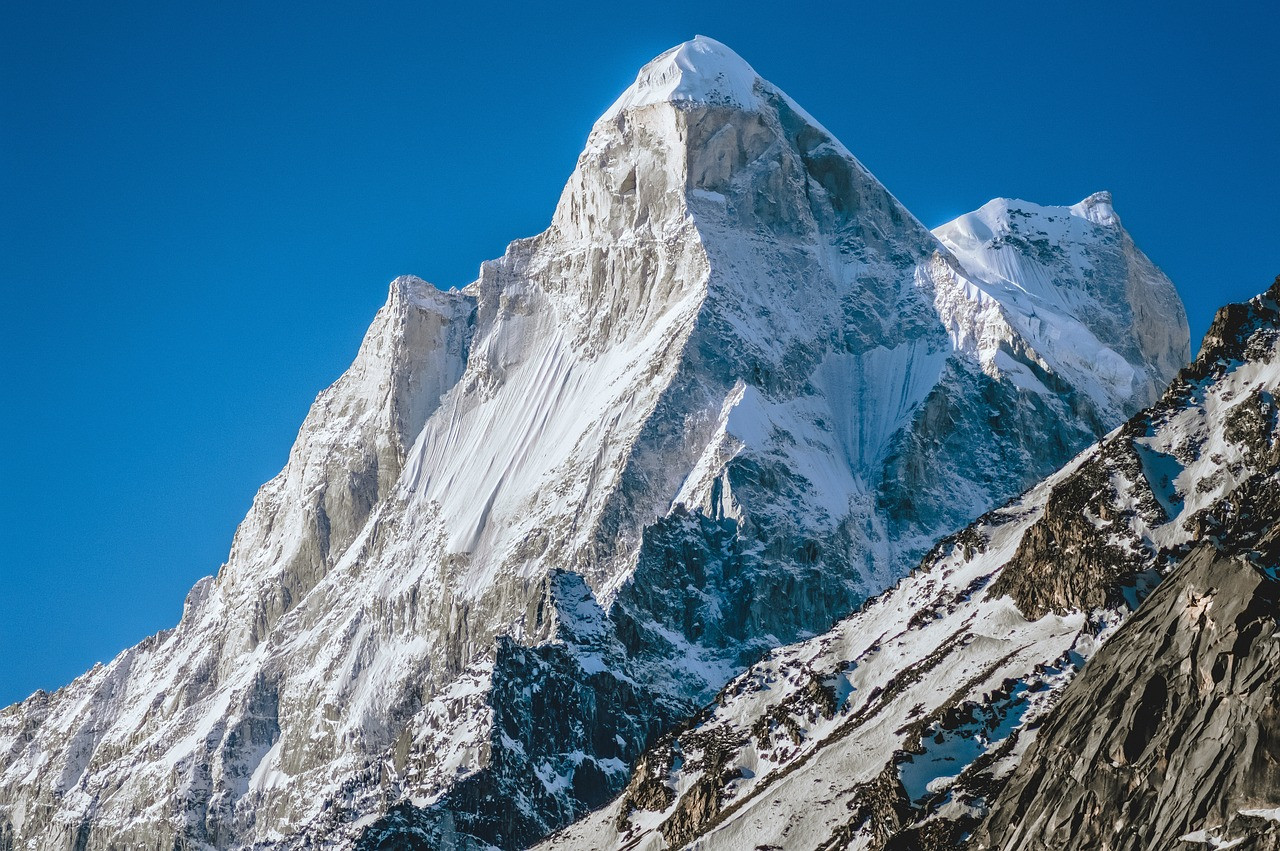
Representative image: Aaqib_jvd / Pixabay
A DRDO-funded study in the journal Landslides finds three unstable hanging glaciers above Badrinath; a worst-case avalanche could reach 398 buildings.
What Happened
A hanging glacier above Badrinath could set off an ice avalanche that would reach parts of the pilgrimage town, a new scientific study has warned. Researchers from the Indian Institute of Science (IISc), the University of Cambridge and the Defence Research and Development Organisation (DRDO), in work funded by DRDO and published recently in the journal Landslides, used satellite images to identify three unstable hanging glaciers on the slopes above the town in Uttarakhand's Chamoli district. Their computer simulations show that, in the worst case, a fast-moving avalanche from one of them could affect 398 buildings, two bridges, a helipad, a parking area and more than two and a half kilometres of road. The authors stress that the danger is serious but not imminent, and that the Badrinath shrine itself is not directly in the modelled path.
Key Facts
- Place: Badrinath, the Himalayan pilgrimage town in Chamoli district, Uttarakhand.
- Study: by researchers from IISc, the University of Cambridge and DRDO, funded by DRDO and published in the journal Landslides.
- Finding: three unstable hanging glaciers above the town, at heights of about 4,700 to 5,465 metres above sea level.
- Worst-case simulation: 398 buildings, two bridges, a helipad, a parking zone and over 2.5 km of roads in the avalanche's reach.
- Modelled speed: about 78.5 metres per second, or more than 280 km/h.
- Timing: the researchers describe the risk as serious but not imminent.
- Shrine: the Badrinath temple is not directly in the modelled path, according to reports on the study.
- Recommendations: map avalanche impact zones, monitor the glaciers, and restrict new commercial construction in vulnerable corridors.
Why It Matters
Badrinath is one of the four shrines of the Char Dham Yatra and draws large numbers of pilgrims every season. The town has grown quickly, with hotels, guest houses, shops and parking built to serve visitors. The study's main message is that some of this growth sits in ground that an ice avalanche could reach.
A hanging glacier is a body of ice that clings to a steep mountainside above a valley, often ending at a cliff or very steep slope. When part of it breaks off, the ice can fall and slide at very high speed, picking up rock and snow on the way. In February 2021, a rock and ice avalanche from a hanging glacier in the same district set off a debris flow in the Rishiganga valley; a later scientific paper traced it to the detachment of part of a hanging glacier. That disaster showed how far and how fast such flows can travel.
The researchers link the instability of these glaciers to warming temperatures, which weaken the ice and the frozen ground that holds it. They do not predict a collapse date. Instead, they argue that the time to act is now, while there is no emergency: by mapping the danger zones, watching the glaciers closely and keeping new commercial buildings out of the most exposed corridors.
| Item | Finding |
|---|---|
| Unstable glaciers identified | Three |
| Height of glaciers | About 4,700 to 5,465 m |
| Buildings in worst-case reach | 398 |
| Other infrastructure | 2 bridges, helipad, parking, over 2.5 km of road |
| Modelled speed | About 78.5 m/s (over 280 km/h) |
For pilgrims and travellers, the study does not mean Badrinath is unsafe to visit today. The researchers call the threat not imminent. It does mean that planning decisions in the town, from where new hotels go to how a warning would reach visitors, matter for future seasons.
Impact
Short-term: The findings are likely to prompt questions to the Uttarakhand government and district administration on hazard mapping, monitoring of the three glaciers, and building permissions in Badrinath. The shrine is scheduled to close for winter on November 16, which leaves time for review before the next season.
Long-term: If acted on, the study could lead to zoning rules that limit construction in avalanche corridors, an early-warning system, and changes to the planned redevelopment of the town. It also adds to evidence that Himalayan pilgrimage towns need risk planning that keeps pace with a warming climate.
Who is affected: Residents and business owners in Badrinath, the lakhs of pilgrims and tourists who visit each year, the temple administration, and the Uttarakhand government and Chamoli district authorities.
Key Takeaway
A DRDO-funded study warns that a hanging glacier above Badrinath could send an avalanche into parts of the town, reaching up to 398 buildings in the worst case, and urges mapping, monitoring and building limits now, while the risk is not imminent.
Questions and Answers
What does the hanging glacier study say about Badrinath?
It found three unstable hanging glaciers above Badrinath and modelled a worst-case avalanche from one that could reach 398 buildings, two bridges, a helipad, a parking area and over 2.5 km of road.
Is the Badrinath temple at risk?
According to reports on the study, the shrine is not directly in the modelled avalanche path, though nearby parts of the town are.
Is a collapse expected soon?
No. The researchers describe the threat as serious but not imminent, and give no date for any collapse.
What is a hanging glacier?
It is a glacier that clings to a steep mountainside above a valley. When a part breaks off, the ice can fall and slide at very high speed.
Disclaimer: Prepared by the Peepals newsroom from publicly available sources with AI assistance. Information is accurate to the best of our knowledge at the time of publication and may change. Images may be representative. Not professional advice. Report an error via our contact page.
By Aditi Kulkarni, Education WriterCovers Education and more for Peepals Bharat. All stories by Aditi Kulkarni
Cyclonic storm Murasu forms, to hit Andhra coast near Nellore by November 3
Rajyotsava Award 2026: Karnataka honours 71, including Yakshagana artiste and actor Ashok
Get the day's stories in your inbox
Peepals Weekly: the week decoded, free. One email a week, unsubscribe in one click.
Aditi Kulkarni is a pen name of the Peepals Global Editorial Team, which researches, fact-checks and publishes every story. The portrait is an illustration.