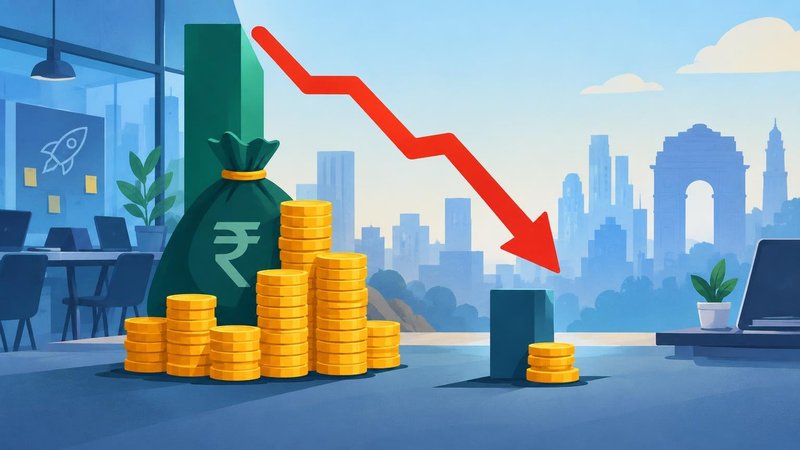

Rupee hovers near record low of 96.97 as RBI's defences come under strain
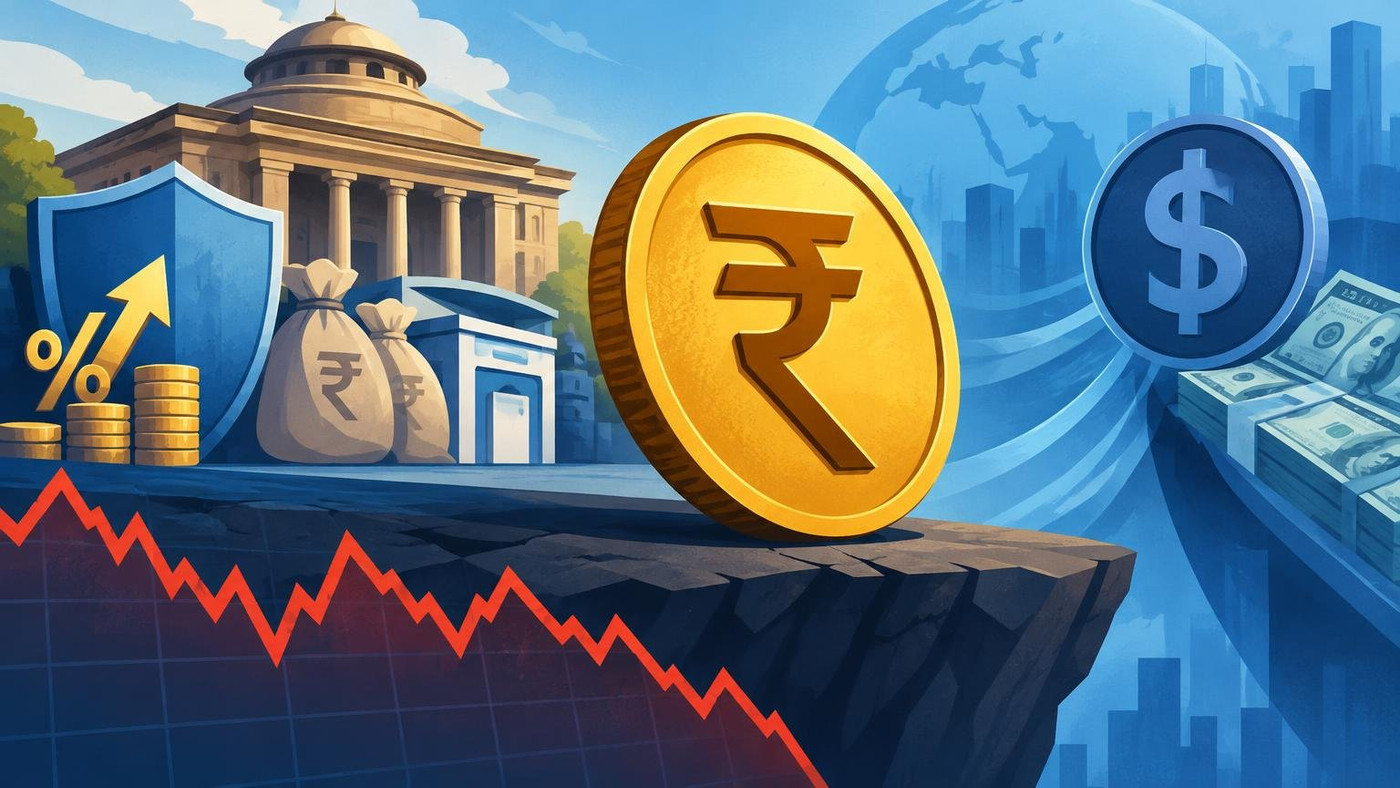
AI-generated illustration
Advertisement
The rupee traded about 0.2% from its record low of 96.97 per dollar on Oct 8, 2026, despite a rate hike, dollar sales and deposit schemes by the RBI.
What Happened
The Indian rupee was trading within about 0.2 per cent of its all-time low of 96.97 per US dollar on Thursday, October 8, 2026, even though the Reserve Bank of India has deployed almost every tool it has to support it. The record low was set in May this year. In the past month the central bank has sold dollars heavily, raised its policy rate on October 7 for the first time in nearly four years, and drawn large dollar inflows through special deposit schemes, but high crude oil prices, rising global bond yields and foreign investors pulling money out of Indian shares have kept the currency under pressure. RBI Governor Sanjay Malhotra has said the rupee may be undervalued and that reserves remain adequate.
Key Facts
- Record low: 96.97 rupees per dollar, touched in May 2026; the rupee was about 0.2 per cent away on October 8.
- Rate hike: the RBI raised the repo rate by 25 basis points to 5.50 per cent on October 7, its first increase in nearly four years.
- Reserves: foreign exchange reserves fell for a fourth straight week to about $734.6 billion in the week to October 2, roughly $51 billion below the early-September peak of about $785.7 billion.
- Deposit schemes: banks have raised close to $133 billion through foreign-currency deposits for non-resident Indians under a special RBI window, according to reports.
- Forward book: traders describe a large negative position in the RBI's forward dollar contracts, which means some future dollar outflows are already committed.
- Equity outflows: foreign investors have sold almost $30 billion of Indian shares this year, according to reports.
- Official view: Governor Malhotra has said the currency may be undervalued, and that reserves cover about eleven months of imports.
Why It Matters
India imports most of the crude oil it uses, and oil is paid for in dollars. When prices stay high, importers need more dollars, which pushes the rupee down. At the same time, higher bond yields in the US and elsewhere make Indian assets less attractive to foreign investors, who sell shares and take dollars out. Both forces are working against the rupee now.
The RBI's response has been to fight on several fronts. Selling dollars from reserves slows the fall directly, but it uses up a finite stock, which is why the four-week drop in reserves is being watched closely. The rate hike makes holding rupees more rewarding and cools inflation, but it also raises borrowing costs at home. The deposit schemes bring in dollars quickly, but deposits can leave again and some of them come with future repayment commitments. Analysts argue that the more of these tools are used, the less each one seems to achieve, because the underlying pressure from oil and capital flows has not eased.
For households, a weaker rupee feeds into prices. Fuel, cooking gas, imported electronics, foreign travel and overseas education all become more expensive. For businesses, importers face higher costs while exporters, such as IT services and pharmaceutical firms, earn more rupees for each dollar of sales.
| Indicator | Latest reported level |
|---|---|
| Rupee record low | 96.97 per dollar (May 2026) |
| Repo rate | 5.50% (raised October 7, 2026) |
| Forex reserves | about $734.6 billion (week to October 2) |
| Fall from September peak | about $51 billion |
Impact
Short-term: The rupee could test or break its record low if oil stays high, and the RBI is likely to keep selling dollars to slow the move. September inflation data due next week will show how much the weaker currency and costlier oil are feeding into prices.
Long-term: A sustained period of a weak rupee would keep imported inflation high and could force further rate rises, slowing growth. Lasting relief depends mainly on lower oil prices and the return of foreign capital.
Who is affected: Families paying for fuel, foreign education or travel; importers and companies with dollar debt; exporters, who gain; and borrowers facing higher interest rates.
Key Takeaway
Despite a rate hike, heavy dollar sales and special deposit schemes, the rupee sat within 0.2 per cent of its record low on October 8, 2026, because oil prices and capital outflows are outweighing the RBI's defences.
Questions and Answers
What is the rupee's record low against the dollar?
The rupee's weakest level is 96.97 per dollar, reached in May 2026. On October 8, 2026 it was trading about 0.2 per cent away from that level.
Why is the rupee falling?
High crude oil prices raise India's demand for dollars, while higher global bond yields and foreign investors selling Indian shares take dollars out of the country.
What has the RBI done to support the rupee?
It has sold dollars from its reserves, raised the repo rate to 5.50 per cent on October 7, 2026, and used special schemes that brought in foreign-currency deposits from non-resident Indians.
How does a weaker rupee affect ordinary people?
It makes imported goods and services costlier, including fuel, electronics, foreign travel and overseas study, and can push up inflation and loan rates.
Sourced and fact-checked by the Peepals Global Editorial Team
Ola Electric sets Rs 1,000 crore rights issue at Rs 27, a 26% discount
Vi Business to run private network at Hindalco's Baphlimali bauxite mine
Reported, fact-checked and published by the Peepals Global Editorial Team.
Advertisement