
Warehouse robot rental start-up Ultra raises $50 million Series A

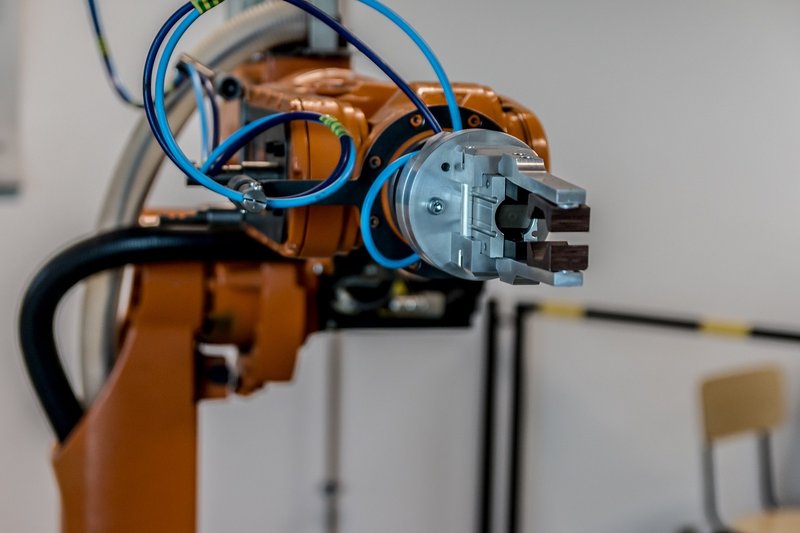
Representative image: tianya1223 / Pixabay
New York start-up Ultra raised a $50 million Series A led by Framework Ventures, announced on 9 October 2026, to rent warehouse robots instead of selling them.
What Happened
Ultra, a New York warehouse robotics start-up, has raised 50 million dollars in a Series A round led by Framework Ventures, with Y Combinator also taking part, the company announced on 9 October 2026. The new money takes its total funding to 62 million dollars, including an earlier 12 million dollar seed round. Alongside the round, Ultra announced a partnership with the AI research company Physical Intelligence, which will supply the software that runs Ultra's robots. Ultra's business model is unusual for hardware: it rents its robots to warehouses rather than selling them.
Key Facts
- Company: Ultra, a warehouse robotics start-up based in New York (Brooklyn, according to some reports).
- Round: 50 million dollar Series A, led by Framework Ventures, with Y Combinator participating.
- Total funding: 62 million dollars, including a 12 million dollar seed round.
- Business model: customers pay an upfront installation fee and then a monthly fee for hardware and software.
- Main product: a stationary robot for packing, sorting and kitting, called Operator (OP1), which the company says can be installed in hours, runs from a standard 120-volt power outlet and fits in about a 5-by-5-foot space.
- Ultra says its machines have processed more than 500,000 warehouse orders.
- Partnership: Physical Intelligence will provide the AI software, while Ultra builds and installs the hardware.
Why It Matters
Warehouses are under constant pressure to pack and ship more orders, faster, and staffing can be a constraint. Robots can help, but large automation systems can be expensive, slow to install and require a company to commit large amounts of capital up front. Ultra's approach tries to remove those barriers. A small robot that plugs into an ordinary socket and can be running within hours, paid for monthly like a software subscription, lowers the risk for a mid-sized warehouse that cannot afford a full automation project.
The split of work with Physical Intelligence reflects a wider trend in robotics. Building a robot's body and teaching it to handle the endless variety of objects in a warehouse are very different problems. Ultra focuses on hardware, installation and service, and relies on a specialist AI company for the software that lets its machines pick, sort and pack different items. If that model works, it could speed up how quickly general-purpose robot software reaches real workplaces.
There are open questions. The company has not disclosed revenue or how many robots it has installed, and its main published figure, more than 500,000 orders processed, is its own. Renting robots also means Ultra carries the cost of the hardware on its own books, which requires steady capital, part of the reason for this round.
For Indian readers, the model is worth watching. Fast-growing e-commerce and quick-commerce businesses rely on large numbers of small and mid-sized warehouses, where pay-as-you-go automation could be more practical than large one-off investments.
| Item | Detail |
|---|---|
| Round | 50 million dollar Series A |
| Lead investor | Framework Ventures |
| Other investor named | Y Combinator |
| Total funding | 62 million dollars |
| AI partner | Physical Intelligence |
Impact
Short-term: Ultra plans to use the money to put its robots into more warehouses, expanding its rental fleet.
Long-term: If renting robots proves profitable, more robotics firms may move from selling machines to subscription models, making automation accessible to smaller businesses.
Who is affected: Warehouse operators and logistics companies; warehouse workers whose tasks may change; robotics and AI start-ups; and investors in automation.
Key Takeaway
Ultra has raised 50 million dollars to rent plug-in warehouse robots run by Physical Intelligence's AI, betting that automation sold as a service will reach more warehouses.
Questions and Answers
How much did Ultra raise, and who led the round?
Ultra raised 50 million dollars in a Series A led by Framework Ventures, with Y Combinator participating, announced on 9 October 2026. Its total funding is now 62 million dollars.
What does Ultra's robot do?
Its main robot, Operator (OP1), is a stationary machine that packs, sorts and kits orders in warehouses. The company says it can be installed in hours and runs from a standard power outlet.
How do customers pay for Ultra's robots?
Customers pay an upfront installation fee and then a monthly fee for the hardware and software, instead of buying the robots outright.
What is Physical Intelligence's role?
Physical Intelligence, an AI research company, supplies the software that controls the robots, while Ultra builds and installs the machines.
Disclaimer: Prepared by the Peepals newsroom from publicly available sources with AI assistance. Information is accurate to the best of our knowledge at the time of publication and may change. Images may be representative. Not professional advice. Report an error via our contact page.
Sourced and fact-checked by the Peepals Global Editorial Team
Reported, fact-checked and published by the Peepals Global Editorial Team.