
Vaidyaratnam Ayurveda College jubilee: President asks for evidence-based Ayurveda
 By Ananya RaoAyush & Wellness Correspondent, Peepals Sanskriti
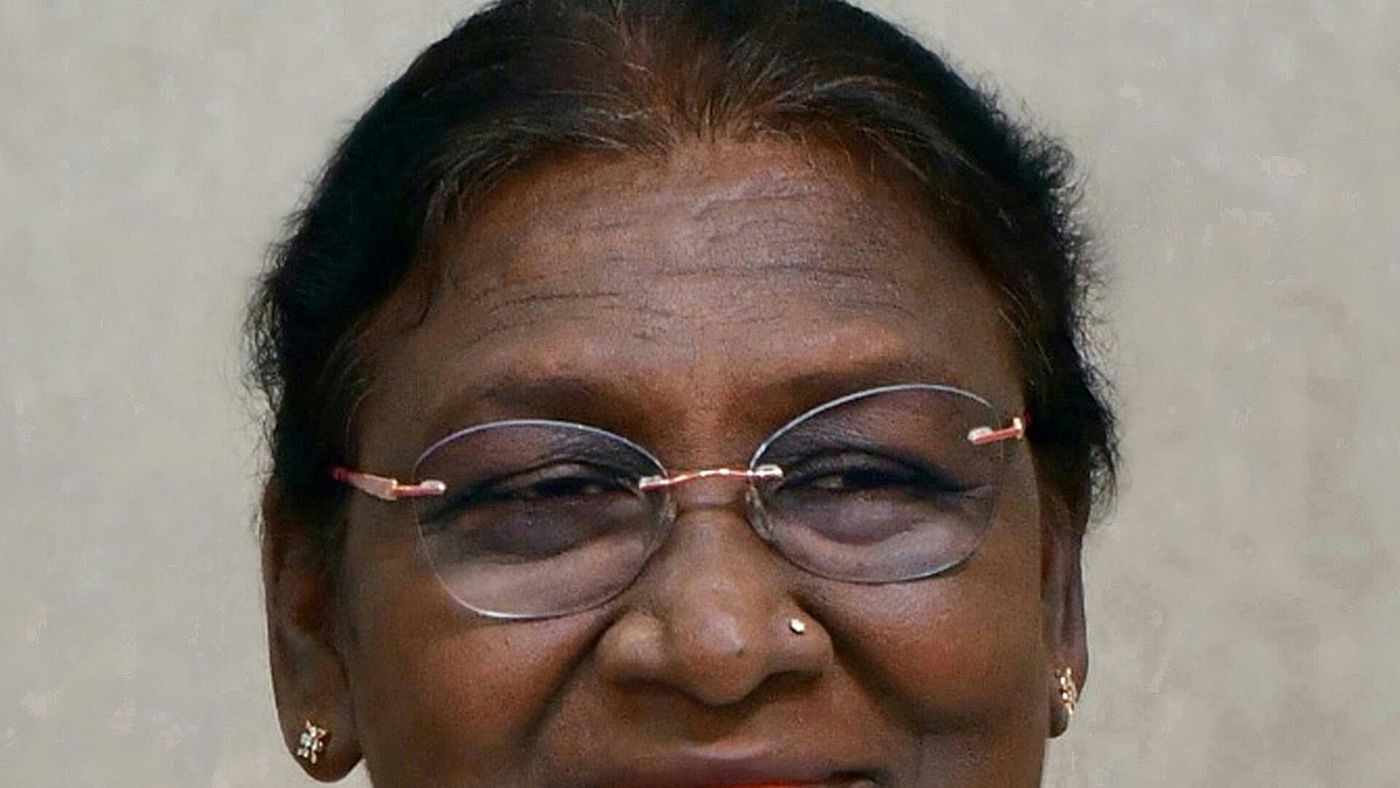
File photo: President's Secretariat (GODL-India), via Wikimedia Commons
At the Thrissur college's golden jubilee close on 27 November 2026, President Murmu asked Ayurveda colleges to pair authentic care with research and relevant teaching.
Vaidyaratnam Ayurveda College: what happened
President Droupadi Murmu attended the valedictory ceremony of the golden jubilee celebrations of Vaidyaratnam Ayurveda College in Thrissur, Keralam, on Friday, 27 November 2026. Speaking at the Lulu International Convention Centre in the city, she asked Ayurvedic colleges to serve their communities with authentic and effective Ayurveda, to teach what is relevant to today's health needs, and to support their practice with scientific research. The event closed a year of programmes marking the college's 50 years.
Vaidyaratnam Ayurveda College: key facts
- Event: valedictory ceremony of the golden jubilee of Vaidyaratnam Ayurveda College, Thrissur, held on Friday, 27 November 2026.
- Venue: Lulu International Convention Centre, Thrissur.
- The college was founded on 2 October 1976 by Ashtavaidyan Eledath Thaikkattu Neelakandan Mooss and is affiliated to the Kerala University of Health Sciences.
- The President said Ayurvedic institutions have an important role in reaching the goal of a healthy and developed India by 2047.
- She named Chikitsa-Manjari, Aalattur Manipravalam and Sahasra-Yogam among the works of learned Vaidyas from Keralam.
- The programme was part of her visit to Keralam on 27 and 28 November.
Vaidyaratnam Ayurveda College: why it matters
Ayurveda colleges train the practitioners who staff Ayush hospitals, dispensaries and wellness centres across the country. When the head of state speaks at one of them, the emphasis of the speech is a signal of what the government expects from the sector. Here the emphasis was clear: authenticity and effectiveness in patient care, teaching that keeps pace with present-day health problems, and research that builds evidence. According to the President's Secretariat and the Press Information Bureau, she said that institutions which combine genuine healthcare delivery with relevant education can produce capable Vaidyas and researchers who are equipped to deal with emerging health challenges.
She also tied the discipline to the country's legal foundations. According to the official account of the speech, she noted that the makers of the Constitution had recognised the need for a systematic framework for practising and teaching Ayurveda and the other Indian systems of medicine. Her call for evidence-based practice fits the direction of that system, in which classical knowledge is expected to be tested and documented before it is presented to patients as effective.
The speech gave a large place to Keralam's own tradition. The state has long been a centre of Ayurvedic practice through family lineages of physicians, and the President pointed out that its contribution is not limited to Sanskrit texts. Several original works and commentaries were written in Malayalam and in Manipravalam, the literary blend of Malayalam and Sanskrit. She cited Chikitsa-Manjari, Aalattur Manipravalam and Sahasra-Yogam as examples of what the learned Vaidyas of the state produced. For students, this is a reminder that the classical base of their subject includes regional-language works, not only the well-known Sanskrit compendia.
She praised the college for its year-long jubilee programme, including the intellectual and field activities held during it, and urged the institution to keep growing its capacity to serve people, especially the underprivileged. That last point matters for a college attached to a hospital, since affordable care for poorer patients is where traditional medicine colleges often reach people that other services miss.
Peepals timeline: The college was founded on 2 October 1976, its golden jubilee was marked through year-long celebrations, and the closing ceremony was held on 27 November 2026, with the President as chief guest. The 2047 goal she named lies 21 years ahead of the jubilee year (2047 minus 2026), a span equal to 42% of the 50 years the college has completed (21 divided by 50). Our calculation from the reported figures.
Vaidyaratnam Ayurveda College: impact
Short-term: The speech puts the spotlight on teaching quality and research at Ayurveda colleges. Teachers and students at Vaidyaratnam and other Keralam colleges are likely to see the call for evidence-based work reflected in their programmes and events.
Long-term: If colleges follow the emphasis on research, more clinical studies, documented case series and critical editions of regional texts could come out of teaching hospitals. That would help separate claims that are supported by evidence from those that are not, which patients and regulators both need.
Who is affected: Students and faculty of Ayurveda colleges, practitioners trained in the Kerala tradition, researchers working on classical texts in Malayalam and Manipravalam, and patients who use Ayurveda hospitals for affordable care.
Vaidyaratnam Ayurveda College: key takeaway
Watch whether Ayurveda colleges turn the President's call into concrete research and community-care programmes, since that is how the sector will be judged by 2047.
Vaidyaratnam Ayurveda College: questions and answers
Where is Vaidyaratnam Ayurveda College and who runs it?
The college is at Ollur, Thaikkattussery, in Thrissur district of Keralam. It was founded on 2 October 1976 by Ashtavaidyan Eledath Thaikkattu Neelakandan Mooss and it is affiliated to the Kerala University of Health Sciences.
What does 'evidence-based Ayurveda' mean?
It means that a treatment is used and taught on the strength of documented results, such as clinical studies and careful records of outcomes, and not only because a classical text describes it. It does not reject the classical texts; it asks that their recommendations be tested and reported in a way doctors and patients can check.
What are Chikitsa-Manjari and Sahasra-Yogam?
They are Ayurvedic works associated with Keralam that the President named as contributions of the state's learned Vaidyas, along with Aalattur Manipravalam. Her point was that Keralam's Ayurvedic literature includes works and commentaries in Malayalam and Manipravalam, not only in Sanskrit.
Was this a new government scheme for Ayurveda colleges?
No. The President did not announce a scheme or funding. Her address set out expectations: authentic and effective care, relevant teaching, research, and service to the underprivileged, as Ayurvedic institutions contribute to the goal of a healthy and developed India by 2047.
Disclaimer: Prepared by the Peepals newsroom from publicly available sources with AI assistance. Information is accurate to the best of our knowledge at the time of publication and may change. Images may be representative. Not professional advice. Report an error via our contact page.
By Ananya Rao, Ayush & Wellness CorrespondentCovers Ayush and more for Peepals Sanskriti. All stories by Ananya Rao
Great Indian Feast Trail Mumbai: 400 regional dishes in 13 food zones till November 29
Ayush pavilion wins IITF 2026 Gold for public outreach
Your week ahead, every Sunday. Free.
Exam and result dates, IPOs opening, scheme deadlines, government holidays and the RBI decision for the next 7 days, plus the week's top stories. One email a week, unsubscribe in one click.
Ananya Rao is a pen name of the Peepals Global Editorial Team, which researches, fact-checks and publishes every story. The portrait is an illustration.
Responsible for this story: the Peepals Global Editorial Team. How we report