Bengaluru opens two quantum labs; MIT Bengaluru to train 100 quantum engineers
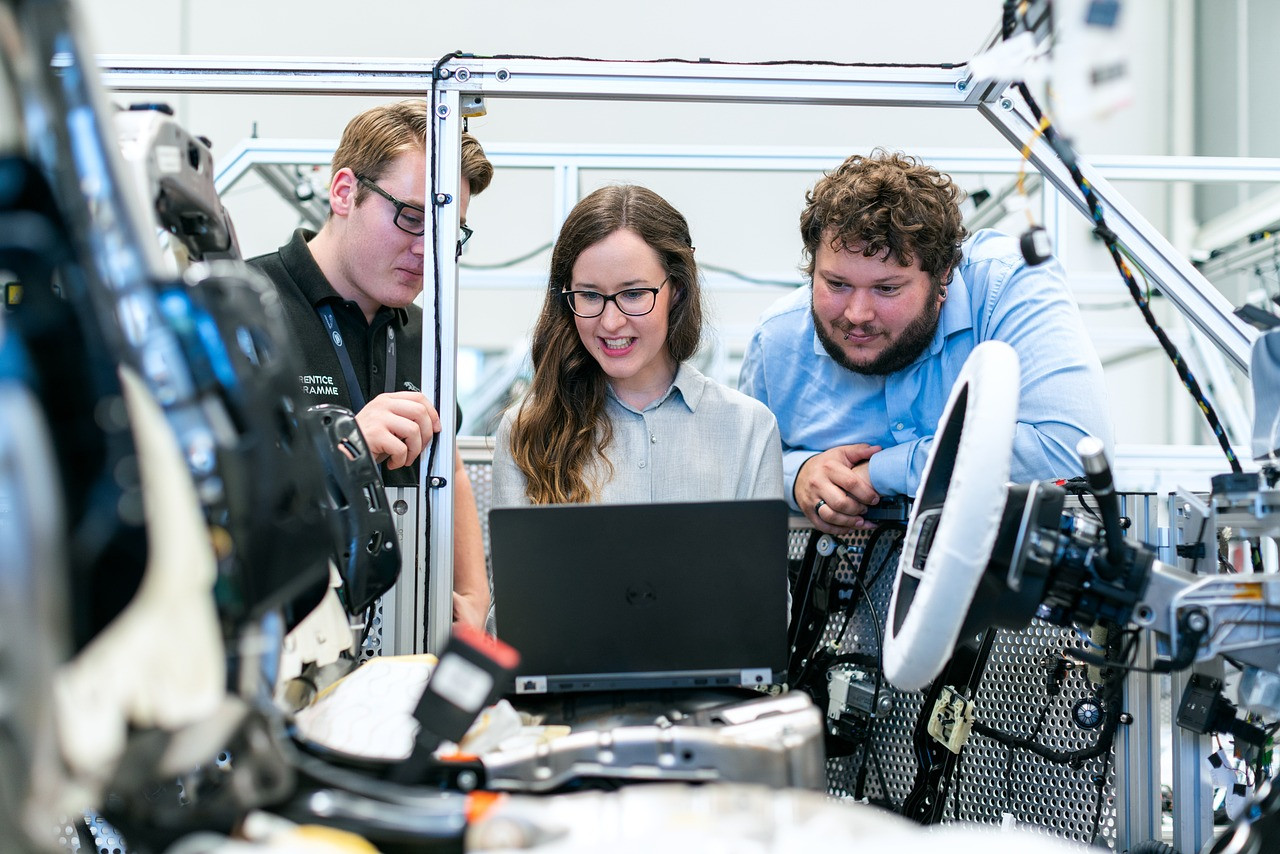
Representative image: This_is_Engineering / Pixabay
MIT Bengaluru launched a 25-qubit training hub on Oct 14, 2026, aiming to certify 100 quantum engineers by December; Samsung and IISc opened a quantum lab Oct 15.
What Happened
Bengaluru added two new quantum technology facilities in two days this week, both pitched as places to train the engineers India will need for quantum computing. On Wednesday, 14 October 2026, Manipal Institute of Technology (MIT) Bengaluru, part of the Manipal Academy of Higher Education (MAHE), launched the Manipal House of Quantum, or Quantum-Hub@MAHE, with a 25-qubit open-architecture dilution refrigeration system built for training and experiments, and a target of training 100 quantum engineers by December 2026 through a certification programme. On Thursday, 15 October, Samsung Semiconductor India Research (SSIR) and the Indian Institute of Science (IISc) opened a Quantum Research Lab on the IISc campus, funded through SSIR's corporate social responsibility support, to give students and researchers from across India hands-on experience with specialised experimental equipment.
Key Facts
- Quantum-Hub@MAHE at MIT Bengaluru was launched on 14 October 2026 with a 25-qubit open-architecture dilution refrigeration system.
- The hub aims to train 100 quantum engineers by December 2026 through a certification programme that mixes online modules, assessments and hands-on lab work.
- Its staff were trained before the launch in dilution refrigerator assembly, cryogenic systems, quantum control and superconducting quantum hardware.
- Partners named for the hub are QuantrolOx, Bluefors, Qblox and ConScience; it also plans quantum awareness camps for Class 10 and Class 12 students in rural India.
- MAHE's roadmap moves from training systems below 50 qubits to 50 to 150 qubit proof-of-concept platforms and, eventually, larger industrial systems.
- The SSIR-IISc Quantum Research Lab opened on 15 October 2026; its work covers qubit characterisation, cryogenic electronics, quantum-device reliability, and single-photon sources and detectors.
- The IISc lab grows out of a partnership the two signed in 2023, led at IISc by Professor Mayank Shrivastava of the Department of Electronic Systems Engineering.
Why It Matters
Quantum computing is still an early technology, but the hardware behind it needs a very particular set of skills: working with cryogenic systems that keep chips extremely cold, controlling and measuring qubits, and designing the electronics that sit around them. Both new facilities say their purpose includes hands-on experience on this kind of specialised equipment, and facilities built for training, not only for research, widen the pipeline of people who can use it.
For students and young engineers, the MIT Bengaluru programme is the more immediate opening. A certification course with a defined target of 100 trainees by December gives electronics, physics and computer science graduates a structured way to gain practical experience on a real quantum system. The hub's plan to run awareness camps for school students in rural areas also aims to bring new people into the field early, not just those already at top institutions.
The IISc lab matters for a different reason. Samsung's chip research arm in India is backing research on the reliability of quantum devices and on cryogenic electronics, areas where semiconductor know-how and quantum hardware meet. That link between the chip industry and quantum research could, over time, create jobs that combine the two skill sets. The opening also fits a wider push: India has a National Quantum Mission, and universities and companies are building their own capacity alongside it.
| Facility | Opened | Focus |
|---|---|---|
| Quantum-Hub@MAHE, MIT Bengaluru | 14 Oct 2026 | 25-qubit training system; 100 engineers to be certified by Dec 2026 |
| SSIR-IISc Quantum Research Lab | 15 Oct 2026 | Qubit characterisation, cryogenic electronics, device reliability, photon sources and detectors |
Impact
Short-term: Engineering and science students in and around Bengaluru gain access to quantum hardware training, with MIT Bengaluru's first certified batch due by the end of 2026 and IISc's lab open to researchers from other institutions.
Long-term: A larger pool of engineers trained on real cryogenic and qubit systems could help Indian start-ups, research centres and chip companies build and test quantum hardware at home instead of relying on scarce overseas expertise.
Who is affected: Students and graduates in electronics, physics, computer science and mathematics; quantum and semiconductor start-ups and research labs; and school students in rural areas reached by the hub's outreach camps.
Key Takeaway
Bengaluru's two new quantum labs, at MIT Bengaluru and IISc, turn quantum computing into a hands-on career track, with MIT Bengaluru aiming to certify 100 quantum engineers by December 2026.
Questions and Answers
What is Quantum-Hub@MAHE at MIT Bengaluru?
It is a quantum technology centre, also called the Manipal House of Quantum, launched on 14 October 2026 at Manipal Institute of Technology Bengaluru. It runs on a 25-qubit open-architecture dilution refrigeration system designed for training and experiments.
How can engineers get quantum computing training at MIT Bengaluru?
The hub plans to train 100 quantum engineers by December 2026 through a certification programme that combines online modules, assessments and hands-on laboratory work. Interested candidates should check MAHE's official announcements for eligibility and how to apply.
What will the Samsung-IISc Quantum Research Lab work on?
The lab, opened on 15 October 2026 at IISc, focuses on qubit characterisation, cryogenic electronics, the reliability of quantum devices, and single-photon sources and detectors. It is also meant to train students and researchers from across India.
Why does quantum hardware training matter for jobs?
Building and testing quantum computers requires skills in cryogenics, qubit control and specialised electronics that few engineers have. Training facilities widen the pool of people who can work for quantum and semiconductor companies and research labs.
Disclaimer: Prepared by the Peepals newsroom from publicly available sources with AI assistance. Information is accurate to the best of our knowledge at the time of publication and may change. Images may be representative. Not professional advice. Report an error via our contact page.
Sourced and fact-checked by the Peepals Global Editorial Team
Intuit to buy AI billing start-up Sequence to push into mid-market finance
Amazon's Bee launches $74.99 Frontier and $99.99 Eclipse always-listening AI devices
Reported, fact-checked and published by the Peepals Global Editorial Team.