BMW to evaluate Industrial Next's AI robots that retool factory lines in minutes
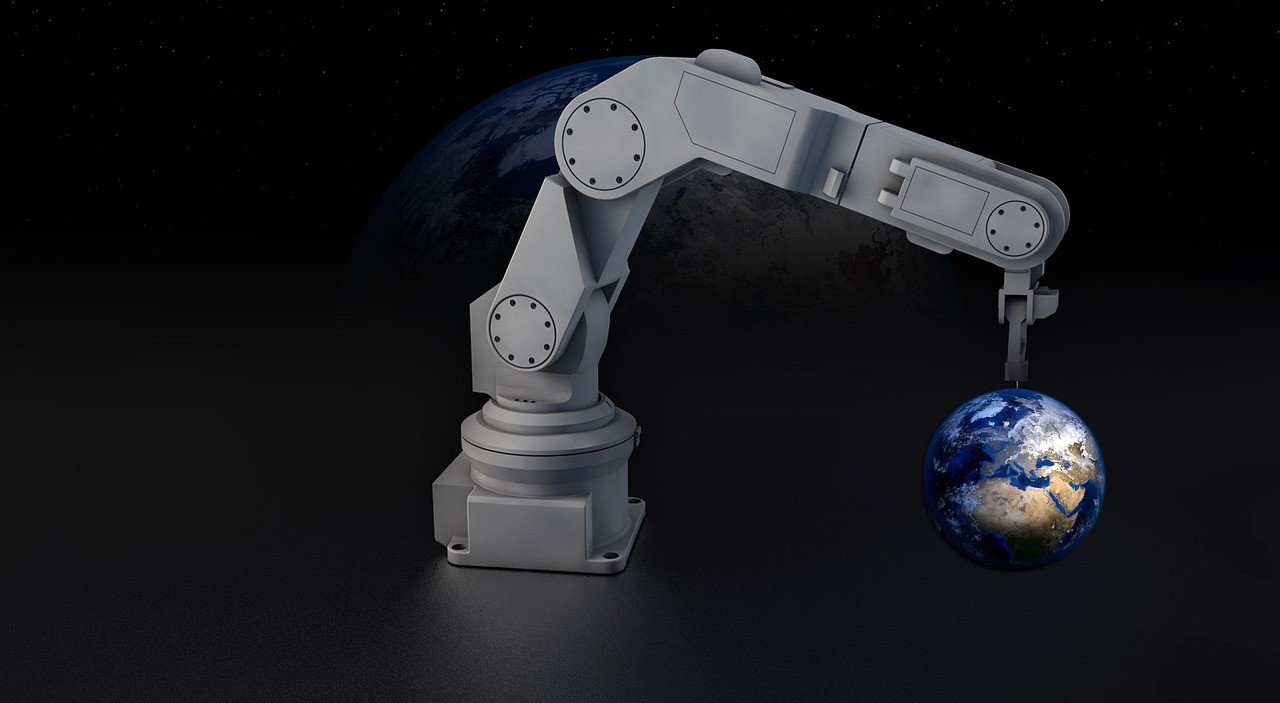
Representative image: PIRO4D / Pixabay
Robotics start-up Industrial Next said on October 13, 2026 that BMW Group's Technology Office will evaluate its AI-trained robot stations for dexterous factory work.
What Happened
Industrial Next, a San Francisco robotics start-up, said on Tuesday, October 13, 2026, that BMW Group's Technology Office will evaluate its AI-driven robotic stations for car manufacturing. The company made the announcement at the TechCrunch Disrupt 2026 conference in San Francisco. Industrial Next builds self-contained robot workstations run by its own AI foundation models, which it says let a production line be switched to a new task in minutes instead of the weeks that conventional robot programming takes. The BMW arrangement is an evaluation of the robots' fine handling skills; no production line or timeline has been announced.
Key Facts
- Industrial Next announced the BMW Group Technology Office evaluation at TechCrunch Disrupt 2026 on October 13, 2026.
- The evaluation focuses on dexterous manipulation, the fine hand-like movements that factory work often needs.
- The company's robotic stations use proprietary foundation models that link what a camera sees, the context of the task and the robot's motion.
- The models are trained largely in high-fidelity computer simulation before working on real parts.
- Tasks the robots already perform include threading flex cables and peeling protective film from smartphone parts; the company says its stations are in production, but it has not named that customer.
- Industrial Next was founded in 2021 by Lukas Pankau and Allen Pan, both former Tesla engineers.
- Claims about retooling in minutes come from the company and have not been independently verified.
Why It Matters
Factory robots are fast and precise but famously rigid. A typical industrial robot arm is programmed by engineers for one job, and changing that job, for a new car model or a new phone design, can take weeks of reprogramming and testing. That is why many delicate assembly tasks, such as connecting thin cables or handling soft materials, are still done by human hands.
The idea behind "physical AI" is to give robots the kind of general learning that large language models brought to text. Instead of following a fixed script, a robot uses a trained model to understand what it is looking at and work out how to move. Training mostly in simulation makes this cheaper, because the robot can practise millions of times on a virtual copy of the task before touching real parts.
BMW's interest matters because car makers rely heavily on industrial robots and set strict standards for them. An evaluation is not an order, and many such trials never reach production. But if a major manufacturer finds that a robot station can be retrained quickly for new tasks, it could change how factories plan model changes and short production runs.
For India, which is trying to grow its electronics and automotive manufacturing, adaptable robots of this kind are a technology to watch: they could raise output and quality but would also change the type of jobs available on factory floors.
Impact
Short-term: BMW's Technology Office will test Industrial Next's robots on fine manipulation tasks; results and any next steps have not been announced.
Long-term: If AI-trained robots can switch tasks quickly and reliably, factories could automate more delicate assembly work and change product lines faster.
Who is affected: Car and electronics manufacturers, factory workers in assembly roles, robotics engineers and makers of traditional industrial robots.
Key Takeaway
Industrial Next's AI-trained robots will be evaluated by BMW's Technology Office, a test of whether factory robots can learn new tasks in minutes rather than weeks.
Questions and Answers
What did Industrial Next announce?
On October 13, 2026, at TechCrunch Disrupt, it said BMW Group's Technology Office will evaluate its AI-driven robotic stations for dexterous manufacturing tasks.
Is BMW using these robots in its factories?
Not yet. The arrangement is an evaluation, and no production line or timeline has been named.
What makes these robots different?
They run on AI foundation models trained largely in simulation that combine vision, task context and motion, which the company says lets a line be retooled in minutes without traditional programming.
Who founded Industrial Next?
Lukas Pankau and Allen Pan, both former Tesla engineers, founded it in 2021.
Disclaimer: Prepared by the Peepals newsroom from publicly available sources with AI assistance. Information is accurate to the best of our knowledge at the time of publication and may change. Images may be representative. Not professional advice. Report an error via our contact page.
Sourced and fact-checked by the Peepals Global Editorial Team
Hinton, Bengio among hundreds urging air-gapped testing of hacking-capable AI
Nazara founder Nitish Mittersain steps down as MD after 27 years; Sacheti joins
Reported, fact-checked and published by the Peepals Global Editorial Team.