
Mueon, founded by ex-Intel engineers, raises $65 million for 3D AI computing blocks
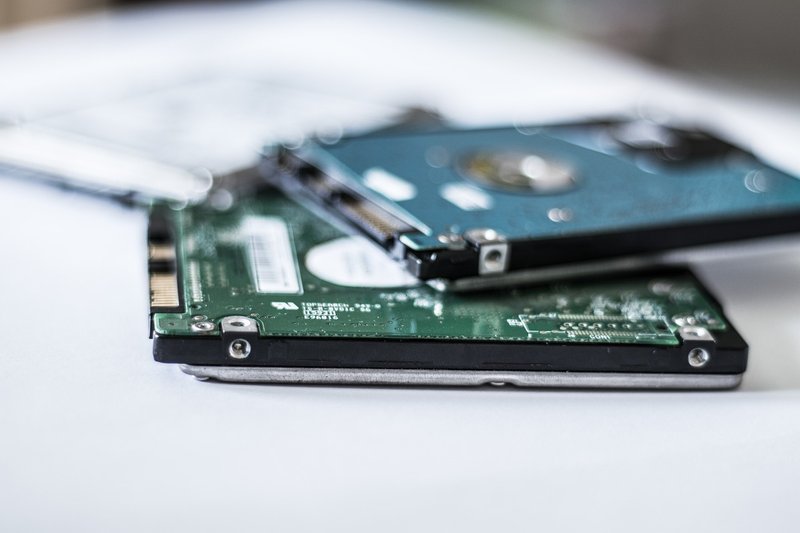
Representative image: Recklessstudios / Pixabay
Portland chip start-up Mueon, founded by former Intel engineers, said on October 15, 2026 it raised a $65 million Series A led by Maverick Silicon.
What Happened
Mueon, a hardware start-up based in Portland, Oregon, said on Wednesday, October 15, 2026 that it has raised $65 million in a Series A funding round to develop Cubelets, modular three-dimensional building blocks of computing and memory designed for artificial intelligence data centres. The round was led by Maverick Silicon, a fund that invests in semiconductor companies, with Intel Capital, Geodesic Alliances Fund, Oregon Venture Fund, M-Ventures, Wellington Capital, IQT and Defined taking part. The company was founded in 2025 by former Intel engineers Wilfred Gomes and Jack Hwang. It raised a $15.5 million seed round last year and says its total funding now exceeds $80 million. It did not disclose a valuation.
Key Facts
- Round: $65 million Series A, announced on October 15, 2026.
- Lead investor: Maverick Silicon; Intel Capital and six other investors joined.
- Earlier funding: a $15.5 million seed round in 2025; total raised now above $80 million.
- Founders: former Intel engineers Wilfred Gomes (chief executive) and Jack Hwang.
- Product: Cubelets, stackable 3D blocks that combine compute and memory to fit more AI processing into the same rack space.
- Target: up to ten times better power and cost efficiency within the same rack footprint, a goal the company has not yet shown in production.
- Board: Manish Muthal of Maverick Silicon and Srini Ananth of Intel Capital will join Mueon's board.
Why It Matters
The race to build AI is increasingly a race for electricity and floor space. Data centres that train and run large AI models are hitting limits on how much power a single rack can draw and how much heat it can shed. Mueon argues that much of the energy in these systems is spent not on the calculations themselves but on moving data between processors and memory, and its pitch is that by stacking compute and memory together in three dimensions, data travels a shorter distance, which cuts the power spent on moving it and lets operators pack far more computing into the same space.
The company says Cubelets are designed to scale toward megawatt-class density, meaning a single rack-sized system that draws on the order of a million watts. It is also working on a wider data centre system that brings together compute, storage, power and cooling. Gomes, the co-founder and chief executive, said the new funding will help bring the next generation of system-scale integration of compute and memory to market, and described the design as a way to get past the limits of today's racks.
It is important to separate ambition from results. Mueon's own announcement describes the new money as a step toward validating its systems and getting them ready for production. The ten-fold efficiency figure is a target rather than a published benchmark. Many hardware start-ups have promised large gains and struggled to turn prototypes into products that big cloud companies will buy.
The make-up of the investor list is still a signal. Intel Capital, the venture arm of the chipmaker, backing a company founded by two of its former engineers suggests the established industry sees value in new ways of packaging chips.
For Indian chip designers and hardware founders, Mueon is an example of where investors now see value: not only in making smaller transistors but in how chips and memory are stacked and connected inside a whole system.
| Mueon at a glance | Detail |
|---|---|
| Headquarters | Portland, Oregon, United States |
| Founded | 2025, by former Intel engineers |
| Seed round | $15.5 million (2025) |
| Series A | $65 million (October 15, 2026) |
| Total raised | More than $80 million |
Impact
Short-term: Mueon says it will use the money to expand its engineering and operations teams, move Cubelets toward system validation and production readiness, and deepen work with potential customers.
Long-term: If its stacked design works at scale, data centre operators could fit more AI computing into existing buildings and power connections, easing one of the biggest bottlenecks in the AI build-out. If it does not, the company will join a long list of hardware ventures that found it hard to move from lab to market.
Who is affected: Cloud and data centre operators looking to lower power and space costs; chipmakers and memory suppliers working on chip stacking; venture investors in deep-tech hardware; and engineers in chip design and packaging, including in India.
Key Takeaway
Mueon's $65 million round shows investors, including Intel's own venture arm, are betting that stacking compute and memory in 3D can ease the power and space squeeze on AI data centres, though the company still has to prove its targets in production.
Questions and Answers
How much did Mueon raise and who led the round?
Mueon raised $65 million in a Series A round announced on October 15, 2026. Maverick Silicon led it, and Intel Capital, Geodesic Alliances Fund, Oregon Venture Fund, M-Ventures, Wellington Capital, IQT and Defined also invested.
What are Mueon's Cubelets?
Cubelets are modular, three-dimensional blocks that combine computing and memory. By stacking them, Mueon aims to shorten the distance data must travel inside AI systems, cutting the energy used to move data and fitting more computing into each rack.
Has Mueon proved its ten-times efficiency claim?
Not yet. The company describes up to ten times better power and cost efficiency as a target and says the new funding will move Cubelets toward system validation and production readiness.
Who founded Mueon?
Mueon was founded in 2025 by former Intel engineers Wilfred Gomes, who is chief executive, and Jack Hwang.
Disclaimer: Prepared by the Peepals newsroom from publicly available sources with AI assistance. Information is accurate to the best of our knowledge at the time of publication and may change. Images may be representative. Not professional advice. Report an error via our contact page.
Sourced and fact-checked by the Peepals Global Editorial Team
Flying cars? Tesla's new Roadster hops and hovers on SpaceX thrusters; production in 2028
Intuit to buy AI billing start-up Sequence to push into mid-market finance
Reported, fact-checked and published by the Peepals Global Editorial Team.