
Nathaniel Craig: GPT-6 Astra led proof for a lattice Standard Model
 By Anika SharmaAI & Innovations Editor, Peepals Tech
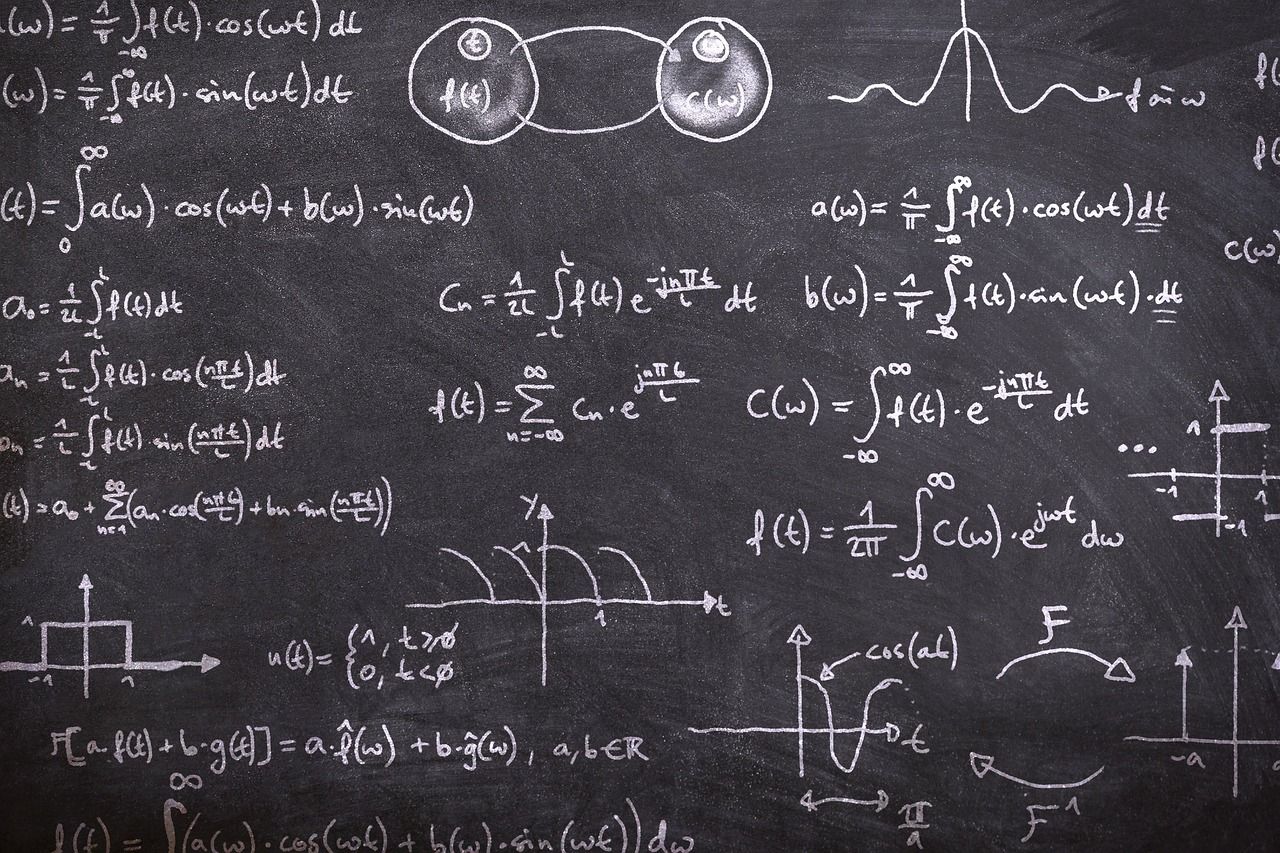
Representative image: athree23 / Pixabay
Physicist Nathaniel Craig says OpenAI's GPT-6 Astra led the proof behind a candidate lattice Standard Model, in the first post on OpenAI's science blog.
Nathaniel Craig: what happened
Nathaniel Craig, a particle physicist at the University of California, Santa Barbara, says he worked with OpenAI's GPT-6 Astra model to build a candidate "lattice" definition of the Standard Model, the theory that describes the known particles and forces apart from gravity. His account, published on Sunday, 15 November 2026, is the first guest post on a new OpenAI science blog. Craig says the AI model took the lead on the detailed proof, and he calls the result an answer in principle rather than in practice.
Nathaniel Craig: key facts
- The underlying paper, on a gauge-invariant measure for lattice chiral fermions, was posted on arXiv, the open preprint server, on 6 October 2026.
- Craig is a theoretical physicist at UC Santa Barbara and a visiting scientist at OpenAI.
- He credits GPT-6 Astra with leading the detailed proof; the strategy was his.
- Three lattice field theorists, Maarten Golterman, Andreas Kronfeld and Yigal Shamir, reviewed the proof; Craig says their questions helped build confidence in it.
- The construction does not yet allow computer simulation of the full Standard Model.
- The post lists open work, including proving a mathematical property called reflection positivity at finite lattice spacing and linking the construction to a continuum theory.
Nathaniel Craig: why it matters
Physicists often study theories by putting space and time on a "lattice", a grid of points, so that a computer can calculate what happens. The approach is a standard tool, but it has been much harder to apply to the full Standard Model because of "chiral fermions", particles whose left-handed and right-handed versions behave differently. Putting them on a grid in a consistent way has been an open problem for decades; accounts of the post put its age at between 25 and more than 50 years.
A lattice definition would give the Standard Model a precise, "nonperturbative" footing: one that does not rely on the step-by-step approximations physicists usually use. Craig's claim is that the construction he and the model built is a candidate for such a definition. He is careful about its limits: it is not yet usable for simulations, and parts of the mathematics still need to be proved.
The bigger story for the technology industry is the role of the AI. OpenAI has been promoting its models as research partners. Here, a working scientist, writing under his own name, says the model did more than check algebra: it led the detailed proof that turned his idea into a construction. That claim is his and OpenAI's; independent physicists outside the review circle have yet to judge the work, and some coverage has warned against reading it as AI solving physics. The test will be whether the wider lattice community accepts the construction.
For research labs everywhere, including India's, the practical question the post raises is how to check, credit and publish work that an AI model helped produce. Craig's approach was to name the model's role and have specialists review the proof before going public.
Peepals timeline: On 6 October 2026, Craig posted the preprint on arXiv. Before the public write-up, three lattice specialists reviewed the proof. On 15 November 2026, OpenAI launched its science blog with Craig's guest post describing how he worked with GPT-6 Astra. The next stages named in the post are proofs of reflection positivity and of the link to a continuum theory.
| Term | What it means |
|---|---|
| Standard Model | The theory of the known particles and three of the four forces |
| Lattice | A grid of points standing in for space and time, used for computer calculations |
| Chiral fermions | Particles whose left- and right-handed versions behave differently |
| Nonperturbative | Exact, not built from step-by-step approximations |
Nathaniel Craig: impact
Short-term: Physicists will read and test the arXiv paper; the AI industry will cite the post as an example of models contributing to research.
Long-term: If the construction holds up, it could open a route to simulating the whole Standard Model on computers. It also sets an example of how AI help is disclosed in a physics paper.
Who is affected: Theoretical and lattice physicists; research institutes deciding how to use AI tools; and AI companies competing to show scientific value.
What to watch next: Responses from lattice physicists outside the original review group, and progress on the open proofs Craig lists.
Nathaniel Craig: key takeaway
Treat this as a claim to watch, not a settled result: the test is whether lattice physicists beyond the three reviewers accept the construction.
Nathaniel Craig: questions and answers
Who is Nathaniel Craig?
Nathaniel Craig is a theoretical particle physicist at the University of California, Santa Barbara, and a visiting scientist at OpenAI. He wrote the first guest post on OpenAI's science blog about his work with GPT-6 Astra.
Did AI solve the Standard Model?
No. Craig describes a candidate lattice definition of the Standard Model and says it is an answer in principle, not in practice. It cannot yet be used for simulations, and some proofs are still open.
What did GPT-6 Astra do in this work?
According to Craig, he supplied the strategy and the model led the detailed proof that turned it into a construction. This is his account; independent experts have not yet confirmed the model's role.
Where can the paper be read?
It was posted on the arXiv preprint server on 6 October 2026, titled around a gauge-invariant measure for lattice chiral fermions. Preprints are not yet peer-reviewed in a journal.
Disclaimer: Prepared by the Peepals newsroom from publicly available sources with AI assistance. Information is accurate to the best of our knowledge at the time of publication and may change. Images may be representative. Not professional advice. Report an error via our contact page.
By Anika Sharma, AI & Innovations EditorCovers AI & Innovation and more for Peepals Tech. All stories by Anika Sharma
Bengaluru Tech Summit robot race: General Autonomy's Param wins at 4.3 m/s
Xiaomi 18 Pro Max goes global at 1,599 euros with a rear screen
Your week ahead, every Sunday. Free.
Exam and result dates, IPOs opening, scheme deadlines, government holidays and the RBI decision for the next 7 days, plus the week's top stories. One email a week, unsubscribe in one click.
Anika Sharma is a pen name of the Peepals Global Editorial Team, which researches, fact-checks and publishes every story. The portrait is an illustration.
Responsible for this story: the Peepals Global Editorial Team, led by editor Prashant Sonar. How we report