
San Francisco: developer explores AI data centre in empty Bloomingdale's mall space
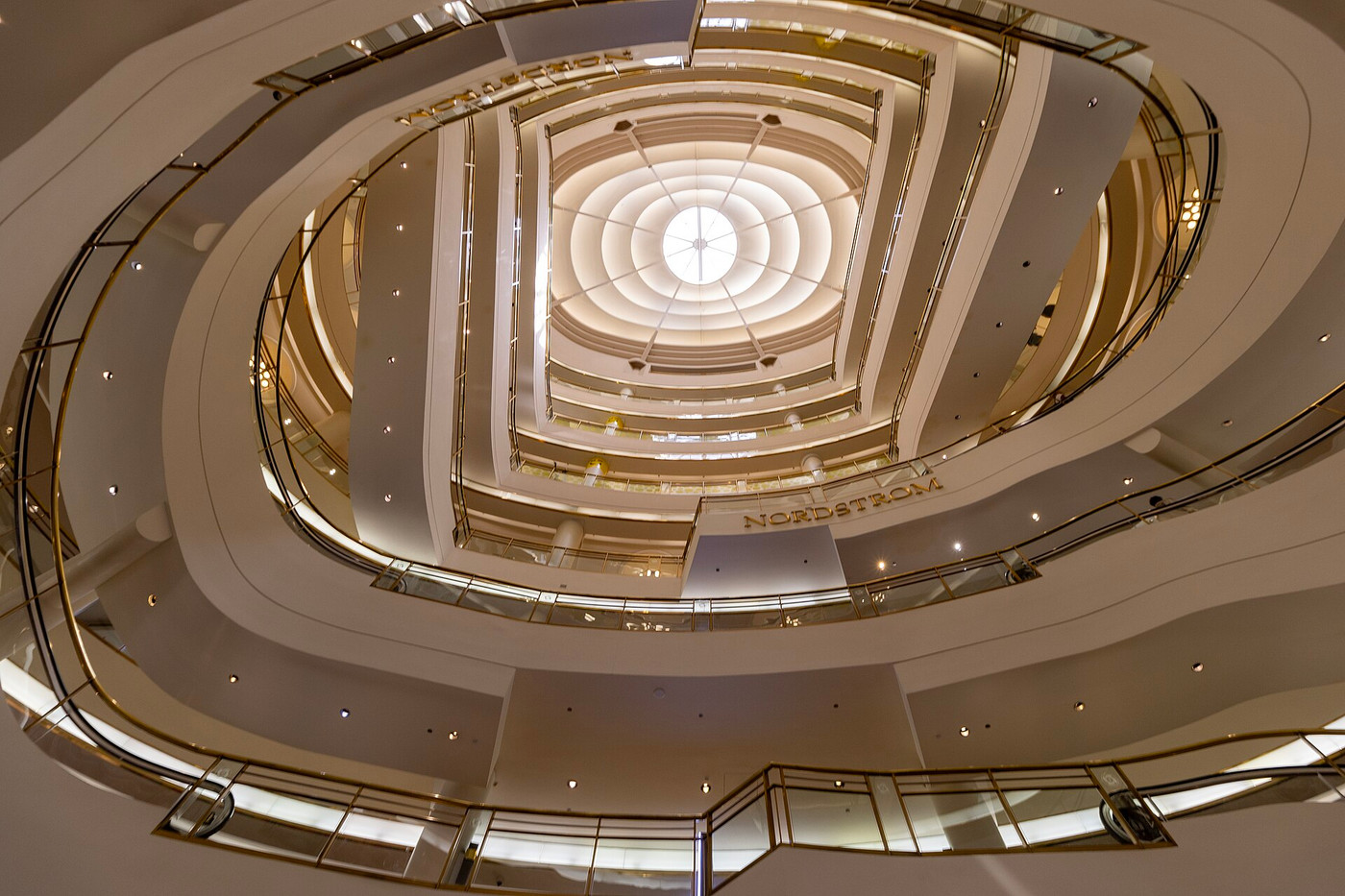
File photo: The wub (CC BY-SA 4.0), via Wikimedia Commons
A Maryland developer is exploring turning the former Bloomingdale's space at San Francisco Centre into an AI data centre, reports said on October 19, 2026.
What Happened
A shuttered shopping mall in downtown San Francisco is being considered for conversion into an artificial intelligence data centre, according to reports published on October 19, 2026. KG Growth Partners, a developer based in the US state of Maryland, asked the city's Department of Building Inspection in June about permits for a data centre in the former Bloomingdale's space at 845 Market Street, part of the San Francisco Centre mall. No formal application has been filed, and the developer said it is working with a potential buyer it did not name.
Key Facts
- The former Bloomingdale's space covers about 350,000 square feet, roughly one-third of the wider San Francisco Centre complex on Market Street.
- KG Growth Partners made its permit inquiry to the city in June 2026; no application had been filed as of October 19.
- The firm's chief executive, Jared Krieger, declined to name the client and described a plan built with an unnamed AI laboratory.
- Under the pitch, the ground floor would stay open to the public, while technical equipment would sit upstairs and in back-of-house areas.
- San Francisco Mayor Daniel Lurie has signed a 45-day moratorium that stops the city approving new data centre facilities while officials study their effects and decide how to regulate them.
- An earlier deal to sell the mall complex to Presidio Bay Ventures and Prado Group fell through after talks over its ground lease failed, according to the reports.
Why It Matters
A data centre is a building full of computer servers that store data and run software for companies and the public. The rapid growth of AI, which needs huge amounts of computing power to train and run models, has set off a global race to build these facilities. They need large amounts of electricity, cooling and network connections, so they have usually been built on cheap land outside cities rather than in downtown districts.
The San Francisco idea flips that pattern. Downtown San Francisco, home to many AI companies, has struggled with empty offices and shops since the pandemic, and the closed mall has become a symbol of that decline. For a property owner, a data centre tenant could fill a vast, windowless retail space that is hard to let to shops. For the city, it raises questions: a data centre employs few people once built, may draw heavy power from the local grid, and does little to bring people back onto the streets. Mayor Lurie has said he wants a downtown where people work, live and learn, and the moratorium shows the city wants rules in place before it approves any new facility.
The proposal also reflects a wider debate in the United States, where opposition to data centres over power use, noise and land is growing in several states and has become an issue ahead of the November midterm elections.
For India, the story is a useful marker. Indian cities such as Mumbai and Chennai have seen a wave of new data centre projects as companies look for AI-ready capacity closer to users. The questions San Francisco is now asking, about power supply, local jobs and whether a dense city centre is the right place for server halls, are the same ones Indian planners and state governments will face as that build-out continues.
| Detail | What is known |
|---|---|
| Site | Former Bloomingdale's, 845 Market Street |
| Size | About 350,000 square feet |
| Developer | KG Growth Partners, Maryland |
| Status | Permit inquiry in June 2026; no application filed |
| City position | 45-day moratorium on approving new data centres |
Impact
Short-term: Nothing can be approved during the city's moratorium, and the developer has not yet filed an application, so the site will stay empty for now. City officials will use the pause to study the effects of data centres and draft rules.
Long-term: If San Francisco allows the conversion, it could become a model for reusing empty malls and offices in other cities as AI computing demand grows. If the city restricts data centres in its core, developers will keep looking to the outskirts and to other regions.
Who is affected: San Francisco residents and businesses downtown, the mall's owners and lenders, AI companies looking for computing capacity, electricity providers, and city planners elsewhere watching how San Francisco handles the request.
Key Takeaway
A developer wants to turn a third of San Francisco's empty downtown mall into an AI data centre, but no application exists yet and the city has paused approvals while it decides how to regulate such facilities.
Questions and Answers
What is planned for San Francisco's shuttered downtown mall?
KG Growth Partners, a Maryland developer, has asked the city about permits to convert the former Bloomingdale's space at 845 Market Street, part of San Francisco Centre, into an AI data centre. It has not filed a formal application.
Who would use the data centre?
The developer says it is working with a potential buyer and an AI laboratory but has not named either. Its chief executive declined to identify the client.
Can San Francisco approve the project now?
Not at present. Mayor Daniel Lurie has signed a 45-day moratorium that bars the city from approving new data centre facilities while officials study their impacts and decide on rules.
Why are AI data centres controversial?
They need large amounts of electricity and cooling, often create few permanent jobs, and can strain local power grids. In a downtown area, critics also argue they do little to bring people and activity back to the streets.
Disclaimer: Prepared by the Peepals newsroom from publicly available sources with AI assistance. Information is accurate to the best of our knowledge at the time of publication and may change. Images may be representative. Not professional advice. Report an error via our contact page.
Sourced and fact-checked by the Peepals Global Editorial Team
Reported, fact-checked and published by the Peepals Global Editorial Team.