
Vulcan Centaur rocket fails, 40 Amazon Leo internet satellites lost
 By Pooja MehraIndustry Trends Analyst, Peepals Tech
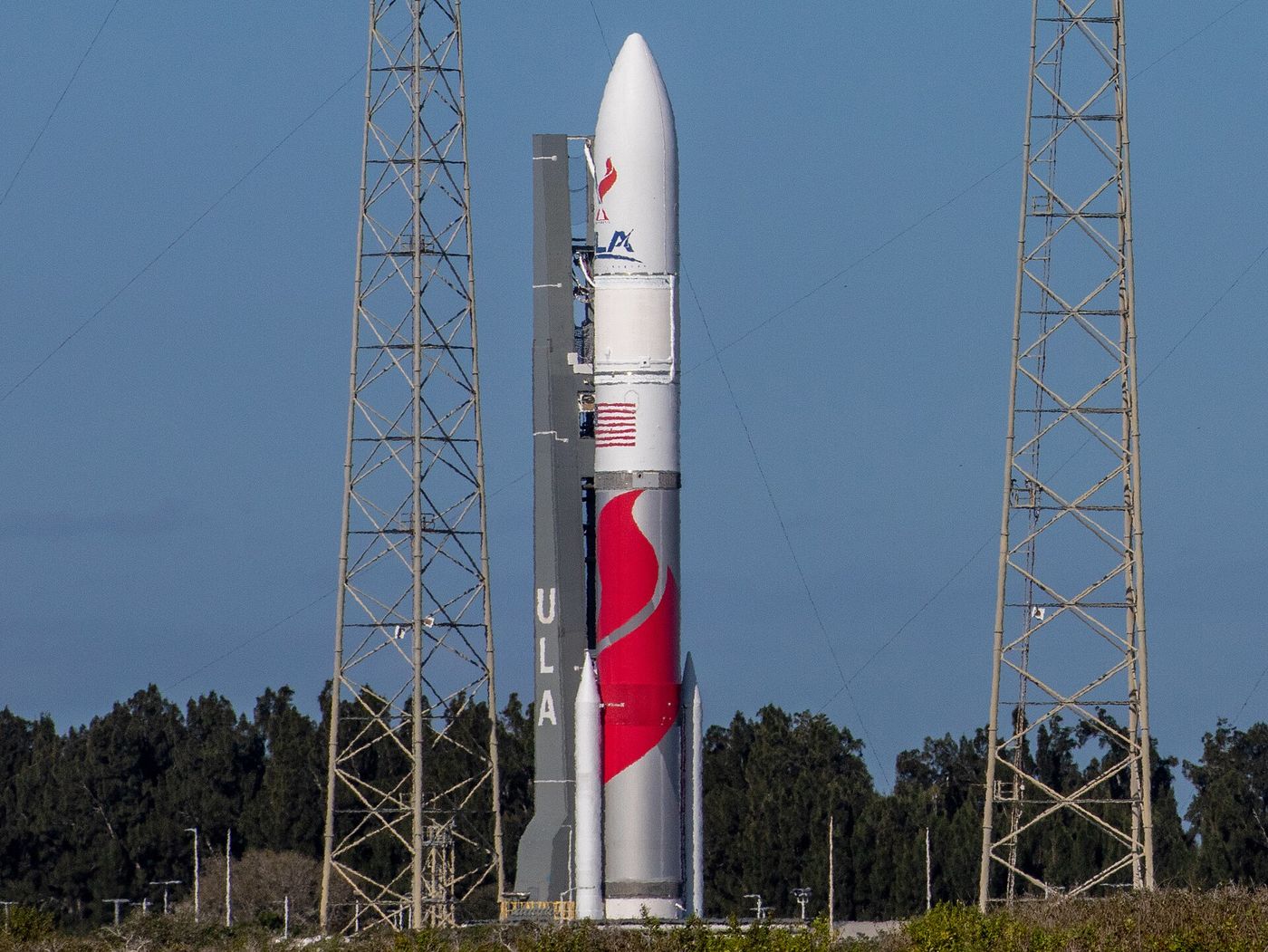
File photo: NASA/Ben Smegelsky (Public domain), via Wikimedia Commons
ULA's Vulcan Centaur failed on 15 November 2026 when its upper stage malfunctioned, destroying 40 Amazon Leo satellites in the company's first total mission failure.
What Happened
A Vulcan Centaur rocket built by United Launch Alliance (ULA) failed on Sunday, 15 November 2026, and the 40 Amazon Leo broadband satellites it was carrying were lost. The rocket lifted off from Cape Canaveral in Florida, and about 10 minutes into the flight ULA reported an anomaly while the Centaur upper stage was firing. Less than an hour after launch, the company confirmed the mission had failed and said it did not yet have enough data to understand what went wrong. It is the first total mission failure in ULA's history, and it came on a flight meant to return Vulcan to service after earlier problems.
Vulcan Centaur: key facts
- Date and place: Sunday, 15 November 2026, from Cape Canaveral, Florida.
- Payload: 40 Amazon Leo internet satellites, all lost.
- What failed: the Centaur upper stage malfunctioned about 10 minutes into flight and did not deliver the satellites to orbit.
- Cause: not yet known; ULA says it will investigate before Vulcan flies again.
- History: on Vulcan's second flight in October 2024 and its fourth in February 2026, a solid rocket booster had problems, after which the US Space Force paused national security launches on Vulcan.
- Amazon's plan: this was the first of 38 Vulcan launches Amazon bought for its constellation, previously called Project Kuiper.
- Amazon has about 400 satellites in orbit, out of more than 3,200 authorised by the US Federal Communications Commission.
- Amazon's next launch is scheduled for 23 November on a European Ariane 6 rocket from French Guiana.
Vulcan Centaur: why it matters
Amazon Leo is Amazon's plan to offer internet from space using thousands of satellites in low Earth orbit, in competition with SpaceX's Starlink. To offer reliable coverage, the company needs to put many satellites up quickly, and it has booked launches with several rocket companies to do it. Losing 40 satellites in one go is a setback, but the bigger worry is time: if Vulcan stays grounded for months while engineers find and fix the problem, Amazon loses one of its main ways to reach orbit.
For ULA, a joint venture of Boeing and Lockheed Martin, the failure is a blow to a rocket it needs to fly often. Vulcan is meant to replace ULA's older Atlas V and Delta IV rockets and to carry both commercial satellites and US military payloads. The earlier booster problems had already led the Space Force to pause national security missions on Vulcan; this flight was supposed to show the rocket was ready. A failure of the upper stage, a different part of the rocket, adds a new issue to investigate.
The episode also shows how few heavy rockets the Western world has. Analysts have noted that Blue Origin's New Glenn rocket is also out of action for now, which leaves Amazon with fewer alternatives. The 23 November Ariane 6 launch from French Guiana will be watched closely as Amazon's next attempt to add satellites.
Peepals calculation: The 40 satellites lost equal about 10% of the roughly 400 Amazon has in orbit (40 ÷ 400), and Amazon's in-orbit fleet is about 12.5% of the more than 3,200 satellites it is authorised to launch (400 ÷ 3,200). With 37 more Vulcan launches still on its books (38 minus 1), Amazon's plan leans heavily on this rocket returning to service. Our calculation from the reported figures.
| Measure | Figure |
|---|---|
| Satellites lost on 15 November | 40 |
| Amazon Leo satellites in orbit | About 400 |
| Satellites authorised by the FCC | More than 3,200 |
| Vulcan launches Amazon bought | 38 |
| Amazon's next launch | 23 November, Ariane 6 |
Impact
Short-term: Vulcan is grounded while ULA investigates, and Amazon has lost 40 satellites and the use of its booked Vulcan flights until the rocket is cleared.
Long-term: A long grounding could slow the build-out of Amazon Leo and delay its competition with Starlink, and could push satellite operators and the US military to rely more on other rockets.
Who is affected: Amazon and future Amazon Leo customers; United Launch Alliance and its owners, Boeing and Lockheed Martin; the US Space Force; and other satellite operators waiting for launch slots.
What to watch next: Amazon's next launch is scheduled for 23 November 2026 on an Ariane 6 from French Guiana, and ULA has said it will investigate before Vulcan flies again.
Key Takeaway
The Vulcan Centaur failure on 15 November 2026 destroyed 40 Amazon Leo satellites and grounded the rocket Amazon most depends on, at a moment when few heavy rockets are available.
Questions and Answers
What happened to the Vulcan Centaur rocket?
The Vulcan Centaur launched from Cape Canaveral on 15 November 2026, and about 10 minutes into flight its Centaur upper stage malfunctioned. The rocket failed to reach orbit, and ULA confirmed the mission failure within an hour.
How many Amazon satellites were lost?
All 40 Amazon Leo satellites on board were lost. Amazon has about 400 satellites in orbit out of more than 3,200 authorised.
Why did the Vulcan Centaur fail?
The cause is not yet known. ULA said it did not have enough data yet and will investigate before Vulcan flies again.
What is Amazon Leo?
Amazon Leo, previously called Project Kuiper, is Amazon's planned network of low Earth orbit satellites to provide broadband internet from space, competing with SpaceX's Starlink.
Disclaimer: Prepared by the Peepals newsroom from publicly available sources with AI assistance. Information is accurate to the best of our knowledge at the time of publication and may change. Images may be representative. Not professional advice. Report an error via our contact page.
By Pooja Mehra, Industry Trends AnalystCovers Industry News & Trends and more for Peepals Tech. All stories by Pooja Mehra
Google Maps Ask Maps trip planner: AI itineraries reach India, 200 countries
California sues OpenAI over AI agents linked to Hugging Face hack
Your week ahead, every Sunday. Free.
Exam and result dates, IPOs opening, scheme deadlines, government holidays and the RBI decision for the next 7 days, plus the week's top stories. One email a week, unsubscribe in one click.
Pooja Mehra is a pen name of the Peepals Global Editorial Team, which researches, fact-checks and publishes every story. The portrait is an illustration.
Responsible for this story: the Peepals Global Editorial Team, led by editor Prashant Sonar. How we report