
Chuncheon turns to St. John's College Great Books seminars to counter AI
 By Kabir SethiEducation Correspondent, Peepals Yuva

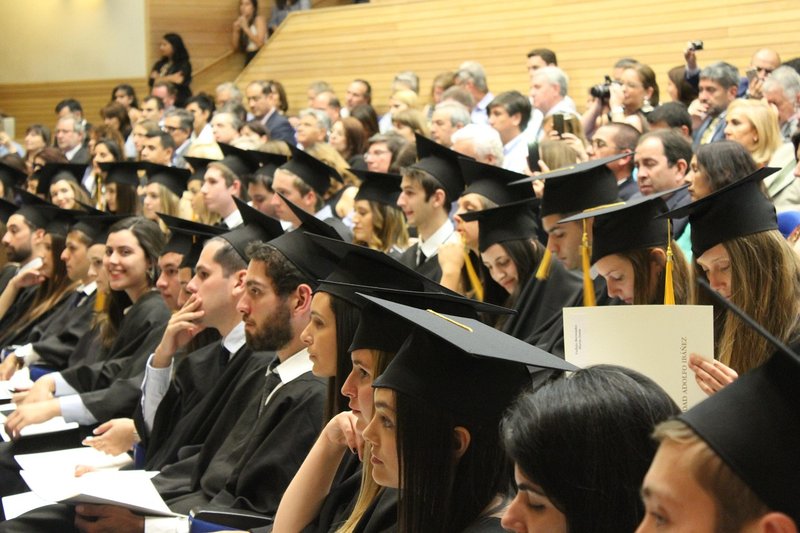
Representative image: congerdesign / Pixabay
South Korea's Chuncheon has partnered with St. John's College to bring Great Books seminars to schools, NPR reported on 9 November 2026.
What Happened
Chuncheon, a city in South Korea, is using an old-fashioned answer to a new worry: students leaning on artificial intelligence instead of thinking for themselves. In a report published on Monday, 9 November 2026, US public broadcaster NPR described how the city government set up an academic partnership with St. John's College in Annapolis, Maryland, to bring the college's "Great Books" teaching model into local schools and universities. In this model, students read original texts, from Aristotle, Euclid and Shakespeare to Korean writers such as Nobel laureate Han Kang, and teachers do not lecture; they only guide the discussion.
Key Facts
- Chuncheon's city government formed an academic partnership with St. John's College last year to promote the Great Books model.
- The agreement was signed by St. John's President Walter Sterling and Chuncheon Mayor Yuk Dong-han, according to the college.
- The model is discussion-based: teachers act as guides in seminars rather than lecturers.
- Reading lists include Aristotle, Shakespeare, Euclid and Korean authors including Han Kang.
- According to the programme's founder in Korea, about 120 college students and some 770 younger students now take Great Books courses in the country, with 40 teachers in training.
- The push follows a post-COVID fall in South Korean reading skills shown in international tests such as PISA, and fast adoption of AI in Korean classrooms, NPR reported.
- South Korea's first Great Books programme was set up in 2019 at Incheon National University by a St. John's College graduate.
Why It Matters
South Korea has moved quickly to bring AI tools into education, NPR reported, at a time when international tests show its students' reading skills slipping. That combination has raised a concern familiar to students and teachers everywhere, including in India: if a chatbot can summarise a chapter or draft an essay in seconds, when do students learn to read closely, argue and form their own views?
Chuncheon's answer is to make students do exactly what a machine cannot do for them in the moment: read a difficult original text, sit around a table and defend an interpretation in front of others. St. John's College in the US builds its teaching around primary texts and seminars rather than lectures. By partnering with the college, the city is trying to import both the method and the training that teachers need to run such discussions.
The scale is still small. The figures quoted by NPR, about 120 college students and 770 younger students, are tiny next to South Korea's school population. But the idea has spread from one university programme in 2019 to a city-backed plan, a school that has adopted the model and seminars at a local high school, according to the college.
For Indian students, the story is a useful mirror. Students and teachers in India face the same question about AI tools and homework. Chuncheon's experiment shows one concrete way a city, not just a single elite school, can try to put that into practice: invest in teacher training and change how a class is run, rather than only banning tools.
Peepals calculation: Of the roughly 890 students in South Korea's Great Books programmes (120 college students plus about 770 younger students), about 87% are school-age learners (770 ÷ 890 ≈ 0.87). There are about 22 students for every teacher now in training (890 ÷ 40 ≈ 22). Our calculation from the reported figures.
| Group | Number reported |
|---|---|
| College students in Great Books programmes | about 120 |
| Younger students in Great Books programmes | about 770 |
| Teachers in training | 40 |
| First Korean programme | 2019, Incheon National University |
Impact
Short-term: Chuncheon schools working with the partnership are running seminars and teacher training in the Great Books method, and the NPR report has drawn international attention to the experiment.
Long-term: If the approach improves reading and reasoning, other Korean cities, and education systems elsewhere worried about AI, may look at discussion-based teaching as a complement to technology rather than a rejection of it.
Who is affected: Students and teachers in Chuncheon and in South Korea's Great Books programmes, education officials weighing how to respond to AI in classrooms, and students worldwide who use AI tools for their studies.
Key Takeaway
Chuncheon in South Korea has partnered with St. John's College to bring discussion-based Great Books teaching into its schools as a response to falling reading skills and heavy use of AI.
Questions and Answers
Why is a South Korean city turning to a US college to deal with AI?
Chuncheon wants students to build reading and reasoning skills that AI cannot replace, so it partnered with St. John's College, which teaches through seminars on original texts rather than lectures.
What is the Great Books model?
It is a way of teaching in which students read original works, such as Aristotle, Euclid or Shakespeare, and discuss them in seminars, with the teacher guiding the conversation instead of lecturing.
How many students in South Korea follow Great Books programmes?
According to the programme's founder in Korea, about 120 college students and some 770 younger students, with 40 teachers in training.
What does this mean for students in India?
It shows one practical way schools can respond to AI: train teachers to run discussion-based classes that make students read and reason for themselves.
Disclaimer: Prepared by the Peepals newsroom from publicly available sources with AI assistance. Information is accurate to the best of our knowledge at the time of publication and may change. Images may be representative. Not professional advice. Report an error via our contact page.
By Kabir Sethi, Education CorrespondentCovers Education and more for Peepals Yuva. All stories by Kabir Sethi
BGMI 4.7 update on November 18: Arctic Chronicles mode till January 18
Golden Joystick Awards 2026: Resident Evil Requiem wins, Capcom takes seven trophies
Get the day's stories in your inbox
Peepals Weekly: the week decoded, free. One email a week, unsubscribe in one click.
Kabir Sethi is a pen name of the Peepals Global Editorial Team, which researches, fact-checks and publishes every story. The portrait is an illustration.