
Government asks platforms to act fast on fake and misleading protest content
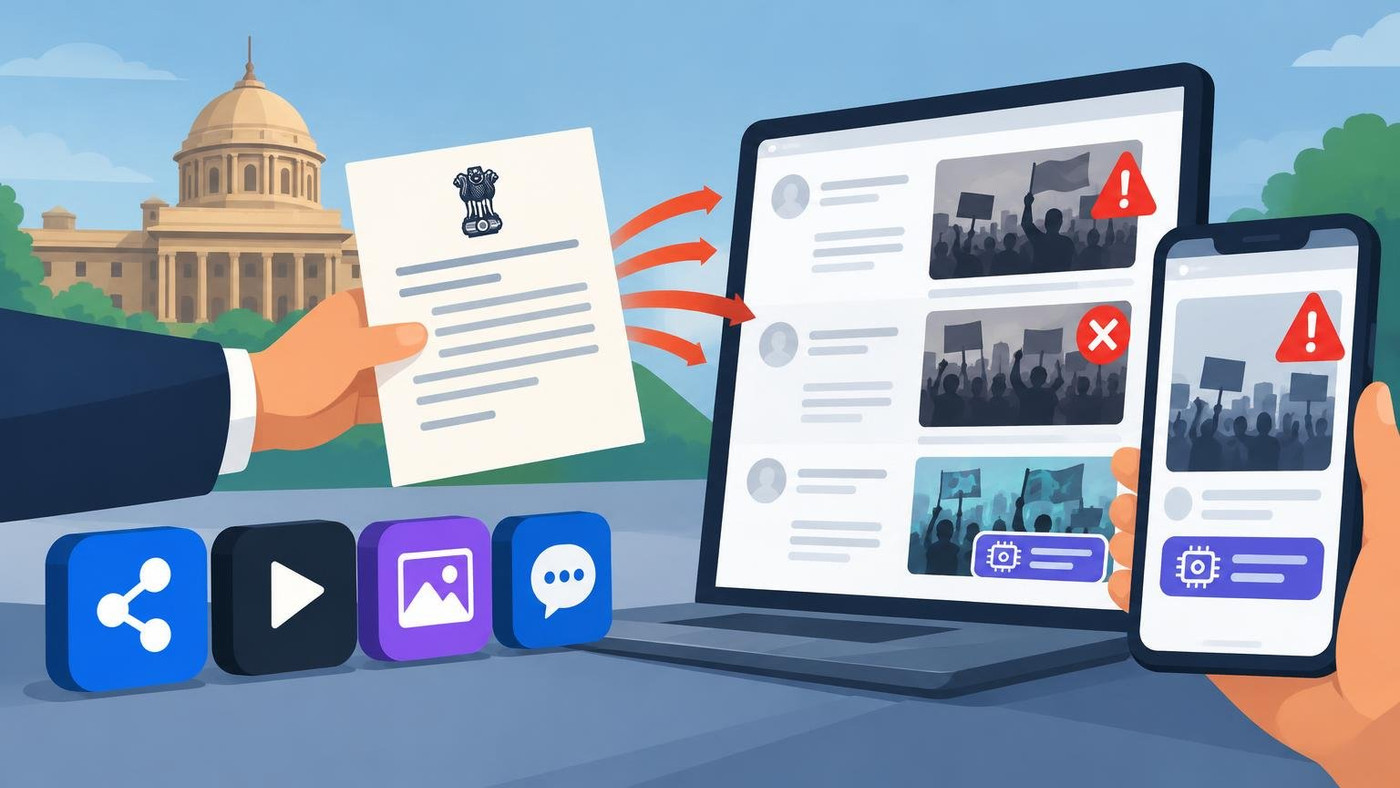
AI-generated illustration
Advertisement
A MeitY advisory dated 8 October 2026 asks social media platforms to act quickly on unlawful protest-related posts and label manipulated or synthetic content.
What Happened
The Ministry of Electronics and Information Technology (MeitY) has asked social media platforms to act quickly against unlawful and misleading content linked to the protests now under way in several Indian cities, according to an advisory dated Thursday, 8 October 2026, that was reported on 9 October. The ministry said such content could disturb public order and social calm and could incite violence. It asked platforms to give priority to complaints from authorised government agencies, and to identify and label manipulated, synthetically generated or misleading content, especially posts presented as showing current events. The protests concern the Election Commission's Special Intensive Revision of voter lists; protesters have demanded the resignation of Chief Election Commissioner Gyanesh Kumar, while the commission and the government deny wrongdoing.
Key Facts
- The MeitY advisory is dated 8 October 2026 and was reported on 9 October.
- Platforms are asked to prioritise complaints from authorised government agencies about content with possible public-order implications.
- The ministry flagged old photos or videos passed off as current, digitally altered or AI-generated audio and video, impersonation of officials, and content likely to incite violence.
- Platforms are asked to label or add context to manipulated, synthetic or misleading content, particularly when it claims to show a current event.
- The advisory refers to the IT Rules, 2021, and asks platforms to cooperate with law enforcement within set timelines.
- One technology policy outlet reported that the labelling request goes further than the February 2026 rules on synthetic content, which cover only audio and visual material, because the advisory does not limit it to those formats.
Why It Matters
During large protests, social media fills quickly with photos and clips, and many of them are not what they claim to be. Old videos from other places are reshared as if they happened today, edited images circulate without context, and AI tools now make it easy to produce realistic fake audio and video. Such content can mislead people, raise tensions and, at worst, lead to violence. The advisory is the government's attempt to get platforms to move faster on this kind of material.
At the same time, the advisory raises questions that young users who live much of their lives online should understand. Asking platforms to prioritise government complaints and to label content as "misleading" gives platforms and authorities a larger role in deciding what people see about a political event. Digital rights observers have pointed out that the labelling request appears broader than the rules notified earlier this year. How platforms apply it, and whether genuine protest footage or criticism gets labelled or removed, will be watched closely.
For ordinary users, the practical lesson is simple. Before sharing a dramatic clip, check when and where it was first posted, look for reports from more than one reliable source, and be wary of audio or video that seems designed to provoke anger. A label on a post is a signal to slow down, not proof either way.
| What the advisory targets | Example |
|---|---|
| Old media shown as new | A video from a past event reshared as today's protest |
| Altered or synthetic media | AI-made audio or edited video |
| Impersonation | Fake accounts posing as officials or authorities |
| Incitement | Posts urging violence |
Impact
Short-term: Users may see more labels, context notes and takedowns on protest-related posts on major platforms in the coming days.
Long-term: The advisory adds to a growing set of government instructions on AI-generated and misleading content, and may shape how platforms in India handle news events and political speech in future.
Who is affected: Social media users, content creators and journalists posting about the protests, platform companies operating in India, and government agencies that send complaints.
Key Takeaway
MeitY's 8 October 2026 advisory asks platforms to act fast on protest-related misinformation and to label manipulated or synthetic content, making it more important than ever for users to verify before they share.
Questions and Answers
What did MeitY ask social media platforms to do?
In an advisory dated 8 October 2026, it asked them to act quickly on unlawful content linked to the protests, prioritise complaints from authorised government agencies, and label manipulated, synthetic or misleading content.
What kind of content is the government worried about?
Old photos or videos shown as current, AI-generated or altered audio and video, impersonation of officials, and posts likely to incite violence.
Does the advisory name the protests?
Reports say the advisory does not name specific events. It was issued during nationwide protests over the Election Commission's revision of voter lists.
How can I avoid sharing fake protest content?
Check when and where a clip first appeared, look for confirmation from more than one reliable source, and be cautious with emotional or provocative audio and video, which are easier than ever to fake.
Sourced and fact-checked by the Peepals Global Editorial Team
UGC NET December 2026 Registration Opens: Dates, Subjects and Career Paths
University of Colorado Denver gets UGC nod for Hyderabad campus, intake from 2027
Reported, fact-checked and published by the Peepals Global Editorial Team.
Advertisement