

Pharmacies may need government nod to advertise prescription drugs, draft rule says
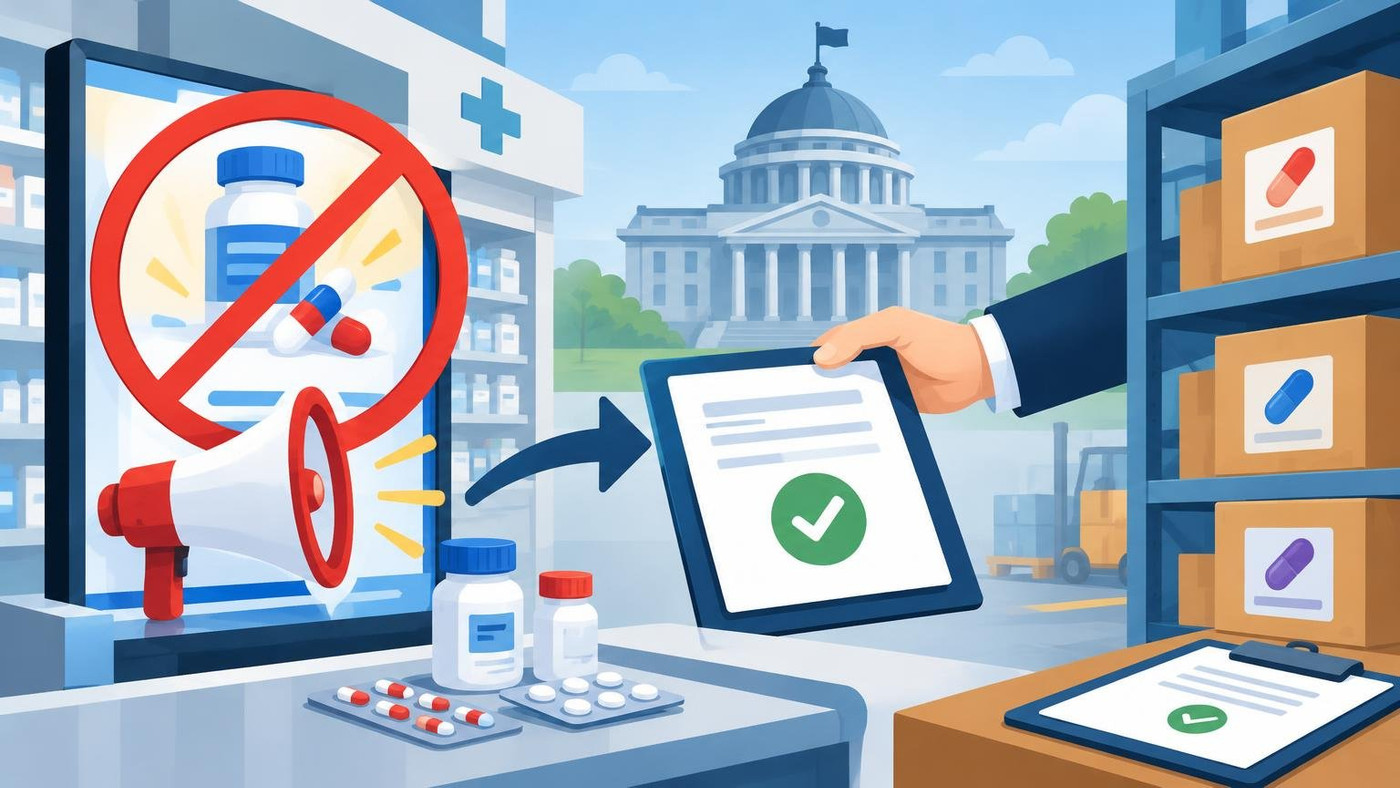
AI-generated illustration
Advertisement
A Health Ministry draft, reported Oct 9, 2026, would make retailers and wholesalers get prior government approval before advertising Schedule H, H1 and X drugs.
What Happened
The Union Health Ministry has proposed that pharmacies, wholesalers and distributors must get prior approval from the Central Government before advertising prescription medicines listed under Schedules H, H1 and X. The proposal is a draft amendment to the Drugs Rules, 1945, issued through Gazette notification GSR 861(E) dated September 28, 2026, and widely reported on Friday, October 9, 2026. It would add a new sub-rule to Rule 65, which governs licences for sale. The ministry has invited objections and suggestions from the public and stakeholders within 30 days of the gazette being made available, after which it will decide whether to finalise the change.
Key Facts
- The draft would bar any licence holder for sale, stock, exhibition or distribution of Schedule H, H1 or X drugs from advertising them without prior Central Government approval.
- Manufacturers of these drugs already need government sanction to advertise them; the ministry said the existing rule does not clearly cover retail and wholesale sellers.
- The amendment was notified in draft through GSR 861(E) dated September 28, 2026, after consultation with the Drugs Technical Advisory Board.
- Public comments are open for 30 days from the date the gazette was made available to the public.
- The rule will take effect only on its final publication in the Official Gazette.
- The schedules concerned list prescription medicines that are meant to be sold only against a doctor's prescription.
Why It Matters
Prescription medicines are meant to be taken only when a qualified doctor decides they are needed. Advertising them directly to the public can push people to ask for, or buy, drugs they do not need, or to take strong medicines without proper supervision. That is why manufacturers already face limits. The draft closes a gap: as online pharmacies, chains and distributors have grown, they too can promote specific medicines through apps, websites, social media and in-store displays.
For citizens, the change aims to reduce pressure to self-medicate. Misuse of prescription medicines, from strong painkillers to antibiotics, can harm health and, in the case of antibiotics, add to drug resistance. Restricting how these medicines are advertised by sellers supports the broader effort to make sure they are dispensed only against a valid prescription.
For the pharmacy trade, especially e-pharmacies and large retail chains, the rule would add a compliance step. Any promotion that names a specific prescription drug would need clearance in advance. That may change how online platforms present discounts and offers on prescription medicines. Smaller chemists who rarely advertise individual drugs are less likely to feel a direct effect.
For regulators, the draft brings retail and wholesale sellers into line with manufacturers, so the same standard applies along the supply chain. How strictly it is enforced, especially online, will decide how much difference it makes.
| Who | Current position | Under the draft |
|---|---|---|
| Manufacturers | Need government sanction to advertise | No change |
| Retailers, wholesalers, distributors | Not explicitly covered | Need prior Central Government approval |
Impact
Short-term: Pharmacies, e-pharmacies, wholesalers and industry bodies have a 30-day window to file objections or suggestions on the draft. Until the final rule is published, existing practice continues.
Long-term: If finalised, the rule would curb promotional advertising of prescription medicines by sellers, support antibiotic stewardship, and tighten oversight of online pharmacy marketing.
Who is affected: Retail chemists, e-pharmacies, wholesalers and distributors; patients and consumers who see medicine promotions; doctors; and drug regulators who will process approvals and enforce the rule.
Key Takeaway
A Health Ministry draft would require pharmacies, wholesalers and distributors to get prior government approval before advertising Schedule H, H1 and X prescription drugs, closing a gap that until now applied clearly only to manufacturers.
Questions and Answers
What does the Health Ministry's draft rule on drug advertising propose?
It proposes that licensed retailers, wholesalers and distributors must get prior Central Government approval before advertising medicines listed under Schedules H, H1 and X of the Drugs Rules.
Is the rule already in force?
No. It is a draft notified on September 28, 2026. It will take effect only after public comments are considered and the final rule is published in the Official Gazette.
Why are only Schedule H, H1 and X drugs covered?
These schedules list prescription medicines that should be taken under medical supervision. Manufacturers already need approval to advertise them, and the draft extends the same check to sellers.
Can the public comment on the draft?
Yes. Objections and suggestions can be sent to the Health Ministry within 30 days from the date the gazette containing the draft was made available to the public.
Sourced and fact-checked by the Peepals Global Editorial Team
Kedarnath helicopter seats for Oct 16-Nov 9 sell out within hours of opening
UP Cabinet approves renaming Noida airport at Jewar after PM Narendra Modi
Reported, fact-checked and published by the Peepals Global Editorial Team.
Advertisement