
MP Board drops choice in 2-mark questions for Classes 9 to 12
 By Aditi KulkarniEducation Writer, Peepals Bharat
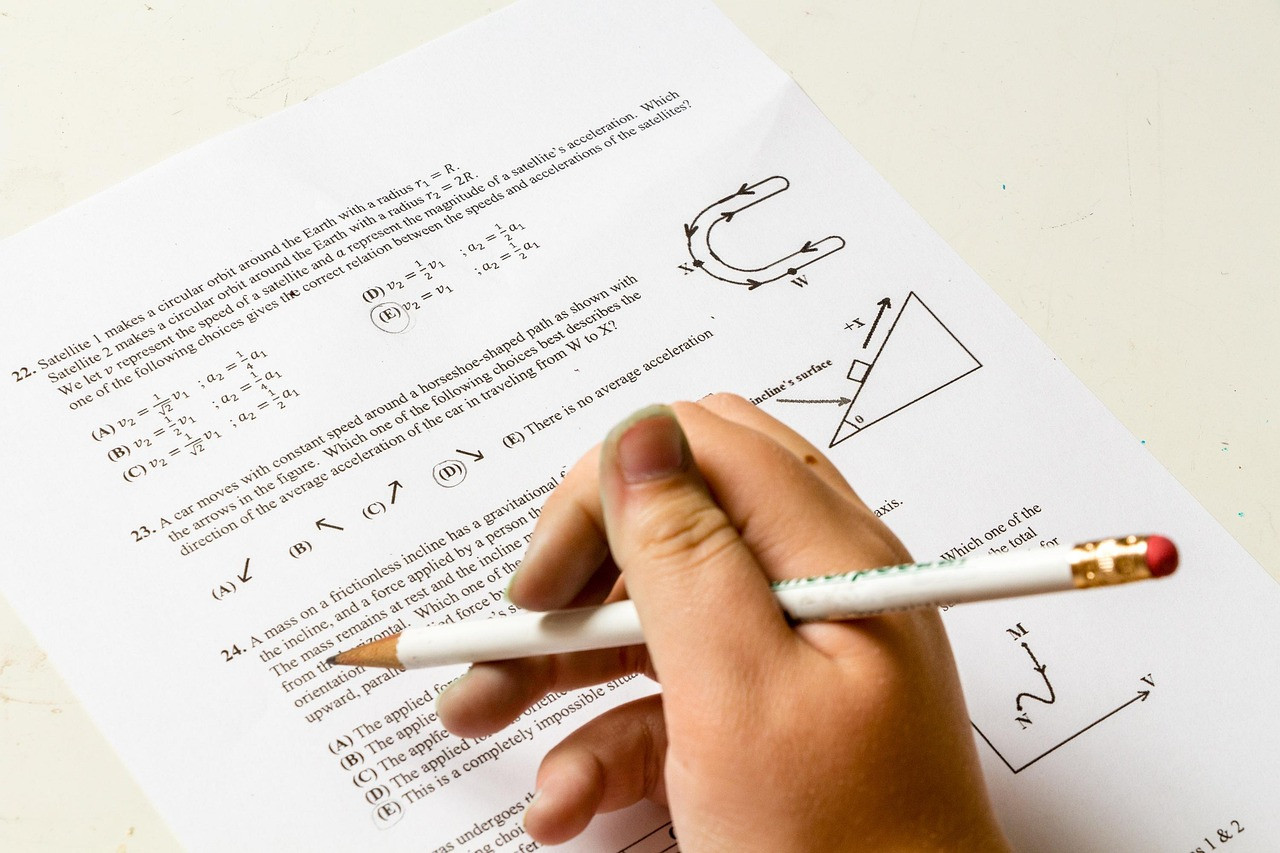
Representative image: tjevans / Pixabay
MP Board's notice of October 15, 2026 removes internal choice in two-mark questions for Classes 9-12 from 2026-27, covering the 2027 board exams.
What Happened
The Madhya Pradesh Board of Secondary Education (MPBSE) has changed the question-paper pattern for Classes 9 to 12 from the 2026-27 session, so the change applies to the Class 10 and Class 12 board exams in February and March 2027. Under a notification dated October 15, 2026, which was reported widely from October 19, two-mark questions in main subjects will no longer offer an internal choice: students must answer the question set, without picking between alternatives. Choices stay in three-mark and four-mark questions, and new choices have been added to five-mark and seven-mark questions in vocational (NSQF) subjects.
Key Facts
- Board: Madhya Pradesh Board of Secondary Education (MPBSE).
- Notification dated October 15, 2026; applies to all exams of the 2026-27 session for Classes 9, 10, 11 and 12.
- Main subjects: no internal choice in two-mark questions.
- Main subjects: internal choice continues in three-mark and four-mark questions.
- NSQF (National Skills Qualifications Framework) vocational subjects: internal choice added in five-mark and seven-mark questions.
- The board says the aim is to reduce dependence on rote learning and test reasoning and understanding.
- The notice changes only the question-paper pattern; it does not change the exam schedule. Board exams are scheduled from February 17, 2027 for Class 12 and February 24, 2027 for Class 10.
Why It Matters
An internal choice is the "attempt either (a) or (b)" option inside a question. It lets a student skip a topic they have not prepared and answer the alternative instead. Removing it from two-mark questions means every short question in a main subject must be answered as set. In practice, students can no longer leave out parts of the syllabus and expect to find a substitute question on the paper.
Two-mark questions are usually very short-answer items: a definition, a one-step calculation, a reason or a short explanation. Because they are many and spread across chapters, they reward students who have covered the whole syllabus. The board's stated goal is to move students away from memorising selected answers and towards understanding every chapter. Officials have also said the change does not mean the board has adopted the CBSE syllabus, though several reports describe the new format as closer to the style of CBSE papers.
The change comes in the middle of the academic year. Teachers in government and private schools affiliated to MPBSE will need to adjust revision plans, practice papers and pre-board tests so that students practise answering short questions without options. For students who had planned to drop certain chapters, there are about four months left before the board exams to cover them.
For vocational students, the change goes the other way. Students taking NSQF subjects, which are skill-based courses offered in schools, now get a choice in their longer five-mark and seven-mark questions, which carry more marks.
Pattern at a glance:
| Question type | Before | From 2026-27 |
|---|---|---|
| Two-mark (main subjects) | Internal choice | No choice |
| Three- and four-mark (main subjects) | Internal choice | Internal choice continues |
| Five- and seven-mark (NSQF subjects) | No choice | Internal choice added |
Impact
Short-term: Students in Classes 9 to 12 must prepare the full syllabus in main subjects, and schools will have to update model papers and pre-board exams before the February 2027 board exams.
Long-term: If applied consistently, the change could push teaching towards complete chapter coverage and conceptual understanding. Results in 2027 will show whether it affects pass rates or scores in subjects where students relied on choices.
Who is affected: Students of Classes 9 to 12 in MPBSE-affiliated schools, including Class 10 and Class 12 board candidates in 2027; their teachers and parents; coaching centres and publishers of guidebooks and sample papers for the MP Board.
Key Takeaway
From the 2026-27 session, MP Board students in Classes 9 to 12 will get no choice in two-mark questions in main subjects, so the whole syllabus must be prepared for the 2027 exams.
What students should do next: download the board's notice from the Academics section of mpbse.nic.in, check the revised pattern with subject teachers, and practise short-answer questions from every chapter rather than selected ones.
Questions and Answers
What has changed in the MP Board exam pattern for 2026-27?
Under a notification dated October 15, 2026, two-mark questions in main subjects for Classes 9 to 12 will have no internal choice. Choices remain in three- and four-mark questions, and vocational NSQF subjects get new choices in five- and seven-mark questions.
Does the MP Board exam pattern change apply to the 2027 board exams?
Yes. It applies to all exams of the 2026-27 session, including the Class 10 and Class 12 board exams due in February and March 2027.
Has the MP Board adopted the CBSE syllabus?
No. Officials have said the change is to the question-paper pattern only and does not mean MPBSE has adopted the CBSE syllabus.
Have the MP Board exam dates changed because of the new pattern?
No. The notice does not change the schedule. Class 12 exams are scheduled from February 17 to March 19, 2027, and Class 10 exams from February 24 to March 18, 2027.
Disclaimer: Prepared by the Peepals newsroom from publicly available sources with AI assistance. Information is accurate to the best of our knowledge at the time of publication and may change. Images may be representative. Not professional advice. Report an error via our contact page.
By Aditi Kulkarni, Education WriterCovers Education and more for Peepals Bharat. All stories by Aditi Kulkarni
Om Birla: fresh CEC impeachment notice will be examined; Delhi hosts BRICS MPs
Coimbatore's Konwert raises pre-Series A to turn auto-rickshaws electric
Aditi Kulkarni is a pen name of the Peepals Global Editorial Team, which researches, fact-checks and publishes every story. The portrait is an illustration.