
Trident share price jumps as board clears Rs 4,650 crore expansion
 By Siddharth VermaBusiness Correspondent, Peepals Bharat

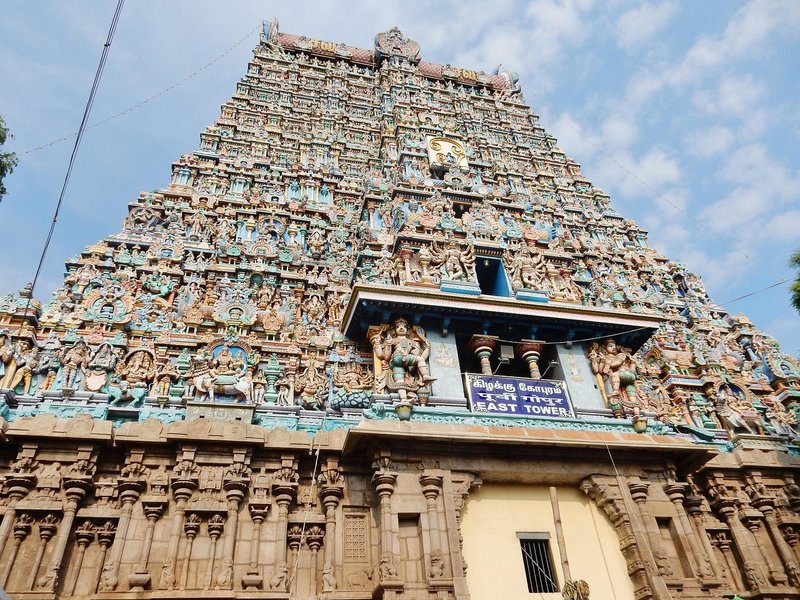
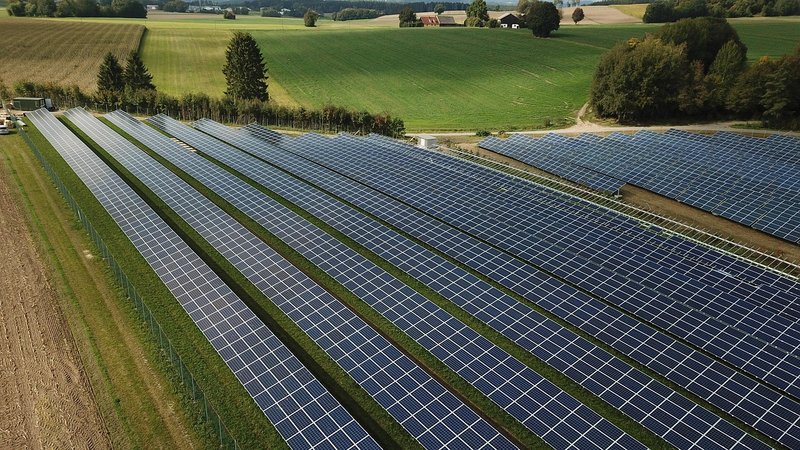
Representative image: medyamen2 / Pixabay
Trident's board on 2 November 2026 cleared a Rs 4,650 crore plan led by a new yarn plant at Dhar, Madhya Pradesh, as Q2 profit rose 93% to Rs 176 crore.
What Happened
Trident Limited, the textile and paper maker, said its board approved a Rs 4,650 crore expansion and modernisation plan at its meeting on Monday, 2 November 2026, alongside results for the July to September quarter. The largest part is a new yarn plant at Dhar in Madhya Pradesh costing about Rs 1,660 crore. The plan also covers its Budhni yarn plant, more looms for bed sheeting, extra paper capacity and a wind and solar power project. Trident's consolidated net profit for the quarter rose about 93% from a year earlier to Rs 176 crore, and its share price jumped after the announcement, with market reports putting the rise at up to 13%.
Key Facts
- Total approved outlay: Rs 4,650 crore, in phases from December 2027 to September 2029, according to the company's disclosure to the stock exchanges.
- Dhar yarn plant (new): about Rs 1,660 crore for 1,99,680 spindles, due by 30 September 2029, on 179.2 acres of leasehold land already acquired.
- Budhni yarn plant: Rs 1,022 crore to add 99,840 spindles and replace older machines, due by 31 December 2027.
- Sheeting: Rs 1,018 crore for 336 more looms, taking capacity from 504 to 840 looms, due by 31 January 2028.
- Paper: Rs 296 crore to raise capacity from 479 to 507 tonnes per day, due by 31 March 2028.
- Renewable power: about Rs 654 crore for a hybrid project of 60 MW wind and 20 MW (AC) solar, due by 31 October 2028, funded from internal accruals and debt.
- Q2 FY27 (July to September 2026): consolidated net profit about Rs 176 crore, up about 93% year on year from about Rs 91 crore; net debt down to Rs 722 crore on 30 September from Rs 1,025 crore at the end of June.
Why It Matters
Most of the money goes into yarn. A spindle is the part of a spinning machine that twists cotton fibre into yarn; mills measure their size by the number of spindles they run. The new Dhar plant alone is planned at almost two lakh spindles, about twice the addition at Budhni. Building a new plant, rather than only adding machines to existing sites, is a bet on demand over the next three years.
The plan also shows how textile makers are trying to control costs. Power is a large expense for spinning and weaving, and the 80 MW wind and solar project is meant to supply part of that need. The modernisation at Budhni, which replaces older spindles and rotors with new ones, is aimed at making the same floor space produce more yarn with less waste.
For Madhya Pradesh, the investment adds to the state's textile base in Dhar and Budhni. The company's disclosure does not give a figure for new jobs, so how many people the plants will employ is not yet known. For shareholders, the question is whether the company can fund the plan while keeping its debt in check. In the September quarter, profit rose partly on inventory sales and better yarn margins, according to analysts' notes, and net debt fell by about Rs 304 crore. Analysts have flagged the execution of the Rs 4,650 crore plan as the main thing to watch.
Peepals calculation: the five parts add up to the total (1,660 + 1,022 + 1,018 + 296 + 654 = 4,650 crore). The Dhar plant is about 36% of the plan (1,660 / 4,650 = 0.357). The loom addition raises sheeting capacity by about 67% (336 / 504 = 0.667), while the paper addition is about 6% (28 / 479 = 0.058). Net debt fell about 30% in the quarter (from 1,025 to 722 crore: 303 / 1,025 = 0.296). Our calculation from the reported figures.
| Project | Cost (Rs crore) | Due by |
|---|---|---|
| Dhar new yarn plant | 1,660 | 30 Sept 2029 |
| Budhni yarn expansion | 1,022 | 31 Dec 2027 |
| Sheeting looms | 1,018 | 31 Jan 2028 |
| Wind-solar power | 654 | 31 Oct 2028 |
| Paper capacity | 296 | 31 Mar 2028 |
Impact
Short-term: the share price has reacted to the results and the plan; the company now has to arrange funding and begin work on the first phase at Budhni.
Long-term: if completed on time, the projects would make Trident a larger spinner and sheeting maker by 2029, with part of its power from its own renewable plant.
Who is affected: Trident's shareholders and lenders, workers and suppliers in Dhar and Budhni, cotton growers and traders who sell to large spinners, and buyers of Indian home textiles.
What to watch next: completion of the Budhni yarn expansion, the first project due, by 31 December 2027.
Key Takeaway
Trident has approved Rs 4,650 crore of expansion through 2029, with a new Rs 1,660 crore yarn plant at Dhar as its centrepiece, after a quarter in which profit rose 93%.
Questions and Answers
Why did the Trident share price rise?
The stock rallied after the company reported a roughly 93% rise in September-quarter profit to Rs 176 crore and said its board had approved a Rs 4,650 crore expansion on 2 November 2026. Market reports put the gain at up to 13%.
What is in Trident's Rs 4,650 crore expansion plan?
A new yarn plant at Dhar (Rs 1,660 crore), a spindle expansion at Budhni (Rs 1,022 crore), 336 more sheeting looms (Rs 1,018 crore), a wind and solar power project (Rs 654 crore) and more paper capacity (Rs 296 crore).
When will the Trident projects be completed?
In phases: Budhni by 31 December 2027, sheeting by 31 January 2028, paper by 31 March 2028, the power project by 31 October 2028 and the Dhar plant by 30 September 2029.
How much debt does Trident have?
Net debt was Rs 722 crore on 30 September 2026, down from Rs 1,025 crore at the end of June, according to the company's results.
Disclaimer: Prepared by the Peepals newsroom from publicly available sources with AI assistance. Information is accurate to the best of our knowledge at the time of publication and may change. Images may be representative. Not professional advice. Report an error via our contact page.
By Siddharth Verma, Business CorrespondentCovers Business and more for Peepals Bharat. All stories by Siddharth Verma
Energy drinks: FSSAI tells Delhi HC PepsiCo, Monster labels mislead buyers
CM-IMPACT PLUS: Meghalaya ends fresh salary grants for private schools
Get the day's stories in your inbox
Peepals Weekly: the week decoded, free. One email a week, unsubscribe in one click.
Siddharth Verma is a pen name of the Peepals Global Editorial Team, which researches, fact-checks and publishes every story. The portrait is an illustration.