
Bank of Korea raises rate to 3.25% in 5-2 vote, lifts growth forecast
 By Neha KapoorEconomy Correspondent, Peepals Business
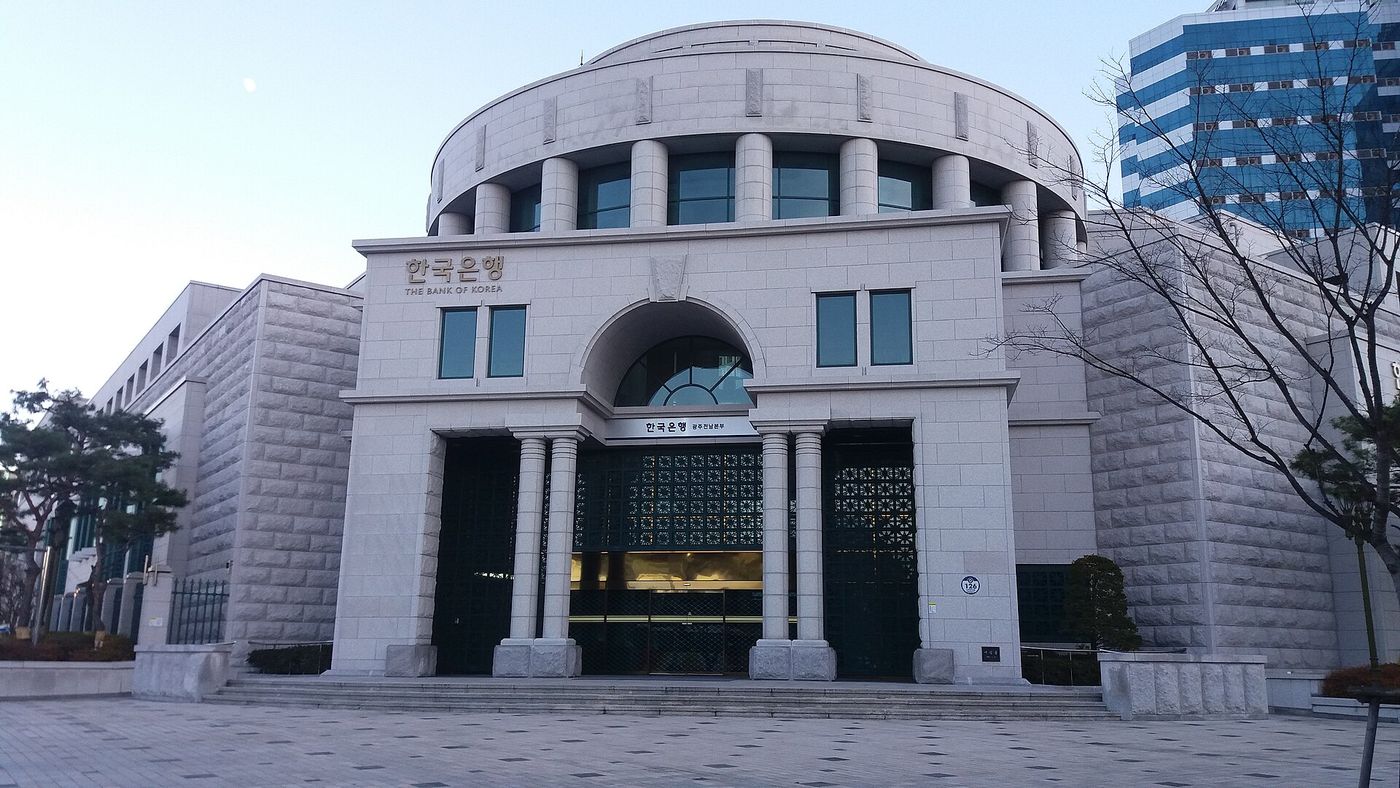
File photo: Neoalpha (CC0), via Wikimedia Commons
The Bank of Korea raised its base rate to 3.25% on 26 November 2026 in a 5-2 vote and lifted its growth forecast to 3.9% for 2026 and 4.1% for 2027.
Bank of Korea: what happened
The Bank of Korea on Thursday, 26 November 2026 raised its base interest rate by 0.25 percentage points to 3.25%, the highest level since November 2024, citing a strong economy driven by semiconductor exports and inflation that is running above its target. It was the central bank's third rate rise in the second half of the year, after increases in July and August and a pause in October. Five of the seven members of the Monetary Policy Board voted for the increase; two wanted to keep the rate at 3.00%. The bank also sharply raised its growth forecasts, to 3.9% for 2026 and 4.1% for 2027.
Bank of Korea: key facts
- Decision: base rate up 0.25 percentage points to 3.25% on Thursday, 26 November 2026.
- Vote: 5 to 2; board members Hwang Kunil and Lee Soohyung voted to hold at 3.00%.
- Growth forecast: 3.9% for 2026 and 4.1% for 2027, up from 3.3% and 2.9% in the August projections.
- Inflation: 2.8% in October, above the 2% target; Governor Shin Hyun-song said it is expected to stay above target for a considerable period.
- Currency: the decision statement said the won-dollar rate stayed broadly stable, helped by a large current account surplus, despite a strong dollar and foreign selling of Korean shares.
- Outlook: board members left open the possibility of the rate reaching 3.75% within six months.
Bank of Korea: why it matters
The Bank of Korea is raising rates because its economy is running hot. The driver, by the bank's account, is the boom in semiconductor exports. When an economy grows faster than its capacity, prices tend to rise, and the bank says inflation, now 2.8%, will stay above its 2% goal for some time. Higher energy costs linked to tensions in the Middle East add to that pressure.
The split vote shows the debate is not settled. Two board members preferred to keep the rate at 3.00%. The majority chose to act now, and the board's signal that the rate could reach 3.75% within six months means more increases are possible if inflation does not cool.
For Indian readers, South Korea is a trading partner and an investor in India, so its growth and borrowing costs matter to companies on both sides. The decision also comes as India's own inflation has climbed above 6%, which puts the Reserve Bank of India's next policy meeting in focus.
Peepals calculation: with the base rate at 3.25% and October inflation at 2.8%, the real interest rate (the rate after inflation) is about 0.45 percentage points (3.25 − 2.8 = 0.45). The new forecasts raise expected growth by 0.6 points for 2026 (3.9 − 3.3) and by 1.2 points for 2027 (4.1 − 2.9). If the rate reaches the 3.75% that board members mentioned, that would be two more quarter-point rises ((3.75 − 3.25) / 0.25 = 2). Our calculation from the reported figures.
| Measure | Before | After |
|---|---|---|
| Base rate | 3.00% | 3.25% |
| 2026 growth forecast | 3.3% (August) | 3.9% |
| 2027 growth forecast | 2.9% (August) | 4.1% |
| October inflation | - | 2.8% (target 2%) |
Bank of Korea: impact
Short-term: Borrowing costs for Korean households and companies rise, including mortgage and business loan rates, and the won is supported by the higher rate.
Long-term: If chip-driven growth continues and inflation stays above target, further increases towards 3.75% are possible; if the chip cycle cools, the bank may pause again as it did in October.
Who is affected: South Korean borrowers and savers; Korean exporters and chipmakers; foreign investors in Korean shares and bonds; and trading partners, including India, whose companies buy from and sell to Korea.
What to watch next: Whether the Bank of Korea moves towards the 3.75% level its board members said was possible within six months.
Bank of Korea: key takeaway
Watch the Korean won and chip-export data: the Bank of Korea has signalled that more rate rises are possible if inflation stays above target.
Bank of Korea: questions and answers
Why did the Bank of Korea raise interest rates?
It said strong growth, driven by semiconductor exports, and inflation above its 2% target required tighter policy. October inflation was 2.8%.
What is South Korea's new base rate?
The base rate is now 3.25%, up from 3.00%, its highest since November 2024.
Was the Bank of Korea decision unanimous?
No. Five of the seven board members voted for the rise, while Hwang Kunil and Lee Soohyung wanted to keep the rate at 3.00%.
Will Korean rates go higher?
Board members left open the possibility of the rate reaching 3.75% within six months, depending on growth and inflation.
Disclaimer: Prepared by the Peepals newsroom from publicly available sources with AI assistance. Information is accurate to the best of our knowledge at the time of publication and may change. Images may be representative. Not professional advice. Report an error via our contact page.
By Neha Kapoor, Economy CorrespondentCovers Economy and more for Peepals Business. All stories by Neha Kapoor
VU Venture Partners launches VU India: $100,000 to $1 million for start-ups
Black Friday 2026 India: D2C brands expect 10-25% growth, premium buys
Your week ahead, every Sunday. Free.
Exam and result dates, IPOs opening, scheme deadlines, government holidays and the RBI decision for the next 7 days, plus the week's top stories. One email a week, unsubscribe in one click.
Neha Kapoor is a pen name of the Peepals Global Editorial Team, which researches, fact-checks and publishes every story. The portrait is an illustration.
Responsible for this story: the Peepals Global Editorial Team. How we report