
doubleAI raises $200 million from Lightspeed, Bessemer to cut compute costs
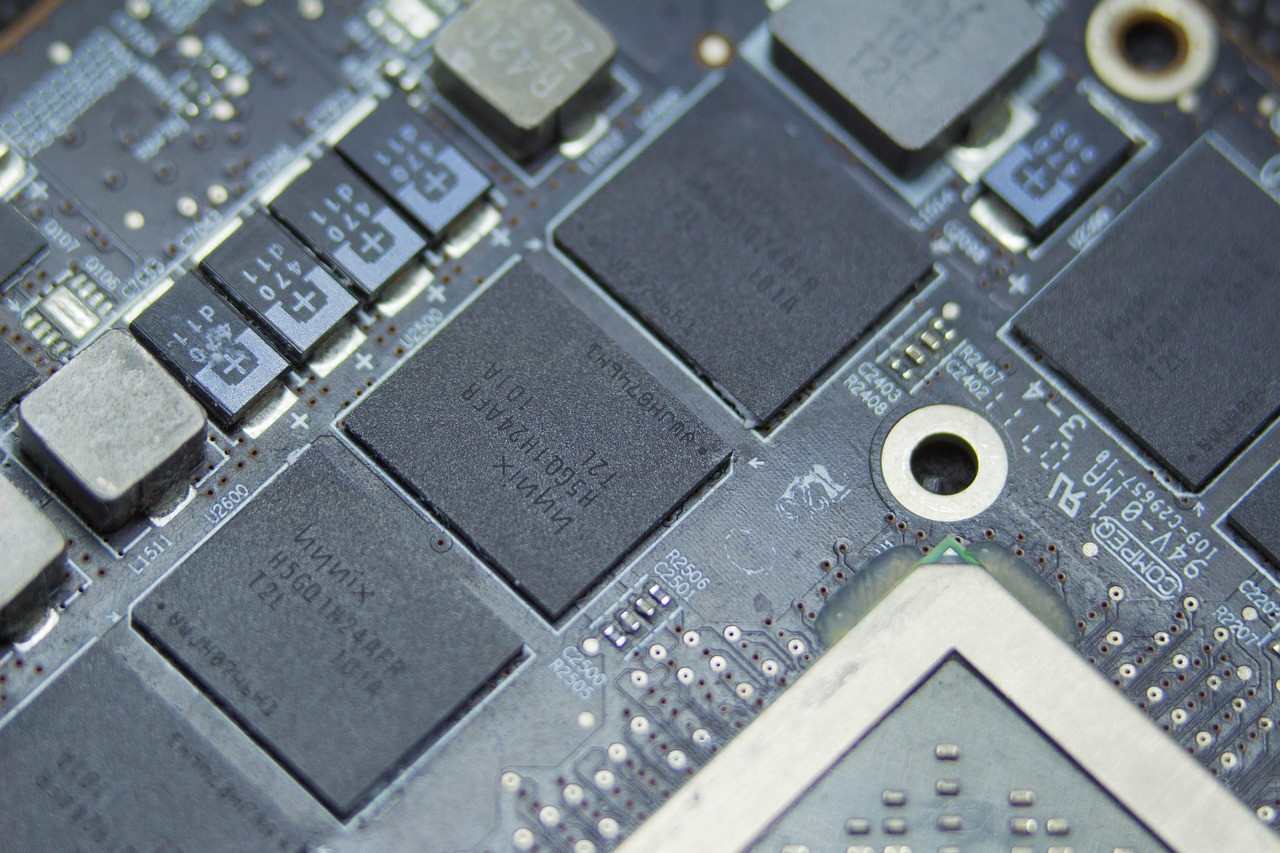
Representative image: Recklessstudios / Pixabay
doubleAI, the AI start-up led by Amnon Shashua, raised a $200 million Series A on October 19, 2026, with Nvidia and Dell joining; reports value it above $1 billion.
What Happened
doubleAI, an artificial intelligence start-up led by Amnon Shashua, said on Monday, October 19, 2026 that it has raised $200 million in a Series A funding round co-led by Lightspeed and Bessemer Venture Partners, with chipmaker Nvidia and computer maker Dell also investing. Reports put the company's valuation above $1 billion and its total funding at about $220 million. The company's first product, called Maxwell, is designed to make existing software run faster and more cheaply on the hardware it already uses.
Key Facts
- Round: $200 million Series A, announced October 19, 2026.
- Investors: co-led by Lightspeed and Bessemer; Nvidia and Dell also took part.
- Valuation: reported at more than $1 billion; total funding reported at about $220 million.
- Product: Maxwell, which the company calls a Code Execution Model. It works alongside running software and rewrites the machine code to suit the hardware, without changing the source code written by developers.
- Company claims: speed-ups of more than 38 times for data pipelines and 4.5 times for AI inference kernels; these figures are the company's own.
- Business model: doubleAI plans to charge customers a share of the computing costs they save, rather than a flat fee.
- Use of funds: reports say roughly half the round will go on about 1,000 Nvidia B300 chips.
Why It Matters
The biggest cost for companies building and running AI today is computing power: the graphics processors, or GPUs, that train and run AI models, and the electricity and data centres around them. Any tool that gets more work out of the same chips directly lowers that bill. doubleAI's pitch is that its system can do this automatically, by studying how software actually runs and rewriting the low-level instructions sent to the chip, a job that usually needs specialist engineers spending months on hand-tuning.
The terms need explaining. Source code is the program as developers write it; machine code is the low-level version the chip actually executes. A kernel, in this context, is a small, heavily used routine that runs on a GPU, such as one step in an AI model's calculation. Inference is the stage at which a trained AI model is used to answer questions or make predictions, as opposed to training it. If a kernel runs faster, every query that uses it costs less.
The investor list is telling. Nvidia sells the chips whose efficiency doubleAI promises to improve, and Dell sells the servers that hold them, so both have an interest in software that makes their hardware more attractive to buyers worried about cost. Charging customers a share of their savings also ties doubleAI's revenue to whether its claims hold up in practice, which is a stronger test than benchmark figures published by the company itself.
For Indian businesses, the opportunity is practical rather than direct. Indian companies are expanding their use of AI and cloud computing, and the government's AI mission is funding shared GPU capacity. Tools that reduce compute costs could lower the price of running AI services for Indian start-ups and enterprises, and the 'pay from savings' model is one that Indian software-optimisation firms could also adopt.
Impact
Short-term: doubleAI will use the funds to buy GPUs and expand access to Maxwell, which has been offered to early-access customers. Companies with large data-processing or AI workloads are its first target market.
Long-term: If automatic code optimisation delivers the savings claimed, it could reduce how many chips companies need for the same work and change how cloud and AI costs are managed. If it does not, the pay-from-savings model means customers would pay little.
Who is affected: Companies running large AI and data workloads, cloud providers, chipmakers and server makers, software engineers who specialise in performance tuning, and investors in AI infrastructure.
Key Takeaway
doubleAI's $200 million Series A, backed by Nvidia and Dell and announced on October 19, 2026, is a bet that software which squeezes more work out of existing chips can become a billion-dollar business.
Questions and Answers
How much did doubleAI raise and who invested?
doubleAI raised $200 million in a Series A round announced on October 19, 2026. Lightspeed and Bessemer co-led it, and Nvidia and Dell also invested. Reports value the company at over $1 billion.
What does doubleAI's Maxwell do?
Maxwell runs alongside existing software and rewrites its machine code to suit the hardware it runs on, without changing the developers' source code. The company says this can make data pipelines and AI inference much faster and cheaper.
How will doubleAI make money?
The company plans to charge customers a share of the computing costs they save, rather than a fixed fee.
What will doubleAI spend the money on?
Reports say roughly half of the $200 million will go on buying about 1,000 Nvidia B300 chips, with the rest used to grow the company and expand access to Maxwell.
Disclaimer: Prepared by the Peepals newsroom from publicly available sources with AI assistance. Information is accurate to the best of our knowledge at the time of publication and may change. Images may be representative. Not professional advice. Report an error via our contact page.
Sourced and fact-checked by the Peepals Global Editorial Team
Reported, fact-checked and published by the Peepals Global Editorial Team.