

NAB to axe up to 2,500 jobs by mid-2027 amid AI questions
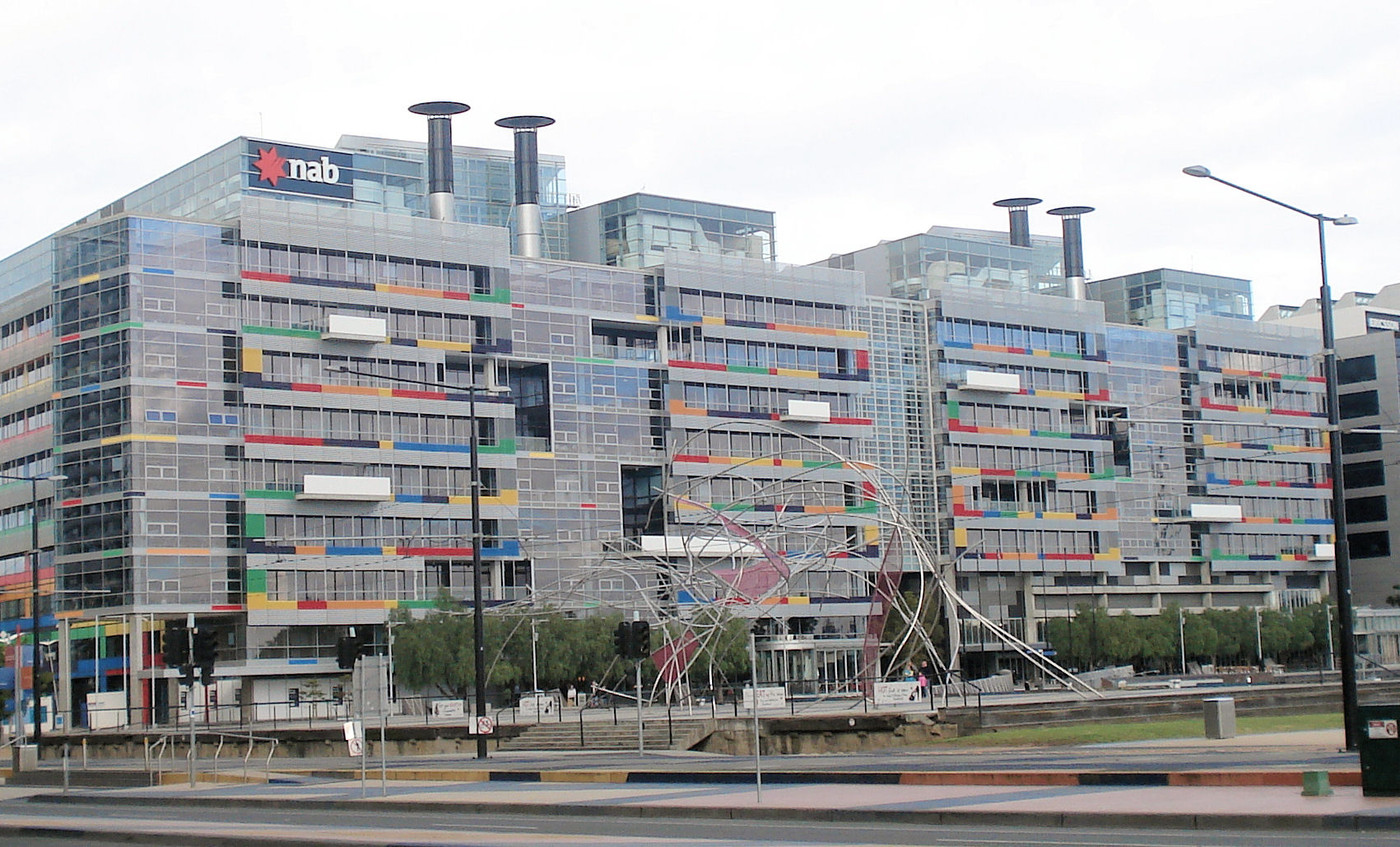
File photo: Aaroncrick (CC BY-SA 3.0), via Wikimedia Commons
National Australia Bank said on October 20, 2026 it will cut up to 2,500 jobs, about 6% of staff, by mid-2027, at a cost of about A$300 million.
What Happened
National Australia Bank (NAB), one of Australia's four largest banks, said on Tuesday, October 20, 2026 that it will cut up to 2,500 jobs, about 6% of its workforce, by the middle of 2027. Up to 1,500 roles will go before the end of 2026. The bank said it wants to simplify how it operates and pointed to tougher economic conditions, rising customer expectations, sharper competition and fast technological change. Chief executive Andrew Irvine said the cuts are focused on corporate functions, not staff who deal with customers.
Key Facts
- NAB will cut up to 2,500 roles, about 6% of its workforce, by mid-2027; up to 1,500 are to go before the end of 2026.
- The bank expects about A$300 million in restructuring costs, according to reports of its announcement.
- The cuts target corporate functions and management; NAB said customer-facing banking roles will not be materially affected, and it also plans to use fewer consultants and contractors.
- NAB listed simpler operations, harder economic conditions, customer expectations, competition and rapid technological change as reasons.
- The bank's statement did not mention artificial intelligence (AI), but a senator and the Finance Sector Union asked how far AI and automation lie behind the cuts.
- NAB shares turned lower after an early rise on the day, falling about 3.5% at one point, according to market reports.
- Reports describe it as the bank's biggest internal restructure since 2019.
Why It Matters
Banks are among the biggest users of technology in any economy, and they are also large employers of office staff whose work involves processing, checking and reporting. That makes them an early test of how automation and AI change white-collar employment. NAB did not name AI as a reason, but it listed rapid technological change among the forces behind the restructure, and the debate in Australia moved quickly to that point.
The questions have a background. Andrew Irvine said in November last year that AI would mean a lower headcount in operational work and called that a good thing, according to reports at the time. After Tuesday's announcement, Senator Tony Sheldon urged the bank to be open about how much of a role AI and technology played. The Finance Sector Union said it was appalled; its national assistant secretary, Nicole McPherson, criticised the timing so close to Christmas and said the bank's leadership was out of touch with workers.
For businesses, the case shows the trade-off that technology-led restructuring creates. A simpler structure with fewer layers and fewer outside contractors can cut costs and speed up decisions, which is what shareholders and boards often ask for. But the one-time cost is large, here about A$300 million, and the market reaction shows investors also read job cuts as a sign that management expects slower business ahead. NAB's shares rose at first and then fell as that second reading took over.
For Indian readers, the story is part of a wider pattern. Large financial firms around the world are rethinking how many people they need in back-office and corporate roles as software takes on more routine tasks. India is home to many operations and technology centres that serve global banks, so staffing decisions made abroad can affect hiring there too. NAB has not said whether any roles outside Australia are part of the cuts.
NAB restructuring at a glance Item | Detail Roles to go | up to 2,500, about 6% of staff By end of 2026 | up to 1,500 Completion | by mid-2027 Restructuring cost | about A$300 million Areas affected | corporate functions and management
Impact
Short-term: Staff in NAB's corporate teams face consultations and possible redundancy over the next two months, and contractors and consultants will see less work from the bank. The union is likely to press the bank for details and support for affected staff.
Long-term: If NAB's leaner structure lowers its costs, other Australian banks may follow, adding to pressure on office jobs in the sector. The debate over AI's role is also likely to feed into calls in Australia for companies to be more open about how automation affects jobs.
Who is affected: NAB's corporate and management employees, its contractors and consultants, its shareholders, and workers in banking back-office roles more widely, including those at overseas operations centres that serve global banks.
Key Takeaway
NAB will cut up to 2,500 jobs, about 6% of its workforce, by mid-2027 at a cost of about A$300 million, and although the bank did not mention AI, the move has sharpened the debate over technology replacing office jobs in banking.
Questions and Answers
How many jobs is NAB cutting and when?
National Australia Bank said on October 20, 2026 that it will cut up to 2,500 roles, about 6% of its workforce, by mid-2027, with up to 1,500 of them going before the end of 2026.
Is NAB replacing jobs with AI?
The bank's statement did not mention AI. It cited a simpler operating model, tougher conditions, customer expectations, competition and rapid technological change. A senator and the Finance Sector Union have asked the bank to say how much AI and technology played a part.
Which NAB staff are affected?
The bank said the cuts focus on corporate functions and management, and that customer-facing banking roles will not be materially affected. It also plans to reduce its use of consultants and contractors.
How did investors react to the NAB job cuts?
NAB shares rose early on October 20 and then turned lower, falling about 3.5% at one point, as investors read the cuts partly as a sign of weaker business conditions ahead.
Disclaimer: Prepared by the Peepals newsroom from publicly available sources with AI assistance. Information is accurate to the best of our knowledge at the time of publication and may change. Images may be representative. Not professional advice. Report an error via our contact page.
Sourced and fact-checked by the Peepals Global Editorial Team
Reported, fact-checked and published by the Peepals Global Editorial Team.