
Intel unveils GPU D-series with 480GB memory for AI inference
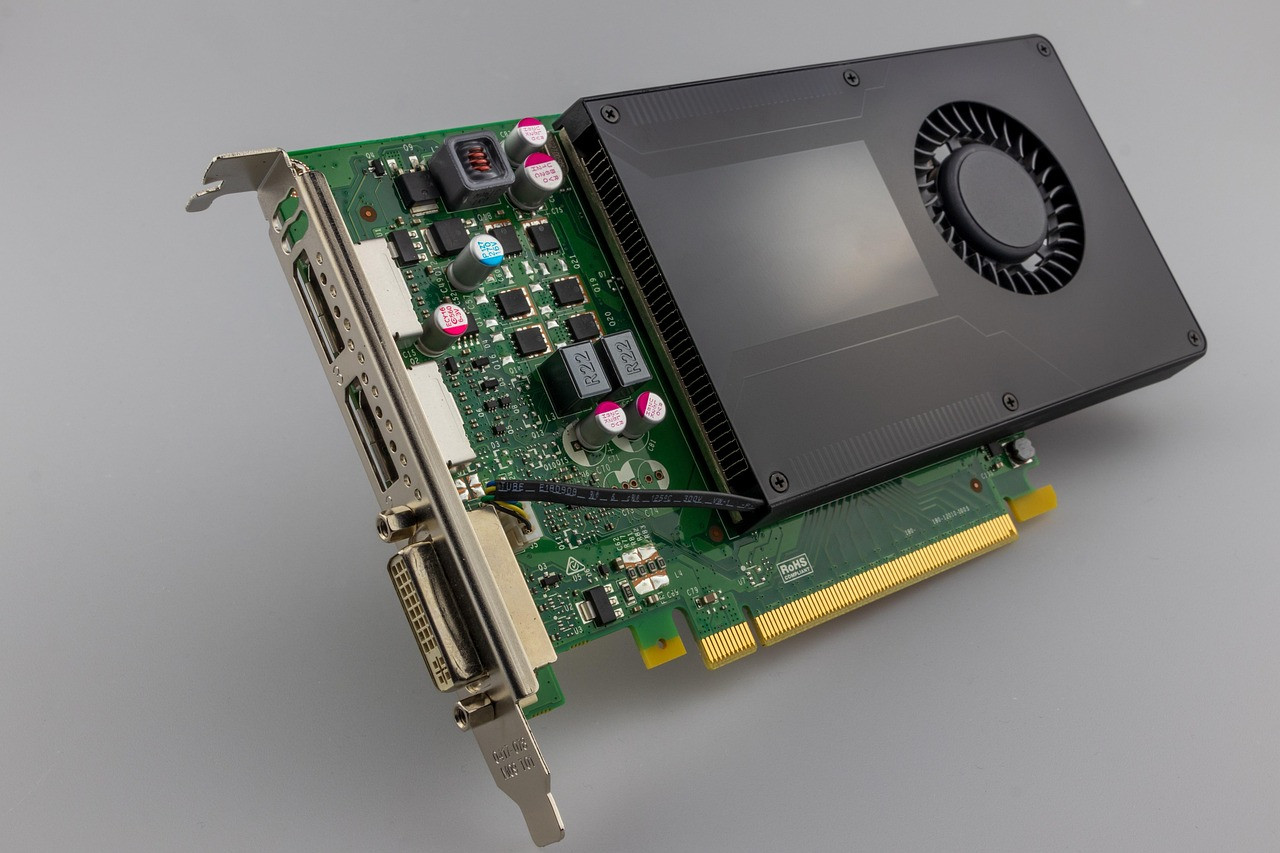
Representative image: analogicus / Pixabay
Intel's GPU D-series, codenamed Crescent Island, offers up to 480GB of memory for running AI models, the company said in announcements reported on October 19, 2026.
What Happened
Intel has detailed its GPU D-series, a data-centre chip codenamed Crescent Island that is designed to run artificial intelligence models rather than train them, in announcements reported on October 19, 2026. The company says the chip carries up to 480 gigabytes of memory, delivers 1.3 petaflops of computing power at a common AI precision, and runs within a 350-watt power limit with ordinary air cooling. Intel says samples are with customers, but it has not announced a release date or price.
Key Facts
- The GPU D-series, codenamed Crescent Island, is built on Intel's Xe3P graphics architecture.
- Intel says it offers up to 480GB of LPDDR5X memory, a type of memory commonly used in laptops and phones, rather than the high-bandwidth memory used in most top AI chips.
- Claimed performance is 1.3 petaflops in FP8, a lower-precision number format widely used to run AI models efficiently, with memory bandwidth of 1.5 terabytes per second.
- The card uses a 350-watt power limit, air cooling and a standard PCIe slot, so it can fit into existing data-centre servers.
- Intel says one card can hold a language model of up to 300 billion parameters, and an eight-card system can handle models of more than a trillion parameters.
- The chip was first announced as Crescent Island in October 2025, with customer sampling planned for the second half of 2026; sampling is now under way.
- No price or general availability date has been announced.
Why It Matters
There are two main jobs in AI computing. Training builds a model by feeding it huge amounts of data, and it needs the most powerful, power-hungry chips. Inference is what happens afterwards, every time someone asks a chatbot a question or an app uses an AI feature. As AI tools spread, inference is becoming the larger and faster-growing workload, and the cost of running it every day matters more than the one-time cost of training.
Intel's bet is that inference needs a lot of memory more than it needs the very fastest memory. Large AI models must be held in memory to answer quickly, and long conversations or documents need even more room. By using cheaper, more power-efficient LPDDR5X and packing in up to 480GB, Intel is trying to offer a card that can hold big models at lower cost and run in ordinary air-cooled servers, instead of the liquid-cooled racks many top AI chips require. Some reports note the capacity exceeds the 288GB of high-bandwidth memory on Nvidia's Blackwell Ultra B300, though the two chips are built for different purposes and speeds.
Intel badly needs a foothold. Nvidia dominates AI chips, and Intel has struggled to compete in this market. A product aimed at the specific, growing niche of efficient inference could give it a way in, especially with customers who want to avoid being dependent on a single supplier.
For India, where companies and government programmes are building AI computing capacity and where data centres often face power and cooling constraints, chips that run large models efficiently in air-cooled servers could be attractive. Whether Intel's chip delivers in practice will depend on independent tests, software support and price, none of which is yet known.
| Specification | Intel's stated figure |
|---|---|
| Memory | Up to 480GB LPDDR5X |
| Compute | 1.3 petaflops (FP8) |
| Memory bandwidth | 1.5 TB per second |
| Power | 350 watts, air-cooled |
| Model size per card | Up to 300 billion parameters |
Impact
Short-term: Customers sampling the chip will test it on their own workloads; independent benchmarks and pricing will decide whether it is a serious alternative for inference.
Long-term: If memory-heavy, air-cooled inference chips prove cost-effective, data centres could run large AI models more cheaply, and the market for AI hardware could become more competitive.
Who is affected: Cloud providers and data-centre operators, companies running AI services, chipmakers competing in AI hardware, and governments and firms building AI computing capacity, including in India.
Key Takeaway
Intel's GPU D-series bets on large, cheaper memory and air cooling to run AI models efficiently, but with no price or release date yet, its impact depends on independent tests.
Questions and Answers
What is Intel's GPU D-series?
It is a data-centre graphics processor, codenamed Crescent Island, designed for AI inference, the work of running trained AI models. Intel says it has up to 480GB of memory and 1.3 petaflops of FP8 computing power.
How is it different from Nvidia's AI chips?
It uses large amounts of cheaper LPDDR5X memory and air cooling instead of the faster but costlier high-bandwidth memory and liquid cooling common in top AI chips, aiming at efficient inference rather than maximum speed.
When can customers buy the Intel GPU D-series?
Intel has not announced a release date or price. It says samples are with customers.
What is AI inference?
Inference is the process of using a trained AI model to answer questions or perform tasks, as happens every time someone uses a chatbot. It differs from training, which builds the model in the first place.
Disclaimer: Prepared by the Peepals newsroom from publicly available sources with AI assistance. Information is accurate to the best of our knowledge at the time of publication and may change. Images may be representative. Not professional advice. Report an error via our contact page.
Sourced and fact-checked by the Peepals Global Editorial Team
AI chip firm Tenstorrent raises $1.5 billion at $6.2 billion valuation
Talent500 survey: 71% of tech workers want hands-on AI, 29% get it
Reported, fact-checked and published by the Peepals Global Editorial Team.