Haryana paddy farmers protest 17% moisture rule, seek 20% after rain

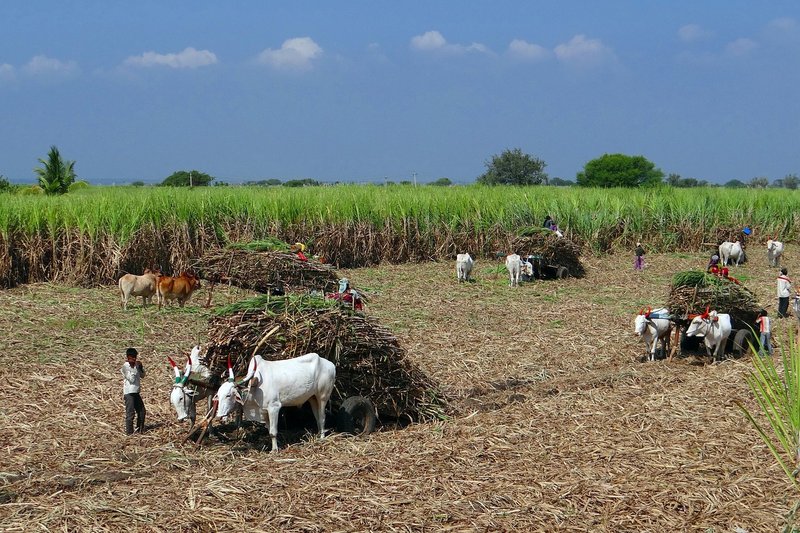
Representative image: allybally4b / Pixabay
Farmers in Sirsa, Karnal and Yamunanagar protested this week over paddy procurement, seeking a 20% moisture limit instead of 17% and full MSP of Rs 2,461 a quintal.
What Happened
Paddy farmers in several Haryana districts protested this week over the way their crop is being bought in government grain markets, with the 17% limit on moisture content at the centre of the dispute. On Wednesday, 14 October 2026, farmers' organisations held a three-hour sit-in at the Market Committee office in Sirsa, from 11 am to 2 pm, and locked its main gate, alleging irregularities in buying, weighing and moisture testing. They demanded that the permissible moisture level be raised from 17% to 20% because of recent rain, and that all farmers receive the government rate of Rs 2,461 a quintal. In Karnal, farmers locked the Market Committee office for three hours, and in Yamunanagar farmers staged sit-ins at five places over delays in buying and slow lifting of grain from the markets.
Key Facts
- Issue: paddy is being refused, or bought below the minimum support price (MSP), when moisture meters read above 17%.
- Farmers' main demand: raise the moisture limit to 20%, citing recent rain.
- Government rate cited by officials: Rs 2,461 a quintal.
- Sirsa, 14 October: three-hour sit-in and lock-out at the Market Committee office.
- Karnal: farmers locked the Market Committee office for three hours; in an earlier case on 6 October, officials declined to buy paddy that read 17.03% moisture.
- Yamunanagar: sit-ins at five places over procurement delays and slow lifting.
- Faggu grain market (Sirsa district): farmers briefly blocked a road after a farmer leader said moisture meters gave wrong readings; officials promised action.
- Official response: the Karnal administration says the permissible moisture level is fixed at 17% and has asked farmers to bring properly dried paddy.
Why It Matters
Moisture is a frequent point of friction in paddy buying. Grain with too much water can rot in storage and loses weight as it dries, so buyers set a limit. For farmers, a reading just above the limit can mean their crop is turned away or bought at a cut price, even when they believe it is dry enough. When rain arrives at harvest time, as it has this season, many more loads cross the line, and tempers rise in the markets.
The dispute is also about trust in the testing. Farmer leaders have said moisture meters are giving wrong readings, and in some markets farmers complain that meters are missing altogether. Even small differences matter: in Karnal, a load was refused at 17.03%, a fraction above the limit. Farmers fear that private buyers then step in and pay less than the government rate, leaving them with losses on a crop they have already spent months growing.
For the state and the central buying agencies, relaxing the moisture norm is not simple. A higher limit means more drying and storage losses, which someone has to pay for. For now, the officials' message is to dry paddy properly before bringing it to the market, while farmers argue that rain has made that impossible for many of them.
| District | Action this week | Main complaint |
|---|---|---|
| Sirsa | Three-hour sit-in, office gate locked (14 Oct) | Moisture testing, weighing, price below MSP |
| Karnal | Market Committee office locked for three hours | Rain-raised moisture, refusals |
| Yamunanagar | Sit-ins at five places | Procurement delays, slow lifting |
Impact
Short-term: Unless the moisture norm is relaxed or testing improves, more paddy is likely to pile up in markets, and farmers may sell to private buyers below the government rate. Protests may spread to other markets as arrivals peak.
Long-term: Repeated disputes add pressure for better drying facilities near markets, reliable and checked moisture meters, and faster lifting, so that grain does not sit in the open where rain can damage it further.
Who is affected: Paddy farmers in Haryana, commission agents (arhtiyas), rice millers, market committees, the state's procurement agencies, and consumers, since procurement feeds the public distribution system.
Key Takeaway
Haryana paddy farmers want the moisture limit raised from 17% to 20% after rain, while officials say the 17% rule stands and paddy must be dried before sale.
Questions and Answers
Why are paddy farmers protesting in Haryana?
They say paddy is being refused or bought below the government rate of Rs 2,461 a quintal because moisture readings are above the 17% limit, and they blame recent rain and faulty meters. They also complain of slow buying and lifting.
What is the moisture limit for paddy procurement?
The permissible moisture level is 17%, according to the Karnal district administration. Farmers want it raised to 20% this season.
Where did the protests take place?
In Sirsa, where farmers held a three-hour sit-in on 14 October 2026, in Karnal, where they locked the Market Committee office, and in Yamunanagar, where they staged sit-ins at five places.
What are officials telling farmers?
The Karnal administration has asked farmers to bring properly dried paddy to the market and says the 17% limit remains in force.
Disclaimer: Prepared by the Peepals newsroom from publicly available sources with AI assistance. Information is accurate to the best of our knowledge at the time of publication and may change. Images may be representative. Not professional advice. Report an error via our contact page.
Sourced and fact-checked by the Peepals Global Editorial Team
Spill Games raises $10.5 million led by Elevation to scale casual mobile games
Nasdaq Composite falls 1.9% as hot US inflation and AI debt fears hit tech
Reported, fact-checked and published by the Peepals Global Editorial Team.