
World Bank lifts India's FY27 growth forecast to 7.1%, flags oil and monsoon risks
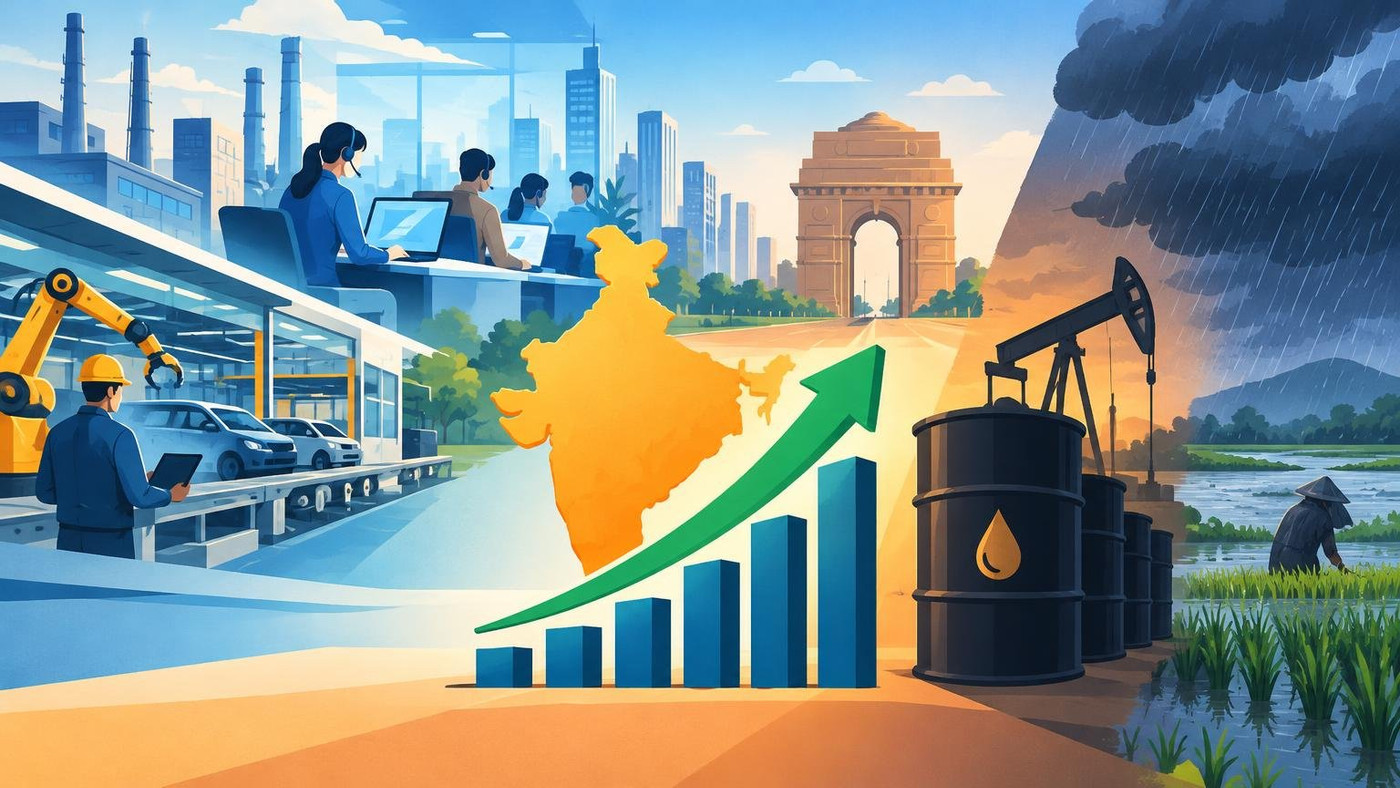
AI-generated representative image
Advertisement
The World Bank's India Development Update of 6 October 2026 raised India's FY27 growth forecast to 7.1% from 6.6%, citing industry and services.
What Happened
The World Bank raised its forecast for India's economic growth in the 2026-27 financial year (FY27) to 7.1%, from the 6.6% it projected in April, in its India Development Update released on 6 October 2026. The bank said growth had held up better than expected despite trade and geopolitical uncertainty, helped by strong industrial and services activity and a run of reforms. It also warned of risks from global oil prices, El Niño and possible stock market corrections, and projected that India's current account deficit will widen to 1.5% of GDP this year.
Key Facts
- New FY27 growth forecast: 7.1%, up from 6.6% in the World Bank's April 2026 projection.
- India's GDP grew 7.8% in the April-June 2026 quarter, above expectations, according to the report.
- Investment grew by more than 10% in April-June.
- Current account deficit is projected to widen to 1.5% of GDP in FY27, from 0.7% the year before.
- Named risks: global oil prices, El Niño and stock market corrections; a rainfall deficit through August is expected to weigh modestly on rural demand.
- Medium-term view: growth expected to pick up and stay above 7% as external headwinds ease.
- The update's special focus is artificial intelligence; it says private AI investment in India rose from $1.2 billion in 2024 to $4.1 billion in 2025.
Why It Matters
A higher growth forecast from the World Bank is a signal to investors and lenders that India's economy has weathered a difficult year better than many expected. The main supports, according to the report, are factory and services output and a strong investment cycle. Investment growing by more than a tenth in a single quarter suggests companies and the government are still adding capacity, which tends to support jobs and future output.
The upgrade comes with clear caveats, and those matter just as much for businesses and households. A wider current account deficit means India is spending more on imports, especially costlier energy, than it earns abroad. That puts pressure on the rupee and can feed into prices of imported goods and fuel. The bank's warning on oil prices fits with this, since costlier energy imports both widen that gap and push up prices at home.
The monsoon is the other weak spot. The report says a delayed monsoon and rainfall shortfall through August slowed farm growth and are likely to weigh modestly on rural demand. For companies selling to rural India, from two-wheeler makers to consumer goods firms, that points to a softer second half in villages even as the overall economy grows faster.
The focus on AI is a pointer to where the bank sees future productivity coming from. A more than threefold jump in private AI investment in one year shows how quickly companies are spending on the technology, though the figure is small next to India's overall investment.
| Indicator | World Bank figure |
|---|---|
| FY27 growth forecast (October) | 7.1% |
| FY27 growth forecast (April) | 6.6% |
| Q1 FY27 GDP growth | 7.8% |
| Current account deficit, FY27 | 1.5% of GDP |
| Current account deficit, FY26 | 0.7% of GDP |
Impact
Short-term: The upgrade supports investor confidence, but a wider current account gap and costly oil keep pressure on the rupee and on inflation in the coming months.
Long-term: If growth stays above 7% as the bank expects, India stays ahead of most of its peers, as the bank put it, with investment and services leading.
Who is affected: Businesses planning investment, exporters and importers, rural consumers and the companies that sell to them, and households exposed to fuel and food prices.
Key Takeaway
The World Bank now expects India to grow 7.1% in FY27, but flags oil prices, a weak monsoon and a widening current account deficit as the risks to watch.
Questions and Answers
What is the World Bank's latest growth forecast for India?
In its India Development Update of 6 October 2026, the World Bank projected 7.1% growth for FY27, up from 6.6% in April.
Why did the World Bank raise India's forecast?
It said growth had held up better than expected, with strong industrial and services activity, GDP growth of 7.8% in April-June and investment growth above 10% in that quarter.
What risks did the World Bank highlight?
It named global oil prices, El Niño and possible stock market corrections, and said a rainfall deficit through August would weigh modestly on rural demand.
What does a wider current account deficit mean for India?
It means India is paying more for imports, especially energy, than it earns from exports and other foreign income. The bank projects the gap at 1.5% of GDP in FY27, up from 0.7%, which can put pressure on the rupee.
Sourced and fact-checked by the Peepals Global Editorial Team
Reported, fact-checked and published by the Peepals Global Editorial Team.
Advertisement