

Sirsa farmers queue and block roads for DAP as rabi sowing begins
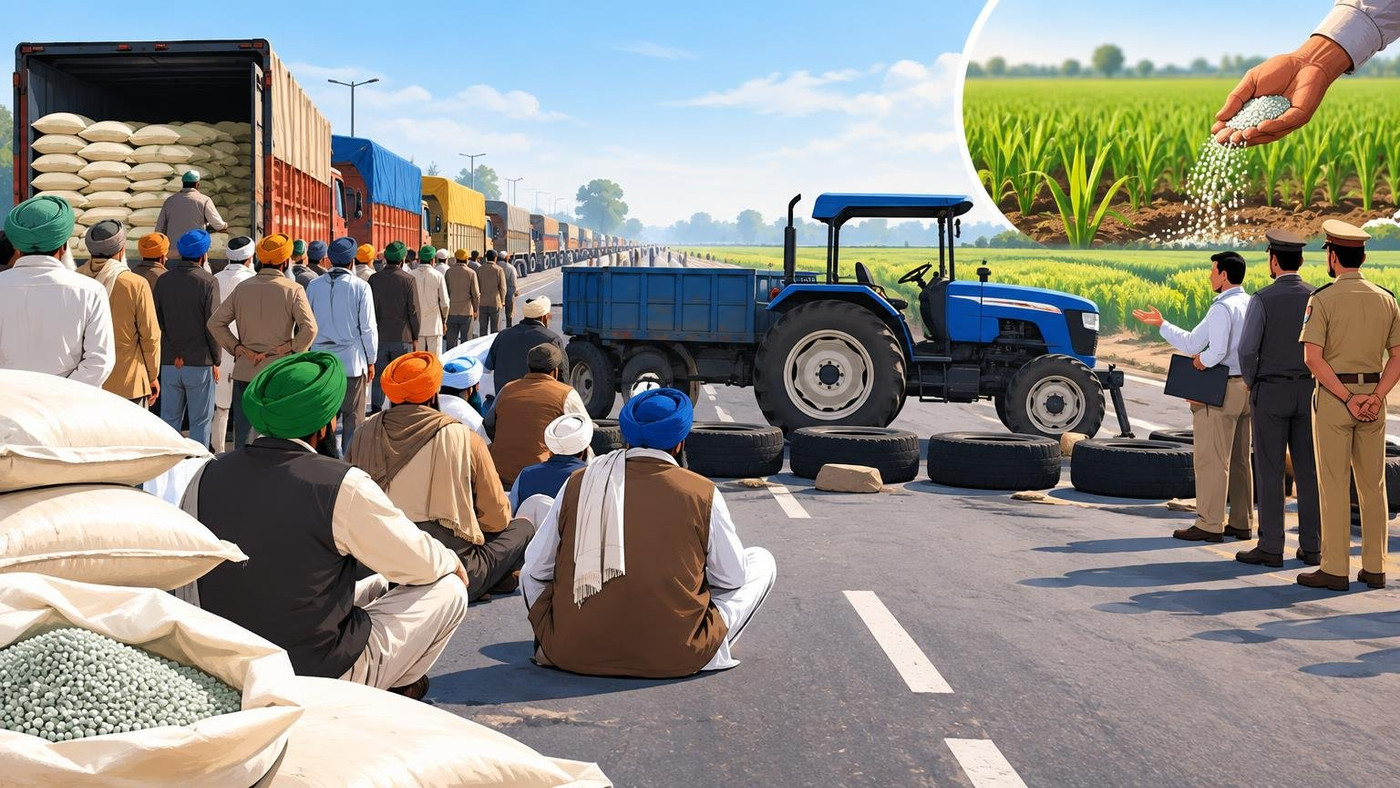
AI-generated illustration
Advertisement
Sirsa needs about 45,000 tonnes of DAP for rabi, but its first lot of 2,300 tonnes came on October 5, 2026, sparking queues and road blockades; officials deny a shortage.
What Happened
Farmers in Haryana's Sirsa district have been queuing from dawn for weeks for DAP (di-ammonium phosphate) fertiliser as rabi sowing gets under way, with repeated road blockades and protests at distribution points. The district needs about 45,000 tonnes of DAP for the rabi season, but its first consignment of the season, about 2,300 tonnes, arrived only on Monday, October 5, 2026. On Wednesday, October 7, token distribution at the grain market turned chaotic and was briefly halted; the agriculture department then issued 400 extra tokens, each allowing a farmer to buy four bags. Farmers that day surrounded an agriculture official's vehicle, and Dabwali Road was blocked twice in one week. State agriculture officials insist there is no shortage and say more supplies are on the way.
Key Facts
- Sirsa district's estimated DAP requirement for the rabi season is about 45,000 tonnes, according to officials.
- The first DAP consignment, about 2,300 tonnes, reached the district on Monday, October 5, 2026.
- On October 5, some farmers who already held tokens could not get fertiliser because of a data-update problem on sale machines, and blocked Dabwali Road for about 20 minutes.
- On October 7, distribution at the new grain market was briefly stopped; 400 extra tokens were then issued, each for four bags from the cooperative IFFCO centre.
- Farmers in Chopta blocked the Sirsa-Bhadra road on October 6 over the same issue.
- Officials say Haryana has sought 45,000 tonnes of DAP and 1.25 lakh tonnes of urea for the district's rabi needs, deny any shortage and expect two or three more rail rakes of fertiliser within a week.
Why It Matters
DAP is the main source of phosphorus for wheat and mustard, the two big rabi crops in this part of Haryana, and it is usually applied at the time of sowing. That makes timing critical. A farmer who gets fertiliser a week late may sow late or sow with less, and both can cut yields when the crop is harvested in spring. This is why a gap between demand and supply, even a short one, quickly turns into long queues and anger at distribution points.
The Sirsa situation also shows the stress points in how fertiliser reaches farmers. Supplies come by rail rakes, are split between cooperative and private dealers, and are rationed through tokens and limits on bags per Aadhaar card to stop hoarding. When a rake is delayed or a machine fails, the whole system backs up. Farmers say the token process is unclear and that rationing to a few bags forces them to return again and again, losing working days at the busiest time of the year.
Officials, for their part, argue that supply is arriving in stages and that panic buying makes queues worse. Both points can be true: total supply over the season may be adequate, while early-season demand runs ahead of deliveries.
For the wider rural economy, smooth fertiliser supply is one of the simplest ways to protect farm incomes. Haryana's paddy farmers are already dealing with slow procurement this season, and a difficult start to rabi sowing would add to that pressure.
| Date (2026) | What happened in Sirsa |
|---|---|
| Monday, October 5 | First DAP consignment of about 2,300 tonnes arrives |
| October 5 | Machine data problem leaves token holders without fertiliser; road blocked |
| Tuesday, October 6 | Chopta farmers block the Sirsa-Bhadra road |
| Wednesday, October 7 | Token distribution halted, then 400 extra tokens issued |
Impact
Short-term: Farmers face long queues and limited bags until more rakes arrive, which may delay sowing of wheat and mustard for some.
Long-term: Repeated early-season shortages could push the state to stock fertiliser earlier and improve token systems, or, if they persist, affect rabi yields in the district.
Who is affected: Wheat and mustard growers in Sirsa and nearby districts, cooperative societies and fertiliser dealers, the state agriculture department, and fertiliser suppliers.
Key Takeaway
Sirsa's farmers are queuing and protesting for DAP at the start of rabi sowing, as a 45,000-tonne seasonal need meets a first delivery of about 2,300 tonnes and officials promise more.
Questions and Answers
Why are farmers in Sirsa protesting over DAP fertiliser?
Rabi sowing has begun and the district needs about 45,000 tonnes of DAP, but only about 2,300 tonnes had arrived by October 5, leading to long queues, token shortages and road blockades.
Is there an official shortage of DAP in Haryana?
State agriculture officials say there is no shortage, that supplies are arriving in stages, and that two or three more rakes are expected within a week.
How is DAP being distributed in Sirsa?
Through tokens at distribution centres, with limits on bags per farmer; on October 7, 400 extra tokens were issued, each for four bags.
Why does the timing of DAP supply matter?
DAP is applied at sowing for crops such as wheat and mustard, so late supply can delay sowing or reduce use, which may lower yields.
Sourced and fact-checked by the Peepals Global Editorial Team
Nifty snaps eight-week losing streak, its longest since 2001, with 0.4% gain
Samsung guides to record $80 billion quarterly profit as AI memory demand soars
Reported, fact-checked and published by the Peepals Global Editorial Team.
Advertisement