
Sparxity Series A: Dresden AI chip start-up's funding reaches $90 million
 By Elena D’SouzaStartups & Innovation Correspondent, Peepals Global
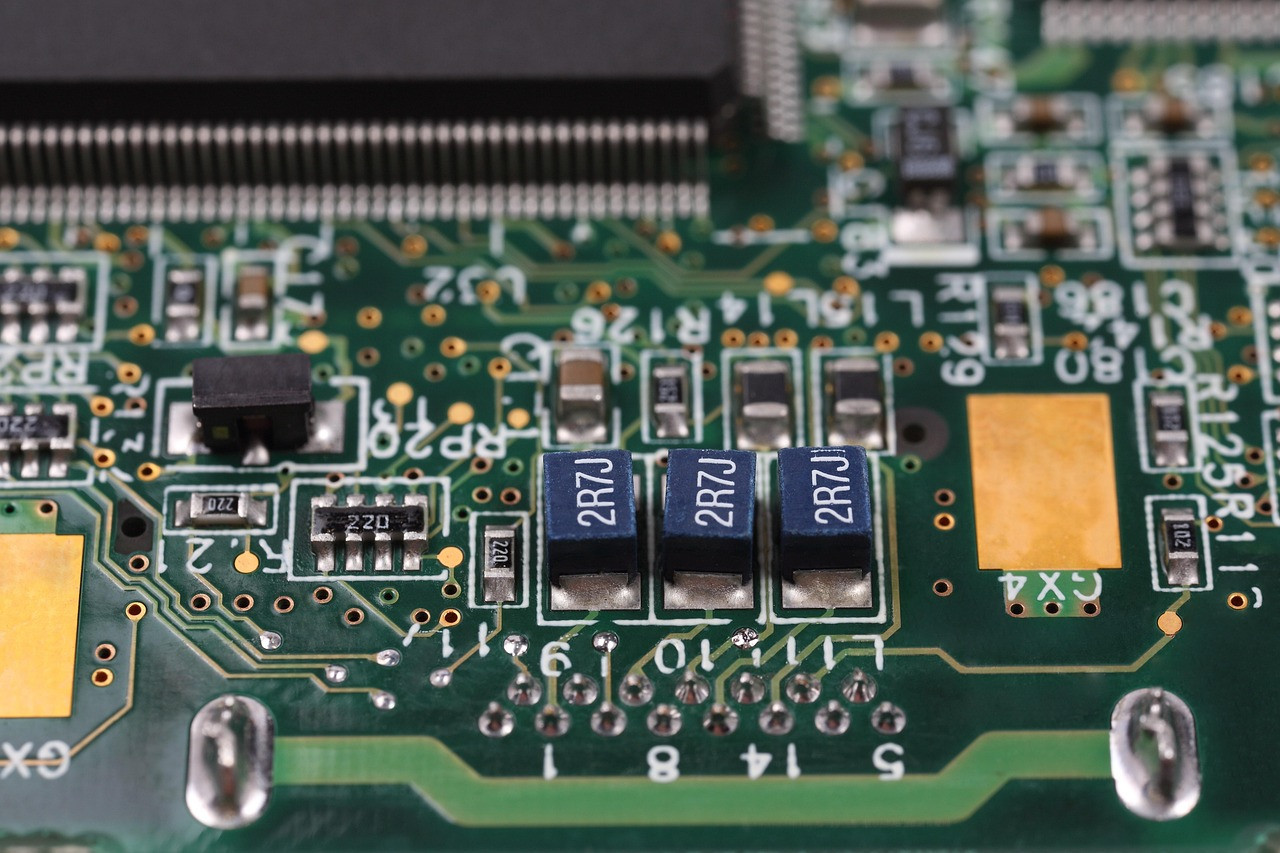
Representative image: nanoslavic / Pixabay
Dresden AI chip start-up Sparxity, formerly SpiNNcloud, closed a Series A on 10 November 2026 led by ICM HPQC Fund, taking total funding to about $90 million.
What Happened
Sparxity, an AI chip start-up from Dresden in Germany that until recently was called SpiNNcloud, has closed a Series A funding round that takes its total funding to about $90 million (about €80 million), the company announced on Tuesday, 10 November 2026. The round was led by ICM HPQC Fund, an investor in computing and quantum infrastructure. Lockheed Martin Ventures, the chipmaker GlobalFoundries, GS Futures, Cloudberry Ventures, TGFS and the European Innovation Council (EIC) Fund are among the other backers reported, with existing investors also taking part. The size of the Series A on its own was not disclosed. Sparxity designs computers built for "sparse" AI workloads and says it has more than 30 customers.
Key Facts
- Total funding raised to date: about $90 million (about €80 million) after the Series A; the Series A amount alone was not disclosed.
- Lead investor: ICM HPQC Fund. Other reported investors include Lockheed Martin Ventures, GlobalFoundries, GS Futures, Cloudberry Ventures, TGFS and the EIC Fund.
- Sparxity was founded in 2021 as SpiNNcloud, a spin-off from TU Dresden, building on the brain-inspired SpiNNaker2 chip.
- It says it has more than 30 customers, including large supercomputing centres; Sandia National Laboratories in the US is one.
- The Jülich Supercomputing Centre in Germany is receiving a Sparxity rack system called JUBIS.
- Company-reported results on selected workloads: sparse solvers 10 times faster, 18 times less energy for event-based machine learning and runtimes 20 times shorter for optimisation problems.
- Its next chip, SpiNNext, is aimed at AI inference; a speed-up of up to 44 times on very sparse models is a target, not yet demonstrated.
- Sparxity has signed a letter of intent with T-Systems, part of Deutsche Telekom, to combine its technology with T-Systems' data centres.
Why It Matters
Most of today's AI runs on graphics processing units (GPUs), which are very good at multiplying large, dense blocks of numbers. But many AI models and scientific problems are "sparse": most of the numbers involved are zero, or most parts of the network are idle at any moment. A GPU still spends time and power handling those zeros. Sparse-native hardware is designed to skip them and compute only what matters, which, if it works at scale, could cut the energy cost of AI sharply.
Energy is now one of the biggest constraints on AI. Data centres need ever more electricity, and governments and companies are looking for ways to do more computing per watt. Sparxity's pitch, backed by its company-reported figures such as 18 times less energy on some machine-learning tasks, is aimed squarely at that problem. The results are for selected workloads, though, and the bigger claim for the next-generation chip is still a target.
The investor list says something about where the company sees demand. A defence company's venture arm, a chip manufacturer and the European Union's innovation fund all backing the round points to interest from defence, industry and governments seeking European-made computing. The T-Systems partnership fits Europe's push for "sovereign" AI infrastructure that does not depend wholly on American or Asian suppliers.
For Indian founders working on semiconductors and AI hardware under India's own chip programmes, Sparxity is an example of a university spin-off turning research hardware into a commercial product, with supercomputing centres as early customers before a wider market.
Peepals calculation: The company's claim of 18 times less energy on event-based machine learning means using about 6% of the energy of earlier systems for that work, a saving of about 94% (1 − 1 ÷ 18 ≈ 0.94). A 10 times faster sparse solver would finish in a tenth of the time, a 90% cut. Our calculation from the reported figures.
| Item | Detail |
|---|---|
| Company | Sparxity (formerly SpiNNcloud), Dresden |
| Founded | 2021, spin-off from TU Dresden |
| Round | Series A, led by ICM HPQC Fund |
| Total funding to date | About $90 million (about €80 million) |
| Customers | More than 30 (company figure) |
| Next chip | SpiNNext, for AI inference |
Impact
Short-term: The funding supports deliveries to supercomputing customers such as Jülich and development of the SpiNNext chip.
Long-term: If sparse-native hardware proves itself beyond selected workloads, it could become a lower-energy alternative to GPUs for some AI and scientific computing, especially in Europe.
Who is affected: Supercomputing centres, AI developers running sparse models, data-centre operators facing power limits, European policymakers pursuing sovereign computing, and rival chip makers.
What to watch next: Progress on the SpiNNext inference chip and independent results from the JUBIS system at Jülich.
Key Takeaway
Dresden's Sparxity has closed a Series A that lifts its total funding to about $90 million, backing chips built to skip the zeros in AI workloads and cut energy use.
Questions and Answers
What is Sparxity?
Sparxity, formerly SpiNNcloud, is a Dresden-based AI chip company spun out of TU Dresden in 2021 that builds computers designed for sparse AI and scientific workloads.
How much has Sparxity raised?
After its Series A, announced on 10 November 2026, its total funding is about $90 million (about €80 million). The Series A amount alone was not disclosed.
Who invested in Sparxity's Series A?
The round was led by ICM HPQC Fund, with Lockheed Martin Ventures, GlobalFoundries, GS Futures, Cloudberry Ventures, TGFS and the EIC Fund among the investors reported.
What is sparse AI computing?
It is computing designed to skip the many zero values or idle parts in some AI models, doing work only where it is needed, which can save time and energy compared with standard GPUs.
Disclaimer: Prepared by the Peepals newsroom from publicly available sources with AI assistance. Information is accurate to the best of our knowledge at the time of publication and may change. Images may be representative. Not professional advice. Report an error via our contact page.
By Elena D’Souza, Startups & Innovation CorrespondentCovers Start-ups & Opportunities and more for Peepals Global. All stories by Elena D’Souza
Esha Singh, Manu Bhaker, Divya Subbaraju clinch Doha world 25m team title
Mauritania confidence vote: Ould Djay government wins 145 to 21
Get the day's stories in your inbox
Peepals Weekly: the week decoded, free. One email a week, unsubscribe in one click.
Elena D’Souza is a pen name of the Peepals Global Editorial Team, which researches, fact-checks and publishes every story. The portrait is an illustration.