
West Mebon Vishnu temple at Angkor reopens after $12 million restoration
 By Ishita SenCulture & Heritage Editor, Peepals Sanskriti
File photo: Clay Gilliland (CC BY-SA 2.0), via Wikimedia Commons
Cambodia's 11th-century West Mebon, a Vishnu temple on an island in Angkor's West Baray, reopened on 16 November after a 14-year Cambodia-France restoration.
West Mebon: what happened
West Mebon, a Vishnu temple built in the 11th century on an island in the West Baray reservoir at Angkor, Cambodia, was formally reopened on Monday, 16 November 2026, after a restoration lasting 14 years. King Norodom Sihamoni and French President Emmanuel Macron presided over the ceremony, held as one of the main events of the 20th Francophonie Summit, the first held in Cambodia. The APSARA National Authority, which manages the Angkor site, said visitors could return to the temple immediately.
West Mebon: key facts
- The restoration cost about $12 million and was carried out jointly by Cambodia's APSARA National Authority and the French government.
- The work covered the temple's 16 towers, its surrounding enclosure and the causeway leading to the central sanctuary.
- West Mebon dates to the mid-11th century, the reign of the Khmer king Udayadityavarman II, who also completed the West Baray, and it was dedicated to Vishnu.
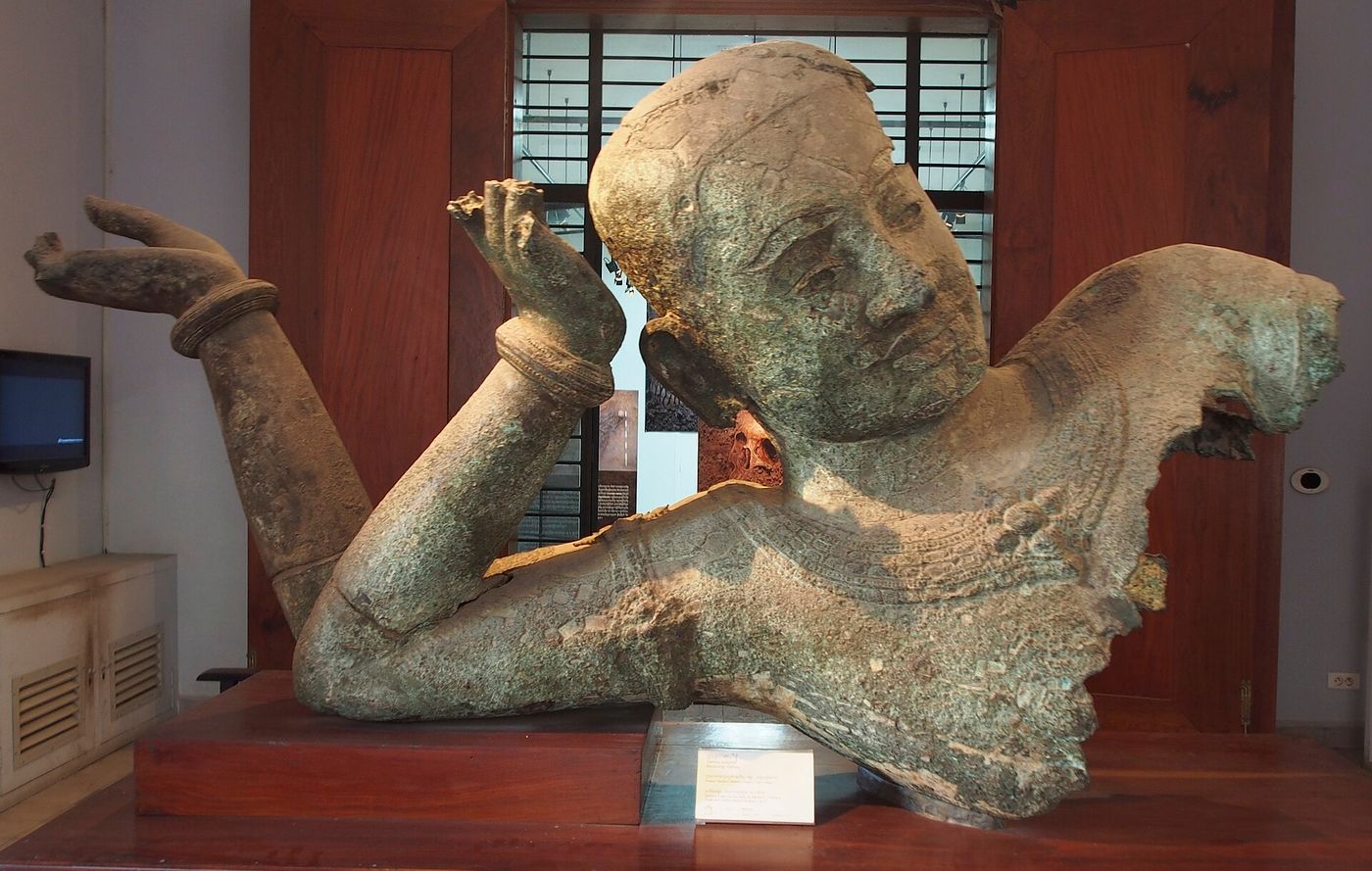
- In 1936, excavations at the site yielded fragments of a colossal bronze of a four-armed Vishnu reclining on the serpent Ananta, estimated to have been more than five metres long; the head, torso and some arms survive.
- That bronze is on an international tour, currently at the Asian Art Museum in San Francisco, and is expected to return to Cambodia in early 2027.
- The temple had been restored once before, by the French conservator Maurice Glaize between 1942 and 1944, but had largely collapsed again, with many stones missing.
West Mebon: why it matters
West Mebon is one of the clearest reminders that Vishnu worship travelled far beyond India's borders more than a thousand years ago. West Mebon placed a Vishnu shrine at the centre of a vast man-made lake. The reclining Vishnu found there shows the god resting on the serpent Ananta, a form widely worshipped in India. According to tradition, Vishnu rests on the cosmic serpent upon the waters between cycles of creation; at West Mebon the temple itself stood in the waters of the baray, giving that belief a physical setting.
The restoration matters because the temple had nearly been lost. A first rebuilding in the 1940s did not hold, and by the time the current project began, much of the structure had fallen and many stones were missing. King Sihamoni said the project helped pass traditional building skills to a new generation of Cambodian workers, which is what keeps a heritage site alive after the experts leave.
The bronze itself has had a long journey. It left Cambodia for France in 2024 to be studied and restored, was shown at the Guimet museum in Paris in 2025, and is now in San Francisco. Its expected return in early 2027 will reunite, in the same country at least, the image and the temple it once stood in. President Macron, recalling the 1936 discovery at the ceremony, pledged continued French expertise, specialist training and conservation exchanges when Cambodia asks for them.
For Indian readers and the wider diaspora, the reopening adds a restored site to the circuit of Hindu heritage in Southeast Asia, alongside the better-known temples of the Angkor park. It also shows a model of long, patient partnership between a host country's heritage agency and a foreign government, the kind of cooperation that sites with shared cultural roots often depend on.
Peepals calculation: Spread over the 14 years of work, the $12 million restoration comes to roughly $860,000 a year, and about $750,000 for each of the temple's 16 towers if the whole budget is divided by tower count (12 ÷ 14 ≈ 0.86; 12 ÷ 16 = 0.75). A mid-11th-century temple is now about 975 years old, so the restoration took roughly 1.4% of its life so far (14 ÷ 975 ≈ 0.014). Our calculation from the reported figures.
| Milestone | Year |
|---|---|
| West Mebon built under Udayadityavarman II | Mid-11th century |
| Reclining Vishnu bronze fragments found | 1936 |
| First restoration by Maurice Glaize | 1942-1944 |
| Bronze sent to France for study and restoration | 2024 |
| Temple reopened by King Sihamoni and President Macron | 16 November 2026 |
West Mebon: impact
Short-term: Visitors to the Angkor park can now reach the restored West Mebon again, adding a Vishnu temple on an island to the usual temple circuit around Siem Reap.
Long-term: The project leaves Cambodia with workers trained in traditional restoration, and France has offered further training and conservation exchanges. The return of the reclining Vishnu bronze in early 2027 will bring the site's most famous object back home.
Who is affected: Visitors and pilgrims interested in Hindu and Khmer heritage, including travellers from India; Cambodia's APSARA National Authority and its conservation workers; and scholars of Southeast Asian art and religion.
What to watch next: The return of the reclining Vishnu bronze to Cambodia, expected in early 2027.
West Mebon: key takeaway
Travellers to Angkor can add West Mebon back to their route now, and those keen to see its reclining Vishnu should watch for the bronze's return to Cambodia, expected in early 2027.
West Mebon: questions and answers
Where exactly is West Mebon?
It stands on an artificial island in the West Baray, a large man-made reservoir in the Angkor area near Siem Reap, Cambodia.
Who built West Mebon and for which deity?
It was built in the mid-11th century during the reign of the Khmer king Udayadityavarman II and was dedicated to Vishnu.
Is the famous reclining Vishnu statue back at the temple?
No. The bronze is on an international tour and is currently at the Asian Art Museum in San Francisco. It is expected to return to Cambodia in early 2027, where it has been kept in the National Museum of Cambodia in Phnom Penh rather than at the temple.
Who paid for the restoration?
The work was a joint project of Cambodia's APSARA National Authority and the French government, at a cost of about $12 million.
Disclaimer: Prepared by the Peepals newsroom from publicly available sources with AI assistance. Information is accurate to the best of our knowledge at the time of publication and may change. Images may be representative. Not professional advice. Report an error via our contact page.
By Ishita Sen, Culture & Heritage EditorCovers Culture & Heritage and more for Peepals Sanskriti. All stories by Ishita Sen
Hospitality Horizon Top 50: Indian Accent is No. 1 standalone for fourth year
AIAPGET 2026: Brittas asks Ayush minister to end PG Ayurveda admission delays
Your week ahead, every Sunday. Free.
Exam and result dates, IPOs opening, scheme deadlines, government holidays and the RBI decision for the next 7 days, plus the week's top stories. One email a week, unsubscribe in one click.
Ishita Sen is a pen name of the Peepals Global Editorial Team, which researches, fact-checks and publishes every story. The portrait is an illustration.
Responsible for this story: the Peepals Global Editorial Team, led by editor Prashant Sonar. How we report