
Tai-Khampti script chair at Arunachal University of Studies: 8-credit elective
 By Devansh TiwariKnowledge Systems Writer, Peepals Sanskriti

Representative image: jarmoluk / Pixabay
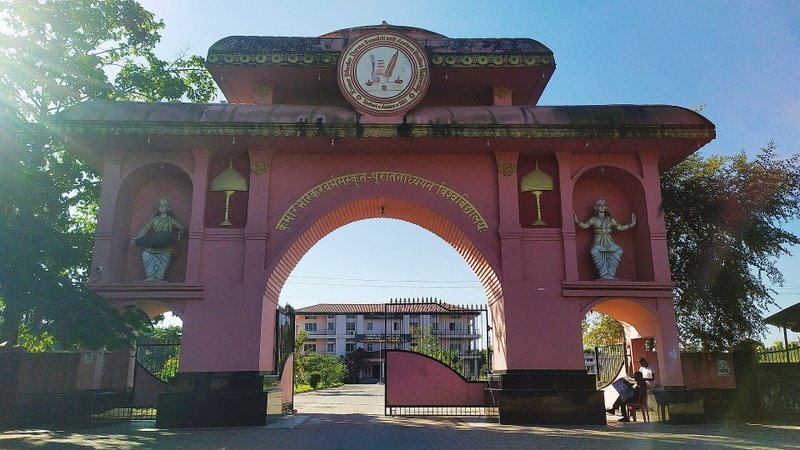
Arunachal University of Studies in Namsai has set up a Tai-Khampti Language and Script Chair, offering undergraduates an eight-credit elective in the Lik Tai script.
Tai-Khampti script: what happened
Arunachal University of Studies (AUS) in Namsai, Arunachal Pradesh, has set up a Tai-Khampti Language and Script Chair, the university announced on Tuesday, 17 November 2026. The chair will run a structured academic programme in the Tai-Khampti script, known as Lik Tai, which undergraduates from every faculty will be able to take as an eight-credit elective, subject to programme guidelines.
Tai-Khampti script: key facts
- The decision was taken at a meeting chaired by AUS Chairman Ashwani Lochan and attended by Vice-Chancellor Ajeya Jha and the deans of the university's faculties.
- The meeting also discussed how the course will be built: curriculum development, the allocation of credits, and how the elective will fit into existing undergraduate programmes.
- AUS Joint Registrar Vipin Rawat said completing the course would also help students meet the local-language eligibility requirements for certain Arunachal Pradesh government jobs.
- Lik Tai, the script used to write Tai-Khampti, originated from the Shan (Tai) script of Myanmar.
- The new chair builds on earlier work at the same university: in 2021 AUS announced a linguistic chair for creating scripts for tribal languages, backed by an annual sponsorship of Rs 10 lakh from the World Education Mission.
- That 2021 chair listed research on scripts for the Nocte and Tangsa languages and the preservation of literature in Tai Khamti (Lik Tai) among its aims.
Tai-Khampti script: why it matters
Knowledge systems are carried by languages and scripts. A community's chronicles, religious texts and local history survive only as long as people can still read the script they were written in. Lik Tai is that script for the Tai-Khampti people of Namsai, and its roots lie in the Shan script of Myanmar. When fewer young people learn a script, older manuscripts and records written in it slowly become unreadable, even if the paper itself survives.
A university chair turns that concern into a regular academic activity. In Indian higher education, a "chair" is a dedicated position or unit, often named after a person or subject, that runs teaching and research in one field. By attaching the Tai-Khampti chair to an eight-credit elective open to every faculty, AUS is not limiting the script to language students. A commerce, science or engineering undergraduate could, under the stated plan, earn part of the degree's credits by learning to read and write Lik Tai. Credits are the units in which a degree's coursework is counted, so an elective of this size is a substantial course rather than a short workshop.
The jobs link gives the course a practical pull. The university says the course would help students meet local-language eligibility requirements for certain state government jobs. For young people in Namsai and nearby districts, that makes learning the script useful for a career as well as for heritage, which is often what decides whether a revival effort lasts beyond its first batch.
The move also fits a wider pattern in the region. India's northeast is home to many languages that were long passed on orally or in scripts that few institutions teach. The university's own 2021 linguistic chair was set up to help create scripts for the Nocte and Tangsa languages, and to preserve Tai Khamti literature. The new chair narrows that focus to one community's script and puts it into the regular degree structure.
Peepals timeline: In 2021 Arunachal University of Studies announced a linguistic chair, with Rs 10 lakh a year from the World Education Mission, to work on scripts for tribal languages including Nocte and Tangsa and to preserve literature in Tai Khamti. On 17 November 2026 the university announced a separate Tai-Khampti Language and Script Chair, with Lik Tai to be offered to undergraduates across all faculties as an eight-credit elective. The detailed curriculum, credit allocation and timetable are still being worked out, and the university has not announced a start date.
Tai-Khampti script: impact
Short-term: AUS faculty will draft the syllabus and decide how the eight-credit elective slots into each undergraduate programme. Students at the university can expect a new option on their elective lists once the curriculum is approved.
Long-term: If the course attracts steady enrolment, Namsai could gain a pool of young readers of Lik Tai able to work with old manuscripts, teach the script in schools and meet state-job language requirements. The chair could also become a base for research and documentation of Tai-Khampti texts.
Who is affected: Undergraduates at Arunachal University of Studies; the Tai-Khampti community of Namsai and nearby areas; job seekers preparing for Arunachal Pradesh government posts with local-language requirements; and researchers of northeast Indian languages and scripts.
Tai-Khampti script: key takeaway
Students and families in Namsai should watch for the university's final syllabus and start date for the Lik Tai elective, since the course is meant to count both towards a degree and towards local-language eligibility for some state government jobs.
Tai-Khampti script: questions and answers
What is Lik Tai?
Lik Tai is the script used to write the Tai-Khampti language spoken in Namsai, Arunachal Pradesh. It originated from the Shan (Tai) script of Myanmar.
Who can take the Tai-Khampti course at Arunachal University of Studies?
The university says undergraduate students from all faculties will be able to opt for it as an eight-credit elective, subject to the guidelines of their programme.
How could the course help with jobs?
AUS Joint Registrar Vipin Rawat said completing the course would help students meet the local-language eligibility requirements for certain Arunachal Pradesh government jobs.
When will classes start?
The university has not announced a start date. Its meeting discussed curriculum development, credit allocation and integration with existing undergraduate programmes, which still have to be finalised.
Disclaimer: Prepared by the Peepals newsroom from publicly available sources with AI assistance. Information is accurate to the best of our knowledge at the time of publication and may change. Images may be representative. Not professional advice. Report an error via our contact page.
By Devansh Tiwari, Knowledge Systems WriterCovers Knowledge Systems and more for Peepals Sanskriti. All stories by Devansh Tiwari
Your week ahead, every Sunday. Free.
Exam and result dates, IPOs opening, scheme deadlines, government holidays and the RBI decision for the next 7 days, plus the week's top stories. One email a week, unsubscribe in one click.
Devansh Tiwari is a pen name of the Peepals Global Editorial Team, which researches, fact-checks and publishes every story. The portrait is an illustration.
Responsible for this story: the Peepals Global Editorial Team, led by editor Prashant Sonar. How we report