
Dowry demand after marriage is punishable without prior deal, MP High Court rules
 By Priya NairLeadership & Growth Editor, Peepals Shakti

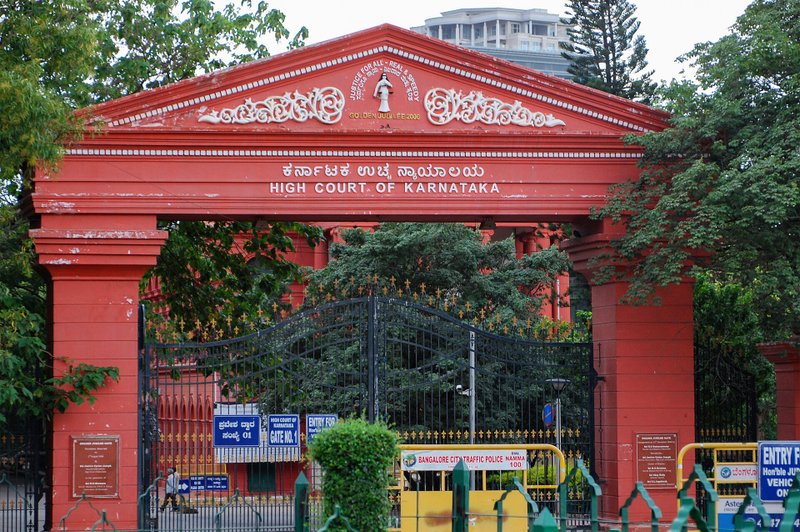
Representative image: veerchudasama007 / Pixabay
The Madhya Pradesh High Court has ruled that a dowry demand made after marriage is punishable even if no amount was agreed before the wedding, restoring a husband's conviction.
What Happened
The Madhya Pradesh High Court has ruled that a demand for dowry made after a marriage can be punished under the Dowry Prohibition Act even if no amount was fixed or agreed before the wedding, according to reports of the judgment published on October 21, 2026. Justice Alok Awasthi set aside a lower court's acquittal of a husband and restored his conviction under Section 498A of the Indian Penal Code, which deals with cruelty by a husband or his relatives, and Section 4 of the Dowry Prohibition Act, which punishes demanding dowry. The court said a prior dowry contract is not a condition that must be proved before a person can be convicted for demanding dowry.
Key Facts
- Court: the Madhya Pradesh High Court; the judgment was given by Justice Alok Awasthi and reported on October 21, 2026.
- Holding: the prosecution does not have to prove that a particular amount was formally fixed as dowry before the marriage.
- A later demand connected with the marriage can by itself attract Section 4 of the Dowry Prohibition Act, the court held.
- Result: the husband's acquittal was set aside and his conviction under Section 498A IPC and Section 4 of the Dowry Prohibition Act was restored.
- Background: according to the prosecution, the woman's family gave jewellery, household articles and Rs 17 lakh at the time of the marriage in 2007, and a further Rs 8 lakh was later demanded.
- The sessions court had acquitted the husband, treating the lack of a pre-marriage agreement and gaps in the evidence about the earlier Rs 17 lakh as reasons to set aside evidence of the later demand.
- A separate recent Delhi High Court ruling also held that a demand does not stop being a dowry demand just because the money is said to be for a business purpose.
Why It Matters
Dowry is banned in India, but demands often do not stop at the wedding. In many cases, pressure for money, gold or goods begins or grows after the marriage, sometimes years later, often described as help for a business, a house or a vehicle. In this case, the sessions court had leaned on the absence of a pre-marriage agreement to acquit the husband.
This ruling rejects that argument. By holding that a prior agreement is not needed, the High Court has made clear that what matters is whether the demand is connected with the marriage, not whether it was settled in advance. That makes it harder for families to escape a dowry case simply because the bride's family cannot prove a pre-wedding deal, which is common since such deals are rarely written down.
The Delhi High Court's recent ruling points in the same direction: calling a demand a request for "business" money does not change its nature if it is linked to the marriage. Together, the two rulings show courts looking at the substance of demands rather than their labels.
For families, the judgment is a reminder that dowry is not only about the wedding day. Partnerships in a marriage depend on both sides being treated with dignity, and a woman's family should not be made to pay for her place in her husband's home at any stage.
Impact
Short-term: The ruling can be cited by women and their families in pending dowry cases where the accused argue that no amount was agreed before the marriage. Trial courts in Madhya Pradesh are expected to follow it.
Long-term: Clear rulings from High Courts help shape how police and trial courts across the country handle dowry complaints. Over time, this can make the law more effective in cases where demands come after the wedding.
Who is affected: Married women facing demands for money or goods from their husbands or in-laws; their parents and siblings; police and lawyers handling dowry complaints; and families who may face prosecution for such demands.
Key Takeaway
A dowry demand made after marriage can be punished even without a pre-wedding agreement on the amount, the Madhya Pradesh High Court has ruled, restoring a husband's conviction.
Questions and Answers
Is a dowry demand after marriage punishable in India?
Yes. The Madhya Pradesh High Court has held that a demand connected with the marriage, even if made after the wedding, can be punished under Section 4 of the Dowry Prohibition Act.
Does dowry need to be agreed before the wedding for a case to be filed?
No. According to the ruling reported on October 21, 2026, the prosecution does not have to prove that a fixed dowry amount was agreed before the marriage.
What did the Madhya Pradesh High Court decide in this case?
Justice Alok Awasthi set aside the husband's acquittal by a sessions court and restored his conviction under Section 498A of the Indian Penal Code and Section 4 of the Dowry Prohibition Act.
What can a woman facing dowry demands do?
She can file a complaint with the police, approach a lawyer or legal aid service, or contact a women's helpline. Under this ruling, a demand made after the wedding can be prosecuted even without proof of a pre-wedding agreement.
Disclaimer: Prepared by the Peepals newsroom from publicly available sources with AI assistance. Information is accurate to the best of our knowledge at the time of publication and may change. Images may be representative. Not professional advice. Report an error via our contact page.
By Priya Nair, Leadership & Growth EditorCovers Leadership & Growth and more for Peepals Shakti. All stories by Priya Nair
Gap Victoria Beckham collection: second 37-piece knitwear drop launches
Women-led listed firms earned Rs 2.11 lakh crore in FY26, BT's MPW list shows
Priya Nair is a pen name of the Peepals Global Editorial Team, which researches, fact-checks and publishes every story. The portrait is an illustration.