
Women Entrepreneurship Trends October 2026: Funding Is Top Barrier for Founders

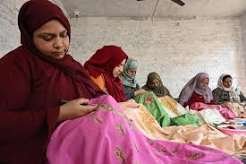
AI-generated representative image
A October 2026 trends round-up citing QuickBooks research finds 47% of aspiring women founders name lack of funding as their biggest barrier, a gap India's data echoes.
What Happened
A women entrepreneurship trends round-up published in October 2026 says funding is the biggest barrier for women who want to start businesses. It cites QuickBooks research finding that 47% of aspiring women founders name lack of funding as their top obstacle. Fear of failure or losing money follows at 33%. The findings point to a gap between interest in starting up and the money needed to do it.
Key Facts
- QuickBooks research, as cited in the round-up, finds 25% of women plan to start a business during 2026, and 58% either plan to start or would consider starting within 12 months.
- The same research finds 65% of women have never owned or run a business, compared with 46% of men.
- On 6 October 2026, Sophia Ukoni, Lead, Market Research at Moniepoint Inc., said 45% of Nigerian women have access to financial services, against 56% of men, citing EFInA data.
- Ukoni said women-owned small businesses worldwide face an estimated unmet financing need of $1.9 trillion. In Nigeria, 65% of women-run businesses saw revenue grow, but only 47% saw profits rise.
- The Organisation for Economic Co-operation and Development (OECD) report "Bridging the Finance Gap for Women Entrepreneurs" says women entrepreneurs are about 25% less likely than men to use bank loans.
- The International Finance Corporation (IFC) estimated that formal lenders meet only 27% of the financing demand of women-owned MSMEs in India. Its study put the finance gap at ₹6.37 lakh crore, or $116 billion, which is 73% of demand.
- The Arise Ventures Diversity Report 2026 found women-led Indian startups receive just ₹4 for every ₹100 invested in founders. A Kalaari Capital report found women hold only 16% of partner-level roles at investment firms.
- As of 31 January 2026, 1,02,054 of 2,12,283 DPIIT-recognised startups had at least one woman director or partner, about 48%. Women-led startups received about 13% of Fund of Funds venture money since 2020, according to one analysis.
Why It Matters
The round-up shows that the main problem for women founders is not interest. Yet 65% have never owned or run one, against 46% of men. Interest is not turning into ownership at the same pace.
The round-up argues that the funding gap shapes how women build. A founder without spare capital often makes defensive choices, such as undercharging or accepting poor-fit clients. Many women also enter business without the financial buffer or insider access that makes early mistakes survivable. It advises founders to avoid underpricing and building alone for too long.
The pattern appears in other countries. In Nigeria, Sophia Ukoni said women-owned businesses get less formal finance despite lower loan default rates. She listed bias among lenders, few women in financial leadership, limits on asset ownership and low awareness of funding options. On 8 October 2026, a report from Uganda said a new government grant scheme will support women who could not get loans under the GROW project. Kapelebyong District councillor Jennifer Ross Asio said many lacked collateral registered in their own names.
India's data points the same way. Mudra Yojana and Stand-up India were designed to widen credit access for women, and most Mudra beneficiaries are women. But analysis in BW Businessworld notes most loans to women fall in the small 'Shishu' category. Such amounts suit a vegetable cart or home tailoring unit, not a scalable manufacturing business or a technology startup.
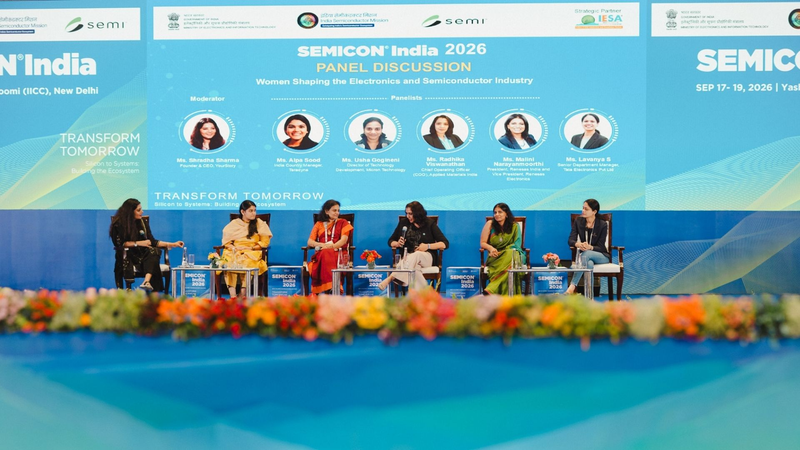
Venture capital shows a sharper gap, even though participation is high. Vani Kola, founder and managing director of Kalaari Capital, argues the gap reflects market inefficiency rather than any lack of ability among women. The 48% figure for startups with a woman director or partner is a board-level count, and women-led companies are fewer. Panellists at the Startup Hub Expo in New Delhi on 16 April 2026 said investor bias affects how women-led ventures are judged, with added limits in Tier 2 and Tier 3 regions. Some, such as skincare brand CHOSEN, still raised $5 million in Series A funding in May 2026.
Impact
Short-term: In the short term, the findings keep attention on credit access for women. Uganda's new grant scheme, reported on 8 October 2026, is one immediate response, aimed at women who could not qualify for loans under the GROW project because they lacked collateral in their own names. Women-led startups continue to raise money, as CHOSEN did with its $5 million Series A in May 2026, but panellists in New Delhi said early-stage funding remains uneven.
Long-term: Over time, the data signals that policy tools need to widen. Proposals discussed include transparent reporting of gender-based investment data, tax incentives, childcare support and lending based on cash flow rather than collateral. The OECD says governments have made progress on women's entrepreneurship but can do more with a wider range of policy tools. For India, closing the credit gap would help the many women-owned MSMEs move beyond micro-scale and create jobs. Vani Kola's view that the gap is a market inefficiency suggests funders may be missing viable businesses.
Who is affected: Aspiring and existing women founders are most affected, especially those without collateral, spare capital or investor networks. Women in Tier 2 and Tier 3 regions of India face thin mentorship networks and fewer chances for early validation, according to panellists at the Startup Hub Expo. Women-owned MSMEs in India, where formal lenders meet only 27% of financing demand, are directly affected. Lenders, venture capital firms and policymakers also feel the impact. Similar gaps appear in Nigeria and Uganda, so the issue spans several geographies.
Key Takeaway
Women want to build businesses, but 47% of aspiring founders in the QuickBooks research say lack of funding is the biggest barrier, a gap India's lending and venture data echo.
Questions and Answers
What is the biggest barrier for women entrepreneurs in October 2026?
Lack of funding is the biggest barrier. QuickBooks research cited in an October 2026 round-up finds 47% of aspiring women founders name it as their top obstacle, followed by fear of failure or losing money at 33%.
How big is the finance gap for women-owned MSMEs in India?
The International Finance Corporation estimated that formal lenders meet only 27% of the financing demand of women-owned MSMEs in India. Its study put the finance gap at ₹6.37 lakh crore, or $116 billion, which is 73% of demand.
How much venture capital do women-led startups in India receive?
The Arise Ventures Diversity Report 2026 found women-led Indian startups receive just ₹4 for every ₹100 invested in founders. One analysis estimates they received about 13% of Fund of Funds venture money since 2020.
Why do women struggle to get loans?
Barriers include bias among lenders, few women in financial leadership, limits on asset ownership and low awareness of funding options. In Uganda, many women lacked collateral registered in their own names. The OECD says women are about 25% less likely than men to use bank loans.
Disclaimer: Prepared by the Peepals newsroom from publicly available sources with AI assistance. Information is accurate to the best of our knowledge at the time of publication and may change. Images may be representative. Not professional advice. Report an error via our contact page.
Sourced and fact-checked by the Peepals Global Editorial Team
WHO's first child obesity guidelines: no weight-loss drugs under 10, families first
Andhra targets 5 lakh women entrepreneurs, puts SHG goods under 'Swayam AP' brand
Reported, fact-checked and published by the Peepals Global Editorial Team.