
Bolna launches Syl speech model to catch 'haan' and short call replies
 By Anika SharmaAI & Innovations Editor, Peepals Tech
Bengaluru voice AI start-up Bolna launched Syl on 23 November 2026, an in-house speech model for short replies like 'haan', starting with English and Hindi.
Bolna: what happened
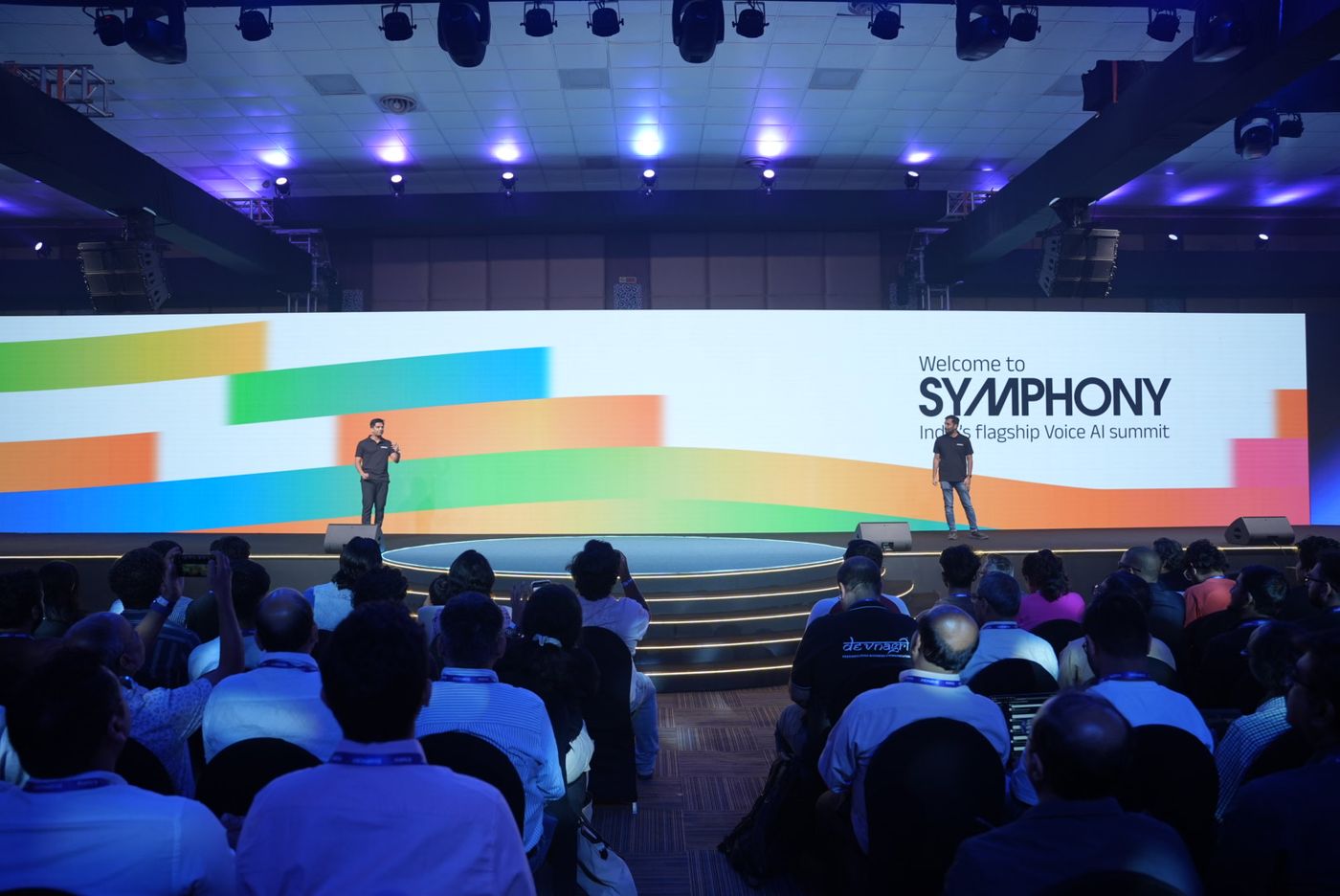
Bengaluru voice AI start-up Bolna launched Syl, its first in-house speech recognition model, at its first Symphony event in Bengaluru, which the company says drew more than 1,800 participants, announced on Monday, 23 November 2026. Syl is built to catch the shortest replies on a phone call, such as "haan", "ji" and "theek hai", which are easily missed on noisy lines and in calls that switch between languages. The first version handles English and Hindi, with Tamil planned next.
Bolna: key facts
- Model: Syl, a speech recognition model, the software that turns spoken words into text, built in-house by Bolna for very short replies.
- Languages: English and Hindi in the first version; Tamil is planned.
- Company's test result: Bolna says Syl correctly transcribed 93% of one-word yes-or-no replies in its own tests.
- Training: Syl was not trained from scratch; Bolna says more models in the family are due by the end of the year, along with making Syl context-aware.
- Event: Symphony, Bolna's first voice AI gathering in Bengaluru, with more than 1,800 participants by the company's count.
- Scale: the company says it supports more than 22 Indian languages and handles more than 1.5 million calls a day for enterprise customers.
- Investors: Bolna says it is backed by General Catalyst, Y Combinator and Blume Ventures.
Bolna: why it matters
Voice AI agents are software that answers or makes phone calls on behalf of a business, for tasks such as reminders, verification and support. Bolna says it runs more than 1.5 million such calls a day for enterprise customers. A common failure point is the tiny answer. When a customer says "haan" to confirm an address or "nahi" to decline a payment date, a general speech model may miss it on a weak network or confuse it in a Hindi-English call. One missed word can send a call down the wrong path or force the customer to repeat themselves.
Bolna's choice to build a narrow model for this one problem says something about how Indian start-ups are approaching AI. Instead of competing to build the largest general model, the company is targeting a specific gap it sees in its own call traffic. Prateek Sachan, the co-founder and chief technology officer, said voice AI for India has to handle many languages, accents, delays, network conditions and cost at the same time. A small model focused on short replies can be cheaper and faster to run on every call.
The 93% figure is the company's own and comes from its internal tests, so it is not a guarantee of how Syl will perform on every network or accent. Independent measurements, and results from customers once it is in use, will show whether it fixes the problem it targets.
Peepals calculation: If Bolna's stated volume of 1.5 million calls a day holds steady, that is about 45 million calls in a 30-day month (1.5 million × 30). In the company's tests, Syl missed or misheard about 7 of every 100 one-word yes-or-no replies (100 - 93). Our calculation from the reported figures.
| Item | Detail |
|---|---|
| Product | Syl speech recognition model |
| Launched | At Symphony, Bengaluru, announced 23 November 2026 |
| Languages now / next | English, Hindi / Tamil |
| Claimed accuracy | 93% on one-word yes-or-no replies (company tests) |
| Investors named | General Catalyst, Y Combinator, Blume Ventures |
Bolna: impact
Short-term: Bolna's enterprise customers can use Syl for calls in English and Hindi, where short confirmations matter most, such as delivery checks and payment reminders.
Long-term: If Syl and the planned follow-up models work well, Bolna can rely less on outside speech providers, cutting cost and giving it more control. Other Indian voice AI firms may follow with their own narrow models for common failure points.
Who is affected: Businesses using voice AI agents for customer calls, customers who answer those calls, developers building voice products, and other Indian voice AI start-ups.
What to watch next: The further models Bolna says it will release by the end of 2026, and the addition of Tamil to Syl.
Bolna: key takeaway
Businesses using voice agents should test Syl on their own call recordings, especially short replies on weak networks, before relying on the company's 93% figure.
Bolna: questions and answers
What is Bolna's Syl model?
Syl is a speech recognition model built by Bolna to catch very short replies on phone calls, such as "haan", "ji" and "theek hai". It was launched at Bolna's Symphony event in Bengaluru, announced on 23 November 2026.
Which languages does Syl support?
The first version supports English and Hindi. Bolna says Tamil is planned next.
How accurate is Syl?
Bolna says Syl correctly transcribed 93% of one-word yes-or-no replies in its internal tests. These are company figures and have not been independently checked.
Who backs Bolna?
The company says its investors include General Catalyst, Y Combinator and Blume Ventures. It has not given a new funding amount with this launch.
Disclaimer: Prepared by the Peepals newsroom from publicly available sources with AI assistance. Information is accurate to the best of our knowledge at the time of publication and may change. Images may be representative. Not professional advice. Report an error via our contact page.
By Anika Sharma, AI & Innovations EditorCovers AI & Innovation and more for Peepals Tech. All stories by Anika Sharma
Bambu P3C launched: seven-slot tool-changing 3D printer at $1,149
Sarvam Dictate launch: Indian-language voice typing API at Rs 0.50 a minute
Your week ahead, every Sunday. Free.
Exam and result dates, IPOs opening, scheme deadlines, government holidays and the RBI decision for the next 7 days, plus the week's top stories. One email a week, unsubscribe in one click.
Anika Sharma is a pen name of the Peepals Global Editorial Team, which researches, fact-checks and publishes every story. The portrait is an illustration.
Responsible for this story: the Peepals Global Editorial Team. How we report