
Riemann hypothesis proof made with Claude certified correct by Lean, Mathlib
 By Anika SharmaAI & Innovations Editor, Peepals Tech
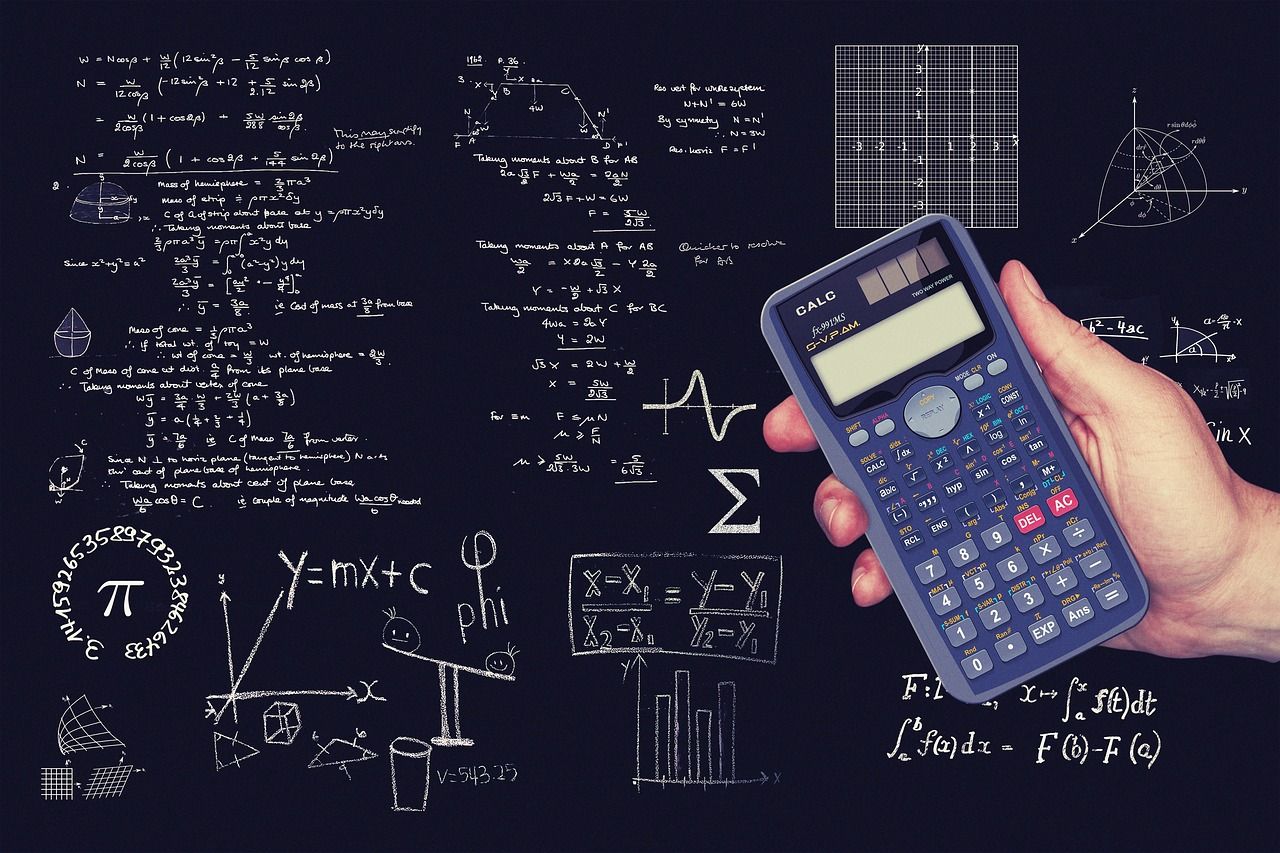
Representative image: geralt / Pixabay
Lean FRO and the Mathlib Initiative said on 21 November 2026 that Levent Alpöge's Claude-assisted Lean proof of the Riemann hypothesis is correct.
Riemann hypothesis: what happened
The Lean Focused Research Organization (Lean FRO) and the Mathlib Initiative, which maintain the main software tools for checking mathematical proofs by computer, said on Saturday, 21 November 2026 that they have full confidence that Anthropic mathematician Levent Alpöge's computer-checked proof of the Riemann hypothesis is correct. Alpöge had released the proof on 20 November as a Lean library of about 17 million lines of code, saying he found it while working with Anthropic's AI model Claude.
Riemann hypothesis: key facts
- Claim: on 20 November 2026, Levent Alpöge released a proof of the Riemann hypothesis written in Lean, a programming language used to state and check mathematical proofs, as a library of about 17 million lines.
- Certification: on 21 November, the Lean FRO and the Mathlib Initiative released a joint statement saying both the statement of the theorem and its proof are correct.
- Method: Alpöge's theorem was compared with the official statement of the Riemann hypothesis in Mathlib, the shared library of formalised mathematics, using two independent checking tools.
- Alpöge said the proof was discovered while working with Claude, an AI model made by his employer, Anthropic.
- Limit: the joint statement says computer verification shows the result is true but does not explain why the proof works; no human has yet read and understood the full argument.
- Mathematicians quoted in coverage say understanding the proof could take months or years, and the result has not been through peer review.
- On the same day, Stanford mathematician Ravi Vakil posted a preprint claiming a separate proof written entirely by humans; its status is still unverified.
Riemann hypothesis: why it matters
The Riemann hypothesis, a problem that has stood for 167 years, is one of the most famous unsolved problems in mathematics. In simple terms, it is a precise prediction about how prime numbers, the building blocks of all whole numbers, are spread out along the number line. A proof would be one of the biggest results in the history of mathematics.
This claim is unusual in two ways. First, the proof was written in Lean, a system in which every logical step is checked by a computer program, so the question is not whether a human made an error but whether the computer check itself is sound. The Lean and Mathlib communities say they examined exactly that, comparing Alpöge's theorem with the agreed statement of the problem using two separate tools. Second, the proof was produced with heavy help from an AI system, which is why it is so long that no person has yet read it all.
That leaves mathematicians in an unfamiliar position. They may have strong evidence that the statement is true without yet understanding why. Mathematics usually values a proof for the insight it gives, and the community's caution reflects that. Formal peer review, publication and years of further study are still ahead.
For India, the result matters to the country's mathematicians and computer scientists, and to its growing AI research community, because it shows AI systems moving from assisting with routine work to helping produce major results.
Peepals timeline: on 20 November 2026, Levent Alpöge released his Lean proof and said it was found with Claude. The same day, Ravi Vakil posted a preprint claiming an all-human proof. On Saturday, 21 November, the Lean FRO and the Mathlib Initiative released their joint statement certifying the formal proof as correct. Coverage describes the problem as 167 years old, which places its origin in 1859 (2026 − 167 = 1859).
| Date | Development |
|---|---|
| 20 November 2026 | Alpöge releases 17-million-line Lean proof, made with Claude |
| 20 November 2026 | Ravi Vakil posts preprint claiming an all-human proof |
| 21 November 2026 | Lean FRO and Mathlib Initiative certify the Lean proof as correct |
Riemann hypothesis: impact
Short-term: Mathematicians will begin the long work of reading, simplifying and explaining the proof, and of checking the separate human-written claim. Debate will continue over how far a computer check can stand in for human understanding.
Long-term: If the result holds under peer review, it would settle one of mathematics' oldest open problems and change how major results are produced and checked, with AI systems and proof checkers playing a central role.
Who is affected: Mathematicians and number theorists; computer scientists working on formal verification; AI companies and researchers; and students considering careers in mathematics and AI.
Riemann hypothesis: key takeaway
Watch for peer review of both the Lean proof and the human-written preprint, since the computer check confirms the result is true but mathematicians have yet to explain why.
Riemann hypothesis: questions and answers
Has the Riemann hypothesis been proved?
A computer-checked proof released by Levent Alpöge on 20 November 2026 has been certified as correct by the Lean FRO and the Mathlib Initiative. It has not yet been peer-reviewed, and mathematicians have not yet understood the full argument.
What role did AI play in the Riemann hypothesis proof?
Alpöge, a mathematician at Anthropic, said he discovered the proof while working with Anthropic's AI model Claude. The resulting Lean proof runs to about 17 million lines of code.
What is Lean?
Lean is a programming language and proof assistant in which mathematical statements and proofs are written so that a computer can check every logical step. Mathlib is its shared library of formalised mathematics.
Is there also a human proof?
Stanford mathematician Ravi Vakil posted a preprint on 20 November 2026 claiming a proof written entirely by humans. Its correctness has not yet been confirmed.
Disclaimer: Prepared by the Peepals newsroom from publicly available sources with AI assistance. Information is accurate to the best of our knowledge at the time of publication and may change. Images may be representative. Not professional advice. Report an error via our contact page.
By Anika Sharma, AI & Innovations EditorCovers AI & Innovation and more for Peepals Tech. All stories by Anika Sharma
Protolabs India engineering base: CEO Suresh Krishna plans 200-300 hires
Google Cloud India layoffs: company confirms 30 roles cut, denies mass job losses
Your week ahead, every Sunday. Free.
Exam and result dates, IPOs opening, scheme deadlines, government holidays and the RBI decision for the next 7 days, plus the week's top stories. One email a week, unsubscribe in one click.
Anika Sharma is a pen name of the Peepals Global Editorial Team, which researches, fact-checks and publishes every story. The portrait is an illustration.
Responsible for this story: the Peepals Global Editorial Team, led by editor Prashant Sonar. How we report