
AMD news: OpenAI models find up to 14% chip gains in AMD GPU design
 By Anika SharmaAI & Innovations Editor, Peepals Tech
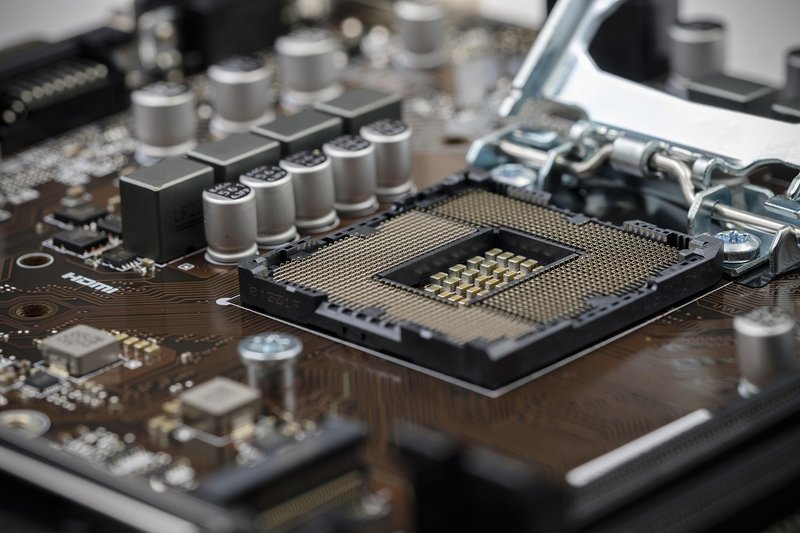
Representative image: fotoblend / Pixabay
OpenAI said on 18 November 2026 its AI models found up to 14% power, performance and area gains in AMD GPU blocks; some changes are already in a design sent for manufacture.
AMD news: what happened
OpenAI said in a post on its website on Wednesday, 18 November 2026, that its AI models found improvements of up to 14% in power, performance and area on AMD's flagship GPU design blocks, measured against what it called heavily optimized baselines. The work took less than five months. According to OpenAI, AMD has already put some of the model-proposed changes into a design it sent for manufacturing and has written others into its production design files for future products. The same post says the models trimmed the area of parts of OpenAI's own inference chip, Jalapeño.
AMD news: key facts
- OpenAI's post, titled "Advancing chip design with our models", reports up to 14% improvement in power, performance and area (PPA) on AMD's flagship GPU IP.
- OpenAI describes the gain, reached in under five months, as roughly a year's worth of progress.
- Much of the gain came from the models rewriting the chip's SystemVerilog code at register-transfer level (RTL), the layer that describes how a circuit behaves.
- AMD also verified single-digit percentage PPA gains in key blocks of its upcoming next-generation flagship CPU using designs written by OpenAI's model, according to the post.
- On Jalapeño, OpenAI estimates model-proposed changes cut standard-cell area by about 13% in the vector unit and about 10% in the matrix unit, and says these changes were proven in silicon during bring-up.
- All figures are OpenAI's own; no block-level data or independent audit has been published.
AMD news: why it matters
Chip design is slow, expensive work. A modern GPU is built from thousands of blocks, and engineers spend months squeezing a few percent of power, speed or silicon area out of each one. Those three measures, usually shortened to PPA, decide how much a chip costs to make, how hot it runs and how much work it does per watt. A gain of a few percent on a flagship block is normally counted as a good year for a design team.
OpenAI's claim is that a language model, working on the written description of a circuit rather than on a finished layout, can find such gains faster. Register-transfer level code is the text that hardware engineers write to describe what a block of logic does on each clock cycle. Changing it can change how many gates the final chip needs. Because the edits are to text, they can be checked by the usual design tools before anything is built, which is why AMD could fold some of them into a design already headed for the factory.
The post also returns to OpenAI's first in-house chip. Jalapeño is an inference processor built with Broadcom, and OpenAI has said AI tools helped its team move from first design to tapeout in nine months. The new post puts numbers on part of that help: smaller vector and matrix units, which are the parts of the chip that do the arithmetic for AI models. In one example given in the post, a redesigned multiplier used about 15% less cell area and needed one clock cycle instead of two.
For Indian readers who work in or are training for chip design, the post is a signal worth noting: the task it automates, tuning RTL code block by block, is routine work for design and verification teams, and the results still needed AMD's engineers to check and choose them.
Peepals calculation: if under five months of work produced what OpenAI calls a year of progress, the pace is about 2.4 times the usual (12 ÷ 5 = 2.4). A block that is 13% smaller in standard-cell area keeps 87% of its old cell area (100 − 13 = 87), and one that is 10% smaller keeps 90%. Our calculation from the reported figures.
| Chip | Reported change | Status |
|---|---|---|
| AMD flagship GPU IP | Up to 14% PPA improvement | Some changes in a design sent to manufacturing |
| AMD next-generation flagship CPU | Single-digit % PPA gains in key blocks | Verified by AMD, per OpenAI |
| OpenAI Jalapeño vector unit | About 13% less standard-cell area | Proven in silicon, per OpenAI |
| OpenAI Jalapeño matrix unit | About 10% less standard-cell area | Proven in silicon, per OpenAI |
AMD news: impact
Short-term: AMD gets design changes it can use in products now in development. For OpenAI, the post is also a showcase for selling chip-design help, which is the aim of its tie-up with Synopsys, the electronic design automation company.
Long-term: if the results hold up, AI models could become a standard step in chip design, used to search for small improvements across many blocks at once. That could shorten design cycles for GPUs and AI accelerators.
Who is affected: chip designers and verification engineers, companies that make design software, and AMD and its customers.
What to watch next: OpenAI and Synopsys signed a multi-year agreement, announced on 30 September 2026, to build GPT-Synopsys, a model meant to operate Synopsys's design tools. No release date or price has been announced, so the next step to watch is when early customers can use it.
AMD news: key takeaway
Treat the 14% figure as OpenAI's own result until AMD or an outside group publishes block-level data, but note that AMD is already shipping some of the changes into real designs.
AMD news: questions and answers
What does PPA mean in chip design?
PPA stands for power, performance and area. Power is how much electricity a circuit uses, performance is how fast it runs, and area is how much silicon it takes up. Engineers trade these against each other, so improving one without hurting the others is hard.
Did OpenAI design an AMD chip?
No. OpenAI says its models proposed changes to existing AMD design blocks, mainly by rewriting the code that describes the circuits. AMD's engineers checked the changes and chose which ones to use.
Has anyone independently checked the AMD news?
Not publicly. The numbers come from OpenAI's post, and no block-level results or independent audit have been released. AMD's own detailed comment on the figures has not been published.
What is GPT-Synopsys?
It is a planned AI model that OpenAI and Synopsys agreed in September 2026 to build together. It is meant to run Synopsys's chip-design software across tasks such as timing closure and verification. It has no announced launch date yet.
Disclaimer: Prepared by the Peepals newsroom from publicly available sources with AI assistance. Information is accurate to the best of our knowledge at the time of publication and may change. Images may be representative. Not professional advice. Report an error via our contact page.
By Anika Sharma, AI & Innovations EditorCovers AI & Innovation and more for Peepals Tech. All stories by Anika Sharma
GTA 6 on Xbox Series S: 720p with FSR 4, dips near 20 fps
eMudhra emBridge flaw: CERT-In flags file-name leak, patch already out
Your week ahead, every Sunday. Free.
Exam and result dates, IPOs opening, scheme deadlines, government holidays and the RBI decision for the next 7 days, plus the week's top stories. One email a week, unsubscribe in one click.
Anika Sharma is a pen name of the Peepals Global Editorial Team, which researches, fact-checks and publishes every story. The portrait is an illustration.
Responsible for this story: the Peepals Global Editorial Team, led by editor Prashant Sonar. How we report