
SpaceX launch: Starfall return capsule flies again on Bandwagon-5
 By Pooja MehraIndustry Trends Analyst, Peepals Tech
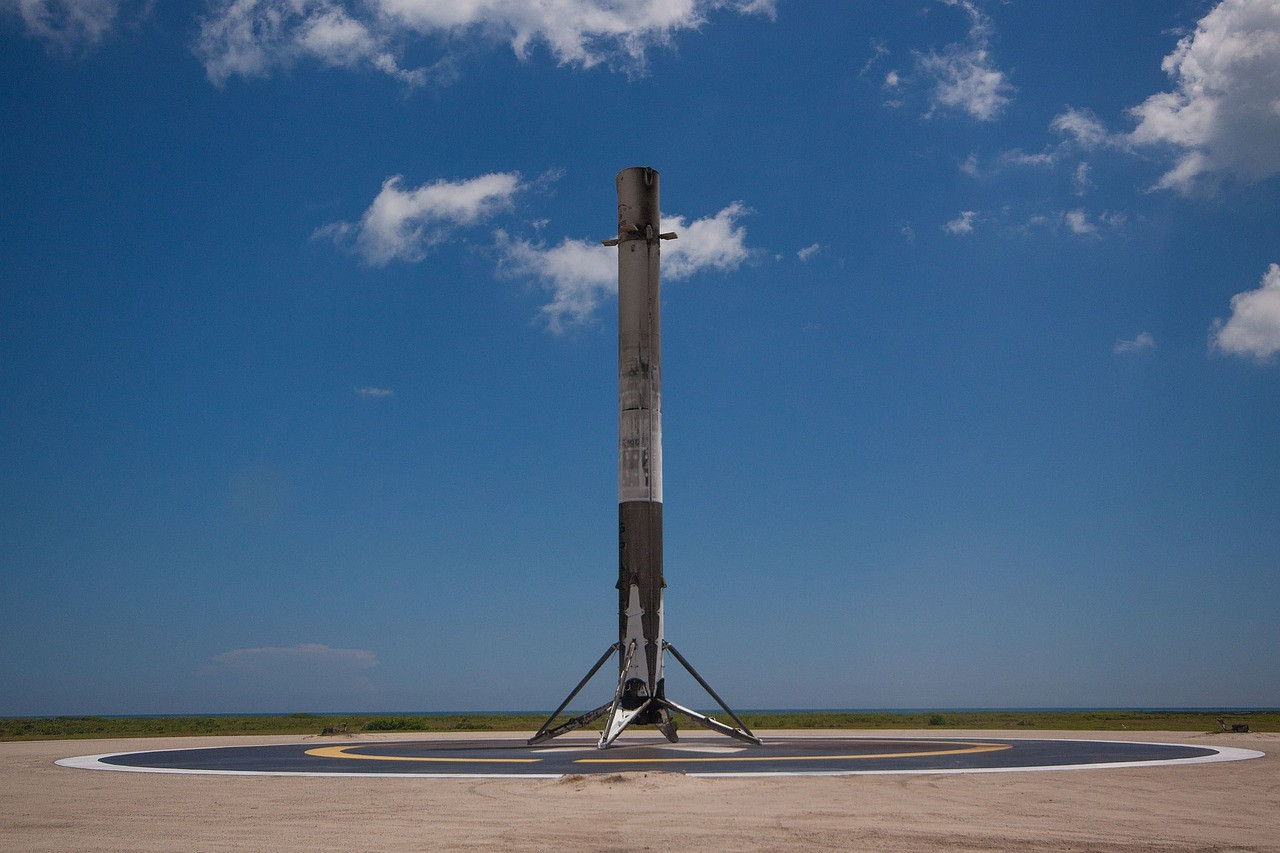
Representative image: Military_Material / Pixabay
SpaceX flew its Starfall reentry capsule for a second time on 20 October 2026, among 32 payloads on the Bandwagon-5 rideshare launch from Cape Canaveral.
What Happened
SpaceX launched its Starfall reentry capsule for the second time on 20 October 2026, a SpaceX launch from Cape Canaveral, Florida, that carried 32 payloads on the company's Bandwagon-5 rideshare mission. A Falcon 9 rocket lifted off from Space Launch Complex 40 at 7:04 a.m. US Eastern time, a day after a planned attempt on 19 October was called off because of weather. Starfall, a flat, disc-shaped vehicle designed to bring cargo back from orbit to Earth, was the last payload to separate, about two hours and 48 minutes after liftoff. The first Starfall demonstration flew on 23 June 2026.
Key Facts
- Launch: 20 October 2026, 7:04 a.m. EDT, Space Launch Complex 40, Cape Canaveral, after a weather scrub on 19 October.
- Mission: Bandwagon-5, a SpaceX rideshare flight carrying 32 payloads for SpaceX and its customers.
- Starfall: a disc-shaped return capsule that SpaceX says is meant to give researchers and manufacturers routine access to microgravity, the near-weightless conditions of orbit.
- Second flight: the first demonstration flight launched on 23 June 2026.
- Recovery plan: according to pre-launch reports, the test capsules are to splash down in the Pacific Ocean about 1,300 km off the coast of the United States or Mexico, using a heat shield and parachutes, with SpaceX ships recovering the parts.
- Approval: the US Federal Aviation Administration's environmental review covered no more than two demonstration flights, so this was the last test flight cleared under it, according to reports.
- Other payloads: Varda Space Industries' W-Series 7 capsule, a small automated factory for making drug compounds in orbit, and Planet's Pelican-12 Earth-observation satellite also flew.
Why It Matters
Getting things into orbit has become routine and cheaper over the last decade, largely because rockets such as Falcon 9 land and fly again. Getting things back from orbit is still hard. A returning object hits the atmosphere at very high speed and must survive intense heat, then land somewhere it can be found. Today most cargo comes back from space only on crewed spacecraft or space station supply ships, and only on their schedule.
Starfall is SpaceX's attempt to change that. The idea is a small, standard capsule that can ride up on a regular rideshare flight, carry an experiment or a batch of material while in orbit, and then return it to Earth on its own. If it works reliably, a university lab or a company could treat a trip to microgravity almost like booking a slot on a shipping service. Microgravity matters because some materials behave differently without gravity: certain crystals grow larger and purer, and some drug compounds form in more useful shapes. This field is often called in-space manufacturing.
SpaceX is not alone. Varda Space Industries, a California start-up whose W-Series 7 capsule flew on the same rocket, builds small capsules that make drug compounds in orbit and bring them back. Other companies in the United States and Europe are building their own return vehicles. A large launch company offering its own return capsule could bring prices down and make the market bigger, but it also increases competition for smaller firms.
What has not yet been reported is how this flight ended. Coverage at the time of launch said the reentry performance and the condition of the cargo after recovery would decide how quickly SpaceX moves to paying customers. Until SpaceX or independent observers report the result of the splashdown, the flight should be seen as a test, not a proven service.
For India, the story is relevant in two ways. Indian start-ups and research groups that design satellites and experiments already buy rides on SpaceX rideshare missions, and a return service would give them a new option for experiments that need to come home. It is also a benchmark for India's own work on reusable and returnable space hardware, as the country's space sector opens further to private companies.
| Item | Detail |
|---|---|
| First Starfall demo | 23 June 2026 |
| Second Starfall demo | 20 October 2026, on Bandwagon-5 |
| Payloads on Bandwagon-5 | 32 |
| Planned splashdown zone | Pacific Ocean, about 1,300 km off the US or Mexico coast |
Impact
Short-term: The key news to watch is the result of the capsule's reentry and recovery. A clean recovery with cargo in good condition would support SpaceX's plans to sell Starfall flights; a failure would delay them and may need a new regulatory review.
Long-term: If return capsules become routine, research in materials, biology and medicines that needs microgravity could become cheaper and faster, and more countries and companies could take part in orbital manufacturing.
Who is affected: Space start-ups such as Varda that build return capsules, pharmaceutical and materials researchers, satellite companies that use rideshare flights, including Indian ones, and regulators who license reentry.
Key Takeaway
SpaceX flew its Starfall return capsule for a second time on 20 October 2026, a test of whether it can offer a regular service bringing experiments and products back from orbit.
Questions and Answers
What did SpaceX launch on 20 October 2026?
A Falcon 9 rocket from Cape Canaveral carried the Bandwagon-5 rideshare mission with 32 payloads, including the second test flight of SpaceX's Starfall reentry capsule.
What is SpaceX's Starfall capsule for?
SpaceX says Starfall is meant to provide routine access to microgravity for research and in-space manufacturing, and then bring the cargo back to Earth.
Did the Starfall capsule land safely?
Reports published at launch did not include the result of the reentry. The test capsules are meant to splash down in the Pacific Ocean, about 1,300 km off the coast of the US or Mexico, and be recovered by SpaceX ships.
Why does a SpaceX launch like this matter to India?
Indian satellite and research teams already use SpaceX rideshare flights. A return capsule service could give them a way to fly experiments that must come back to Earth, and it sets a benchmark for India's own returnable space hardware.
Disclaimer: Prepared by the Peepals newsroom from publicly available sources with AI assistance. Information is accurate to the best of our knowledge at the time of publication and may change. Images may be representative. Not professional advice. Report an error via our contact page.
By Pooja Mehra, Industry Trends AnalystCovers Industry News & Trends and more for Peepals Tech. All stories by Pooja Mehra
Goa AI Policy 2026 aims to train 50,000 people in AI by 2030
Tonbo Imaging share price opens 66% above IPO price on market debut
Pooja Mehra is a pen name of the Peepals Global Editorial Team, which researches, fact-checks and publishes every story. The portrait is an illustration.