

Urban Indian Young Adults Define Healthy Living: Diet, Sleep, Exercise, Less Screen Time
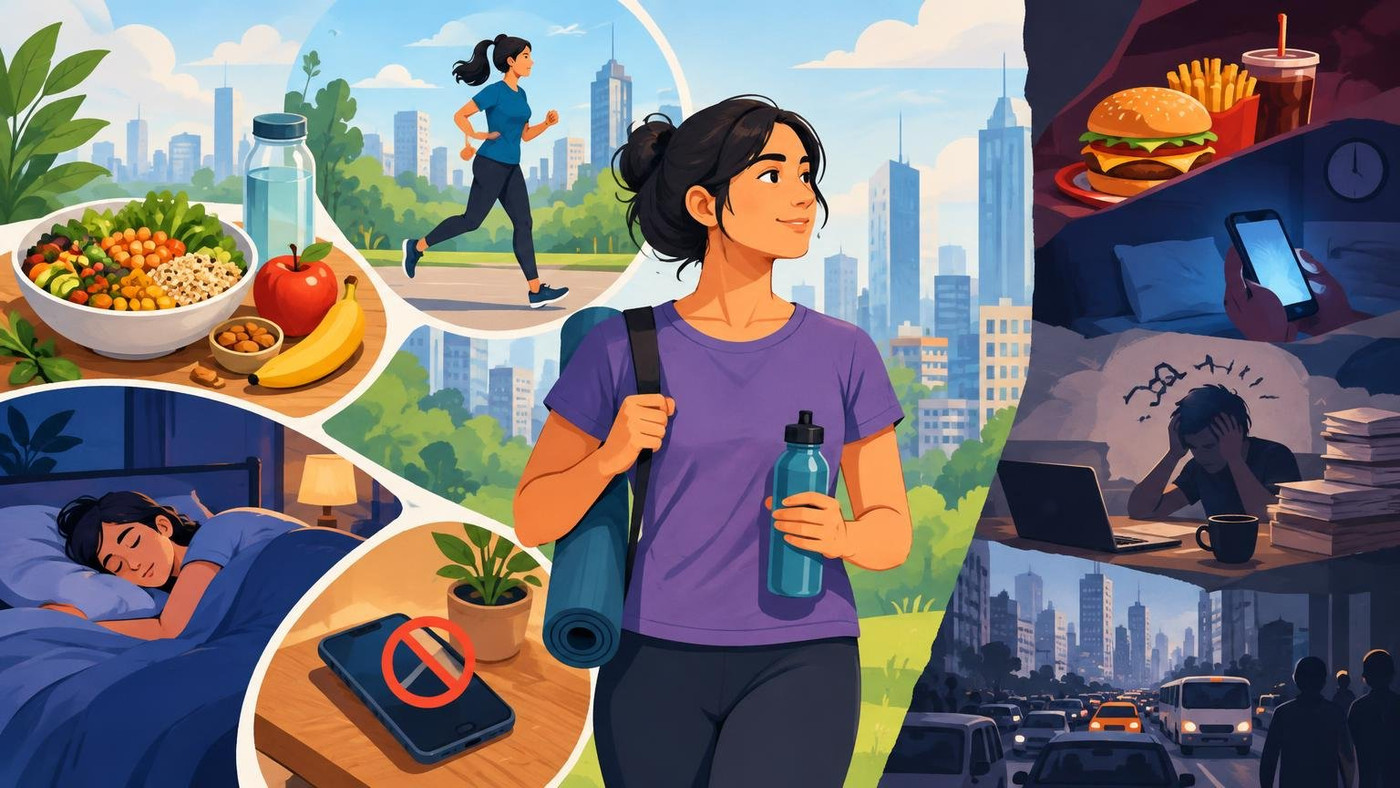
AI-generated illustration
Advertisement
A July 2026 study of 79 young adults in eight Indian cities maps what they think a healthy lifestyle is and what stops them from adopting one.
What Happened
A study published on 8 July 2026 in the journal Frontiers in Public Health examines how urban Indian young adults understand a healthy lifestyle. The paper is titled "Urban Indian young adults' perceptions of a healthy lifestyle and its associated factors". It is led by Neha Rathi, with co-authors including Chowdhury, Singh, Worsley and Bruening. The researchers interviewed 79 people aged 21 to 30 in eight metropolitan cities to learn what helps and what blocks healthy habits.
Key Facts
- The researchers interviewed 79 young adults aged 21 to 30. Of these, 41 were men and 38 were women.
- Participants came from eight cities: New Delhi, Mumbai, Kolkata, Chennai, Ahmedabad, Pune, Hyderabad and Bengaluru. They were recruited through purposive and snowball sampling, where participants refer other people.
- The study is qualitative. It records what people say in in-depth interviews, which were audio recorded, transcribed word for word and analysed with NVivo software to group recurring ideas into themes.
- The authors identified five themes. These include how young adults perceive a healthy lifestyle, the barriers and facilitators that shape daily habits, and the recommendations participants made.
- Participants linked a healthy lifestyle with a balanced diet, an active life and adequate sleep. A 24-year-old from Kolkata described light, less spicy, less oily, homemade food as healthy and called street-corner food unhealthy.
- Some participants cut time on online games and social media for mental well-being. They said heavy phone use disturbed sleep and caused headaches; some uninstalled game apps, and others stopped browsing social media one hour before bed.
- A study in the Indian Journal of Community Medicine (July-August 2026) surveyed 700 college-going young adults in rural Southern Andhra Pradesh. It found 36.9% had high screen time, 32.7% reported disturbed sleep, and the average was 3.6 hours a day.
Why It Matters
The authors say the problem is not awareness alone. In their introduction, they note that overweight, obesity and related non-communicable diseases in young adulthood have risen significantly in the last decade. They also state that urban Indian young adults fail to meet recommended guidelines for healthy diet and physical activity.
The interviews were designed to understand the gap between knowing and doing. Participants pointed to barriers at individual, social and environmental levels, and time constraints were among those noted. The study also lists facilitators, meaning factors that help people keep healthy habits.
The authors say first-hand evidence on both sides has been scarce for young adults in Indian cities. Hearing from young people directly gives health planners and campuses a basis to design programmes that match how peers think about food, exercise and sleep.
Screen time stands out among the self-directed strategies. The paper links participants' habits to a randomised trial showing that three weeks of reduced smartphone screen time improved stress, sleep quality and well-being. Other recent research points the same way.
The Andhra Pradesh survey found the difference in disturbed sleep between high and lower screen-time users was statistically significant. It also found 16.7% of participants had never taken part in any outdoor activity. Regular junk food intake and a lack of outdoor activity were linked with higher screen use. That setting is rural, unlike the eight-city study, but the themes overlap. Both are research papers, not government statistics.
Impact
Short-term: For young readers, the practical message is that small, self-chosen habits feature strongly in what peers say works. These include home-cooked meals, a regular exercise slot, fixed bedtimes and a screen cut-off before sleep. Nothing changes by rule or policy now. The study does not test whether these habits improve health. It documents perceptions, so readers can compare their own routines with what other young adults describe.
Long-term: The authors say participants' suggestions can be used to tailor future lifestyle interventions that encourage a sustainable healthy lifestyle among young adults. They add that findings can help design targeted programmes to reduce barriers and prevent chronic degenerative diseases. Participants recommended education and awareness about nutrition and health, and creating healthy and hygienic food environments. These point to where support could be focused.
Who is affected: The findings concern urban young adults aged 21 to 30, especially in large cities such as New Delhi, Mumbai, Kolkata, Chennai, Ahmedabad, Pune, Hyderabad and Bengaluru. The study is a single qualitative sample of 79 people in eight metros. It shows how young people think, not how many of them behave in a particular way.
Key Takeaway
A qualitative study of 79 young adults in eight Indian cities shows they link healthy living to balanced diet, activity, sleep and less screen time, while facing barriers such as limited time.
Questions and Answers
What did the healthy lifestyle study of urban Indian young adults find?
The study found young adults link a healthy lifestyle with a balanced diet, an active life and adequate sleep. Participants also named barriers such as time constraints and described cutting screen time for well-being.
How many people took part in the Frontiers in Public Health study?
The study interviewed 79 young adults aged 21 to 30, of whom 41 were men and 38 were women. They came from eight metropolitan cities across India.
Which cities were covered in the healthy lifestyle study?
The cities were New Delhi, Mumbai, Kolkata, Chennai, Ahmedabad, Pune, Hyderabad and Bengaluru. Participants were recruited through purposive and snowball sampling.
Does the study prove these habits improve health?
No. The study is qualitative and records perceptions from interviews rather than measuring health outcomes. It shows how young people think, not how many behave in a particular way.
Sourced and fact-checked by the Peepals Global Editorial Team
MeitY Advisory Asks Platforms to Label AI Content Showing Current Events
UGC NET December 2026 Registration Opens: Dates, Subjects and Career Paths
Reported, fact-checked and published by the Peepals Global Editorial Team.
Advertisement