

One in four New Zealand teens seeking work is jobless; think tank warns of AI shift
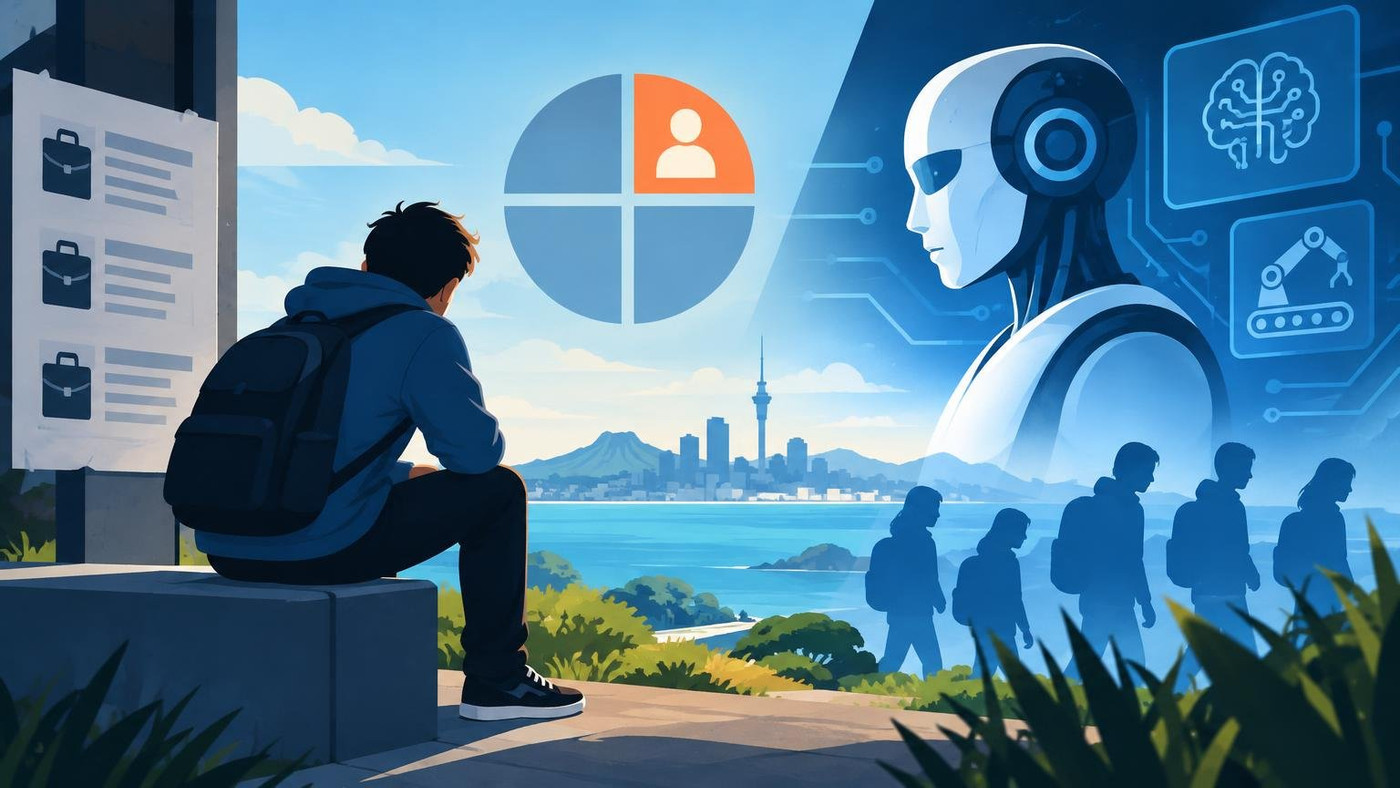
AI-generated representative image
Advertisement
NZIER said on 9 October 2026 that 25.3% of New Zealand's 15 to 19-year-olds seeking work are unemployed and warned AI may slow any recovery.
What Happened
One in four teenagers in New Zealand who are looking for work cannot find a job, according to a paper published on Friday, 9 October 2026 by the New Zealand Institute of Economic Research (NZIER), an independent economic think tank. The paper, titled "Locked out in a perfect storm? What's behind the youth employment crisis?", says unemployment among 15 to 19-year-olds reached 25.3% in the year to June 2026. It warns that the problem is only partly caused by the weak economy, so a recovery alone may not bring young people back into work, and it flags artificial intelligence as one reason entry-level jobs may stay scarce.
Key Facts
- NZIER published the paper, Insight 131, on 9 October 2026; principal economist Sarah Hogan is among its authors.
- Unemployment among 15 to 19-year-olds was 25.3% in the year to June 2026.
- For 20 to 24-year-olds the rate was 12%, while for everyone aged 25 and over it was just 3.5%.
- NZIER says youth jobless rates are now similar to those seen at the peak of the Global Financial Crisis, even though the overall jobless rate has stayed relatively stable.
- "Youth unemployment has reached a crisis level without an economy-wide unemployment crisis," the paper says.
- The think tank warns that structural factors, including the spread of AI, may make recovery for young workers harder.
Why It Matters
Youth unemployment usually rises and falls with the wider economy: when a recession hits, the young are the first to lose jobs and the first to be hired back. NZIER's point is that this time looks different. The gap between young workers and everyone else has widened sharply while overall unemployment has stayed fairly steady. That suggests something beyond the business cycle is shutting young people out.
One factor the think tank points to is technology. If AI tools take over some of the routine tasks that once gave beginners their first foothold, employers may need fewer entry-level staff, and the first rung of the career ladder gets narrower. NZIER's warning is that this kind of change does not reverse when the economy picks up.
The New Zealand findings carry a lesson well beyond that country. Young people in many economies, India included, are entering a job market where entry-level openings are being reshaped by automation For young people planning their careers, the practical question is how to build the experience and skills that employers still need from new hires.
| Age group (New Zealand) | Unemployment rate, year to June 2026 |
|---|---|
| 15 to 19 | 25.3% |
| 20 to 24 | 12% |
| 25 and over | 3.5% |
Impact
Short-term: Teenagers and young adults in New Zealand face a tough hiring market, and NZIER's analysis suggests waiting for the economy to recover will not be enough on its own.
Long-term: If AI keeps thinning out entry-level work, countries will need new routes into employment, such as more structured apprenticeships and work-based training, so that young people can still build experience.
Who is affected: Young job seekers, especially school-leavers and new graduates, employers who rely on entry-level staff, and policymakers in New Zealand and other countries watching the same trend.
Key Takeaway
In New Zealand, a quarter of teenage job seekers are out of work while adults are largely unaffected, and the country's leading think tank warns that AI and other structural shifts mean recovery alone may not fix it.
Questions and Answers
How high is youth unemployment in New Zealand?
According to NZIER, 25.3% for 15 to 19-year-olds and 12% for 20 to 24-year-olds in the year to June 2026, compared with 3.5% for people aged 25 and over.
Why does NZIER call it a crisis?
Because youth jobless rates are now similar to the peak of the Global Financial Crisis, even though overall unemployment has stayed relatively stable.
What role does AI play?
NZIER says structural changes, including AI, may make it harder for young people to find work even when the economy recovers, because fewer entry-level roles may be needed.
What can young job seekers do?
The paper is about New Zealand, but its message applies widely: if entry-level roles shrink, internships, apprenticeships and hands-on projects become more important ways to gain the experience employers look for.
Sourced and fact-checked by the Peepals Global Editorial Team
Half of urban Indian singles use AI on dating messages, but most trust their gut
Manikanta Hoblidhar wins national open 100m in 10.25s in first race since injury
Reported, fact-checked and published by the Peepals Global Editorial Team.
Advertisement